Syro-Malabar head alarmed by Christian emigration from India


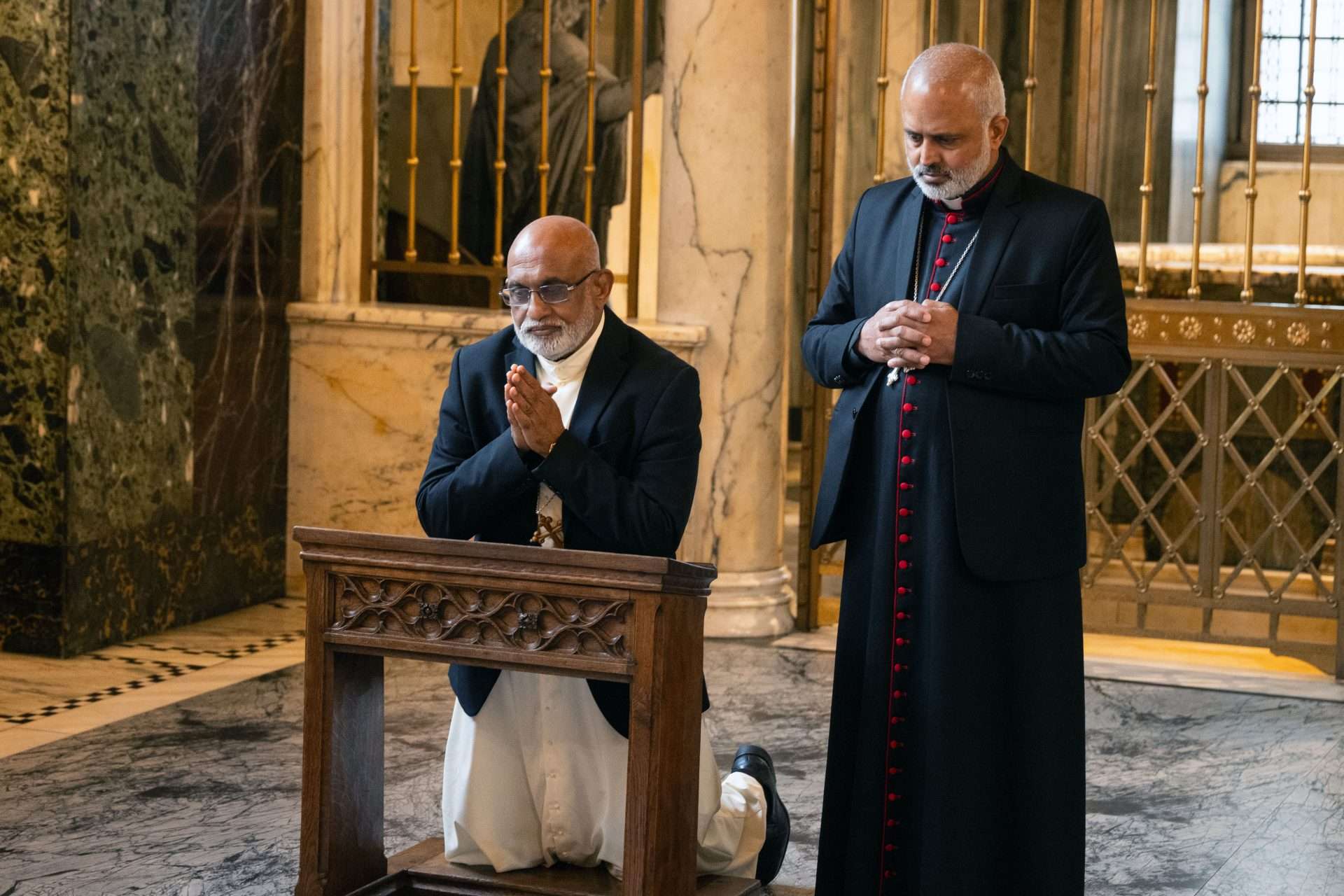
Major Archbishop Raphael Thattil (left) with Bishop Joseph Srampickal, who leads the Syro-Malabar Church in Great Britain
Catholic Church in England and Wales / Mazur
Major Archbishop Thattil said the challenges to the Syro-Malabar Church have a deeper spiritual dimension than mere administrative concerns.
The head of the Syro-Malabar Church expressed concern at the “fall” in India’s Christian population, warning that this weakens the Church’s public presence.
“The alarming rate of migration to foreign countries by community members [is] leading some into significant debt while their absence [is] being felt by the Church in India,” said Major Archbishop Raphael Thattil, urging Christians to engage with economic concerns and work to create employment.
While agriculture is often considered unprofitable, the prelate said there were models created by dioceses that generate revenue and employment for the community. His statement declared 2026 the “Community Empowerment Year” to promote self-reliance and development.
The statement followed the conclusion of the first session of the thirty-fourth Syro-Malabar Episcopal Synod, the Church’s supreme authority, held on 6-10 January at Mount St Thomas, Kakkanad, in Kerala’s Ernakulam district.
Archbishop Thattil said the challenges to the Syro-Malabar Church – one of the 23 sui iuris Eastern-rite Churches in communion with Rome – had a deeper spiritual dimension than mere administrative concerns.
The Synod reiterated its decision that the “uniform mode” of the Holy Qurbana, the Syro-Malabar Mass, which it approved in 2021 with endorsement from the Holy See, will continue without change across all dioceses except the Archeparchy of Ernakulam-Angamaly where there were sustained protests against its introduction.
Ernakulam-Angamaly, the Church’s primatial see, is considered a “liturgical exception” with one Mass in the uniform mode – with the priest ad orientem during the Eucharistic rite – required on Sundays and feast days while other Masses continue with the priest versus populum. The Church authorities appealed to protesters to reconcile with them on the issue of the uniform mode.
Thattil also condemned the increasing hate-crimes against the community. He noted with concern the attacks and vandalism across India during the Christmas season, causing fear and anxiety among Christians.
Emphasising that synods are crucial meetings to discuss governance and pastoral matters, he reflected on recent developments in the Church – particularly the redrawing of the boundaries of the 12 dioceses, the creation of four new ecclesiastical provinces outside Kerala and the appointment of an apostolic visitor for Syro-Malabar Catholics in the Gulf region. There were 53 bishops from India and abroad present at the Synod.
Syro-Malabar Church declares end to liturgy dispute with new compromise
Hindu nationalists will turn on Christians, Indian bishops warned
Stay updated — add us as a preferred news source on Google:


Help us keep The Tablet’s voice independent, clear and far-reaching.
Founded in 1840, The Tablet is the leading independent English-language Catholic weekly, celebrated for great writing, astute analysis, brilliant arts and books reviews and trustworthy reporting from correspondents in Britain, Ireland, Rome and across the world.
Independent, high-quality journalism is at the heart of what we do. The Tablet does not have deep pockets and we are not funded by rich donors. If you appreciate our work please consider supporting The Tablet’s Development Fund. It only takes a moment and you can cancel at any time.
- Support with £5 per month
- Support with £10 per month
- Support with other amount.

MOST READ ARTICLES
-
1
Archbishop of Cardiff-Menevia meets with other worldwide Catholic Church leaders to discuss liturgy
-
2
Let there be light
-
3
World Humanitarian Day: aid workers face a ‘crisis of protection’
-
4
Ruling allows French private hospitals limited exemption from assisted suicide
-
5
A tract for our times
-
6
The wisdom of the saints
FROM THE EDITOR'S DESK