Prayer and fasting ‘can shape history’ says Ukrainian bishop


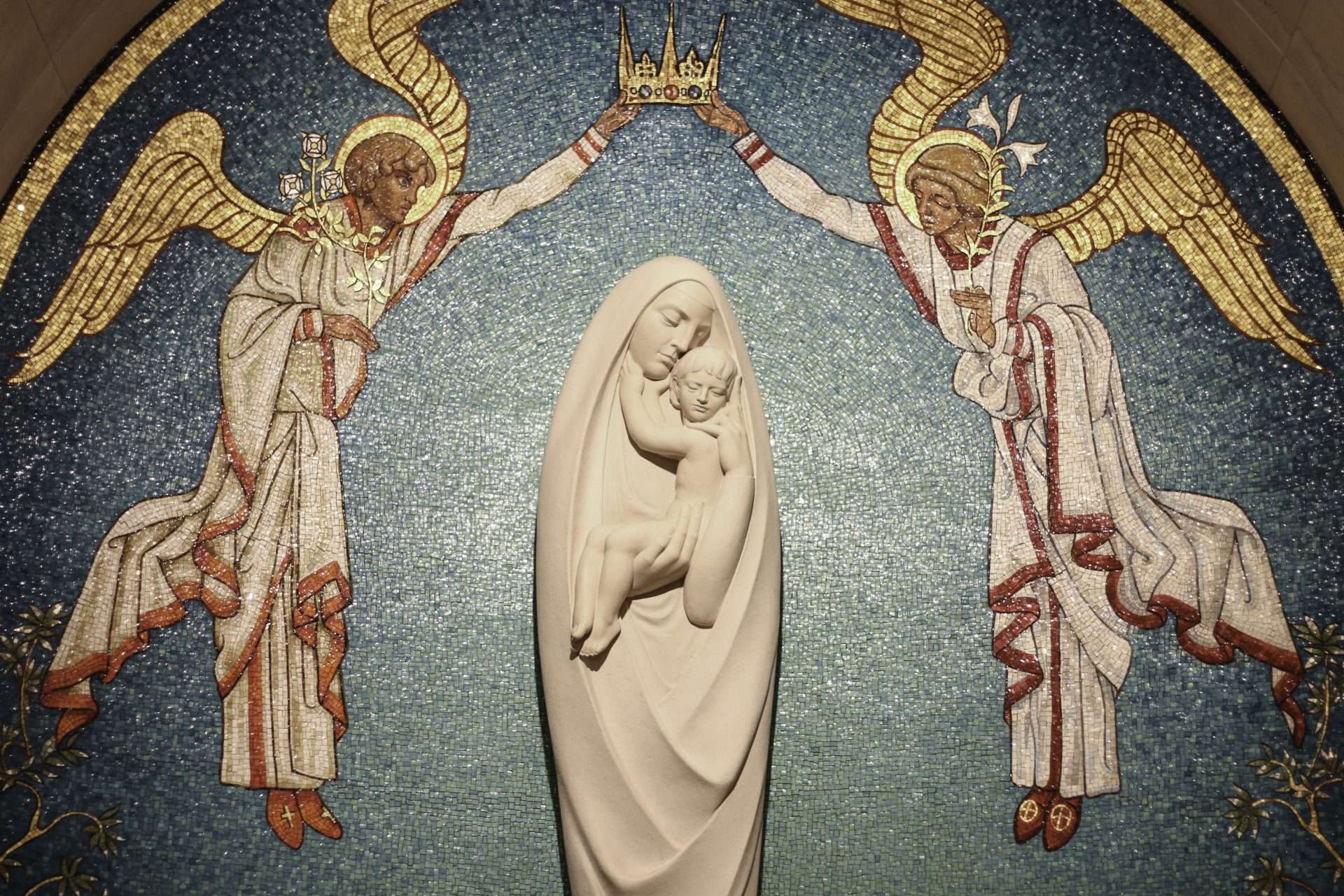
An image of Our Lady Queen of Peace in the Basilica of the National Shrine of the Immaculate Conception in Washington, DC
Fr Lawrence Lew OP / flickr | Creative Commons
At his general audience on Wednesday, Pope Leo asked Catholics to remember the Virgin Mary as Queen of Peace with prayer and fasting, ‘imploring the Lord to grant us peace and justice’.
Pope Leo’s call to pray and fast for peace on the Feast of the Queenship of the Virgin Mary “holds real power”, according to the leader of Ukraine’s Latin-rite Catholics.
Bishop Vitaliy Skomarovskyi of Lutuk, president of the Roman Catholic bishops’ conference of Ukraine, told Vatican News that the appeal “echoes the words of the Gospel, where prayer and fasting are shown to have great power – they can shape history”.
At his general audience on Wednesday, Pope Leo asked Catholics to remember the Virgin Mary as Queen of Peace with prayer and fasting on Friday, “imploring the Lord to grant us peace and justice and to wipe away the tears of those who suffer because of ongoing armed conflicts”.
He said that “our earth continues to be wounded by wars in the Holy Land, in Ukraine and in many other regions of the world”.
Addressing pilgrims at the audience en route to the Shrine of Our Lady of Częstochowa in Poland, he said: “I ask you to include in your intentions the supplication for the gift of peace – a peace that is disarmed and disarming – for the whole world, especially for Ukraine and the Middle East.”
Bishop Skomarovskyi said the Ukrainian Church was “especially thankful that this intention of prayer includes an end to the war in Ukraine”.
“The Holy Father has said himself that peace demands real effort and sustained prayer,” he said. “Naturally, we welcome and support every sincere effort toward peace. But since ordinary people often don’t have full insight into the political processes underway, our role is to pray, and to support with our prayers those in positions of influence, those on whom peace ultimately depends.”
In negotiations with US President Donald Trump on 15 August, Russia’s President Vladimir Putin demanded a series of concessions from Ukraine including control of the entire Donbas region and restrictions on its military. However, talks in Washington, DC on Monday between President Trump and Ukraine’s President Zelenskyy, attended by several European leaders, increased hopes of significant security guarantees for any peace agreement.
Returning to Rome from his summer residence at Castel Gandolfo on Tuesday, Pope Leo told reporters that the negotiations were cause for hope, “but we still need to work hard, pray hard and truly seek the way forward, to find peace”.
The head of the Ukrainian Greek Catholic Church said the talks were “only the beginning” and must go beyond questions of territory.
“Ukraine is its people. Ukraine is its nation,” said Major Archbishop Sviatoslav Shevchuk in a message on 17 August, before the Washington talks. “We ask that the subject of human rights be returned to the negotiations, above all the right to life and freedom, and in our case, the right to be Ukrainian, to belong to the millions-strong Ukrainian people.”
The Belarussian dissident outlet Katolik.life reported that Russian Catholics were cautiously discussing the peace negotiations in online forums, expressing hope for restored relations with European countries.
One commented that “being friends and trading with each other is much better than fighting”, while another wrote: “Perhaps we need to ask more and more often for peace from the Only One who can change the course of history.”
Others declared support for Russia’s policy and the Kremlin’s claims about the causes of the war.
In a statement on Monday, Bishop Kenneth Nowakowski of the Ukrainian Catholic Eparchy of the Holy Family in London said he prayed for President Putin “that his eyes may be opened to the horror that he has unleashed on Ukraine and its people … and that this genocidal war criminal converts and ends this war”.
Reflected on “Forgiveness Sunday”, which the Ukrainian Catholic Church marks on the Sunday before the beginning of Lent, he said: “We are asked to forgive those who have wronged or harmed us and we also ask for forgiveness. These past few years this has been very difficult for us, however we do forgive and ask for forgiveness.
“We are also asked by Our Lord to both love and pray for those who persecute us. Without faith and trust in Our Lord, these Christian obligations are more than difficult, but we do it.”
Putin’s church demands meet cold reception in Ukraine
The war in Ukraine: diplomacy beyond revenge
Stay updated — add us as a preferred news source on Google:


Help us keep The Tablet’s voice independent, clear and far-reaching.
Founded in 1840, The Tablet is the leading independent English-language Catholic weekly, celebrated for great writing, astute analysis, brilliant arts and books reviews and trustworthy reporting from correspondents in Britain, Ireland, Rome and across the world.
Independent, high-quality journalism is at the heart of what we do. The Tablet does not have deep pockets and we are not funded by rich donors. If you appreciate our work please consider supporting The Tablet’s Development Fund. It only takes a moment and you can cancel at any time.
- Support with £5 per month
- Support with £10 per month
- Support with other amount.

MOST READ ARTICLES
-
1
Pope returns to Vatican after hospital discharge
-
2
Diverse schools that are 100 per cent Catholic
-
3
Under endless skies
-
4
Battling confession fatigue
-
5
Nigerian bishop scorns suggestion of running in presidential election
-
6
Schismatic Spanish nuns strip contents of convent before eviction
FROM THE EDITOR'S DESK