Nuns held on trafficking charges released on bail after protests


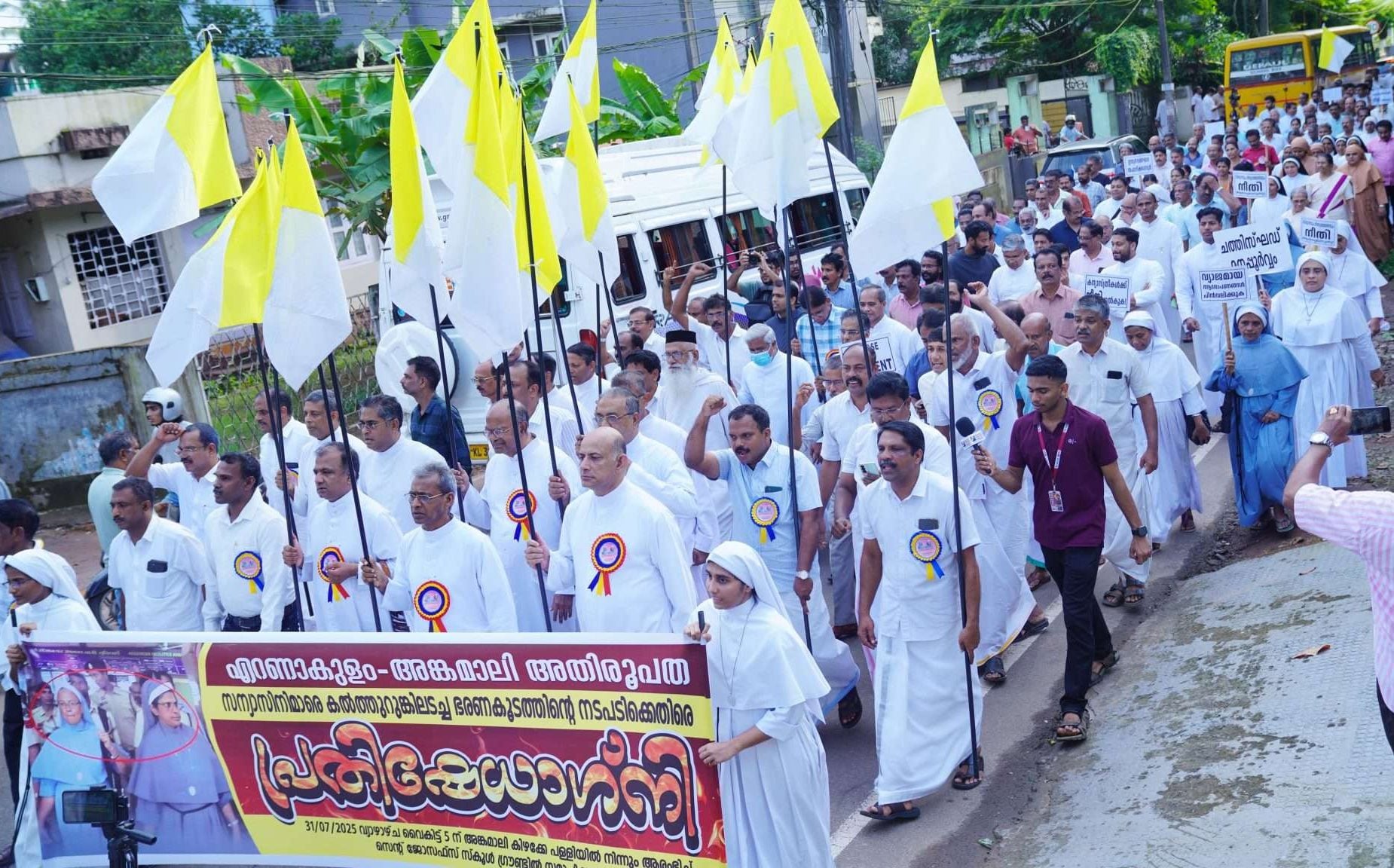
Nuns and clergy led protests against the arrests in Kerala.
Picture supplied
Prelates, priests and nuns alongside lay Christians and people of other faiths had taken to the streets in protest in Kerala and other states over the ‘gross injustice’.
Two nuns and a man held on charges of human trafficking and forced conversion were released on bail on 2 August, eight days after their arrest in India’s eastern Chhattisgarh state.
Sr Vandana Francis and Sr Preeta Mary along with the young tribal Christian Sukhman Mandavi from Narayanpur district, were arrested at Durg railway station on 25 July following accusations of human trafficking and kidnapping for proselytisation by the vigilante Hindu militant group Bajrang Dal.
The nuns of the Assisi Sisters of Mary Immaculate (ASMI), both aged over 50, were accompanying three women aged 18-19 to work placements in convents in Agra, in northern Uttar Pradesh.
The order’s Sr Ancilin Francis said Sr Mary is a registered nurse while Sr Francis has worked as a paramedical staffer and is trained in pharmacy.
A special National Investigation Agency (NIA) court granted them bail, noting that there had been no requisition for custodial interrogation of the accused persons and that they are “not habitual offenders”.
Judge Sirajuddin Qureshi ruled the police report is “primarily based on a mere apprehension and suspicion of commission of an offence by the accused persons”.
He said that “the parents of the three victims have also filed their affidavits stating that the accused persons/applicants have not allured or forced or coerced their daughters for religious conversion or human trafficking”.
An array of politicians, including members of the governing Hindu nationalist Bharatiya Janata Party (BJP) from nuns’ native state of Kerala, were waiting to receive them on their conditional release, alongside fellow religious.
Rajeev Chandrasekhar, BJP president of Kerala, which goes to polls next year, attempted to placate Christians after Chhattisgarh’s Chief Minister Vishnu Deo Sai backed the arrests and claimed that the detainees were engaged in human trafficking and conversion.
Chandrasekhar, who lobbied for their bail and is helping the BJP to make inroads into the elusive southern state, said that Prime Minister Narendra Modi and the federal interior minister had assured him that their bail would not be opposed.
Meanwhile, the three women allegedly trafficked by the nuns approached the police with a complaint against members of the Bajrang Dal.
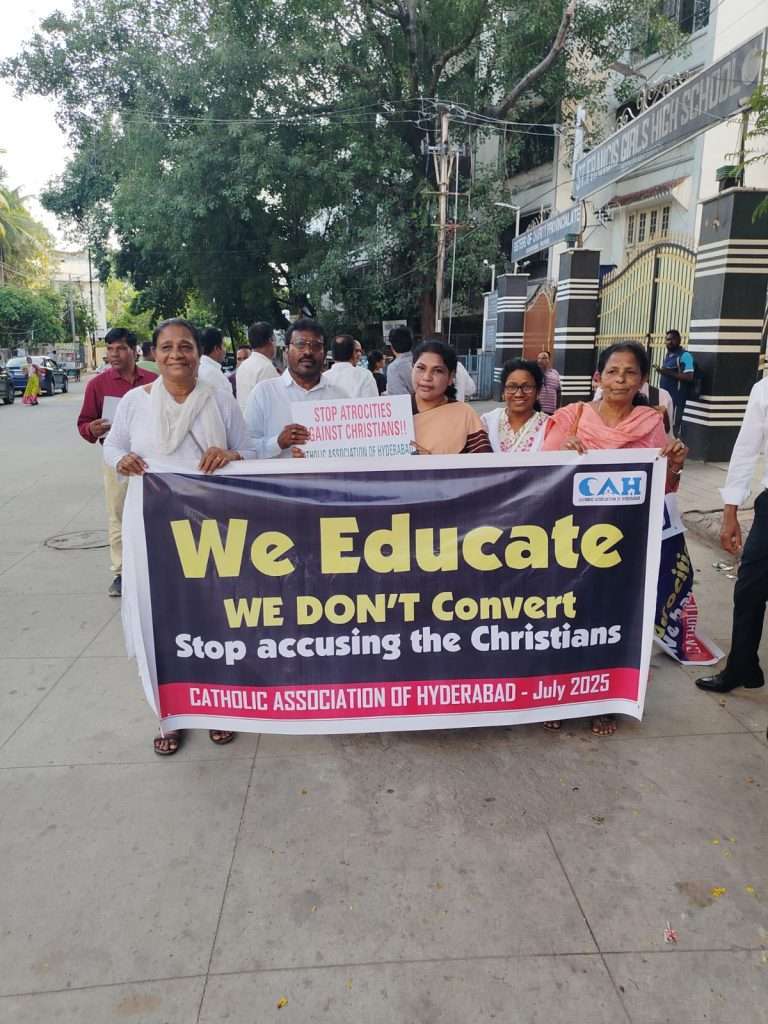
Reacting to the release of the nuns, the Catholic Bishops’ Conference of India (CBCI) said it was a “ray of hope” in a situation that has caused immense distress within the Christian community.
The CBCI president Archbishop Andrews Thazhath of Thrissur said: “We are grateful to the government for the support shown in this case. We hope this marks the beginning of renewed efforts to protect the rights and dignity of all religious minorities in our secular democracy.”
Demanding the immediate quashing of the case, he said the young women involved were already Christians and legal adults so proselytisation charges could not stand.
“We sincerely thank the whole Church in India, various political leaders, civil society members, and concerned citizens who stood by the sisters in solidarity during this difficult period.”
Prelates, priests and nuns alongside lay Christians and people of other faiths had taken to the streets in protest in Kerala and other states over the “gross injustice”, to the alarm of the BJP.
Fr C M Paul, a Catholic priest from Siliguri, said in the east in Jharkhand, youth groups called for a state-wide shutdown to protest the weaponisation of anti-conversion laws. In Odisha, civil society groups called for an independent judicial probe into religious hate crimes.
Adivasi Christians in Raigarh, civil rights lawyers in Delhi and mothers in Bastar joined Kerala’s bishops to share their rage and their resistance.
Bishops and political leaders condemn nuns’ arrest
Stay updated — add us as a preferred news source on Google:


Help us keep The Tablet’s voice independent, clear and far-reaching.
Founded in 1840, The Tablet is the leading independent English-language Catholic weekly, celebrated for great writing, astute analysis, brilliant arts and books reviews and trustworthy reporting from correspondents in Britain, Ireland, Rome and across the world.
Independent, high-quality journalism is at the heart of what we do. The Tablet does not have deep pockets and we are not funded by rich donors. If you appreciate our work please consider supporting The Tablet’s Development Fund. It only takes a moment and you can cancel at any time.
- Support with £5 per month
- Support with £10 per month
- Support with other amount.

MOST READ ARTICLES
-
1
Archbishop of Cardiff-Menevia meets with other worldwide Catholic Church leaders to discuss liturgy
-
2
Let there be light
-
3
World Humanitarian Day: aid workers face a ‘crisis of protection’
-
4
Ruling allows French private hospitals limited exemption from assisted suicide
-
5
A tract for our times
-
6
The wisdom of the saints
FROM THE EDITOR'S DESK