Leading bishop condemns cuts in overseas aid


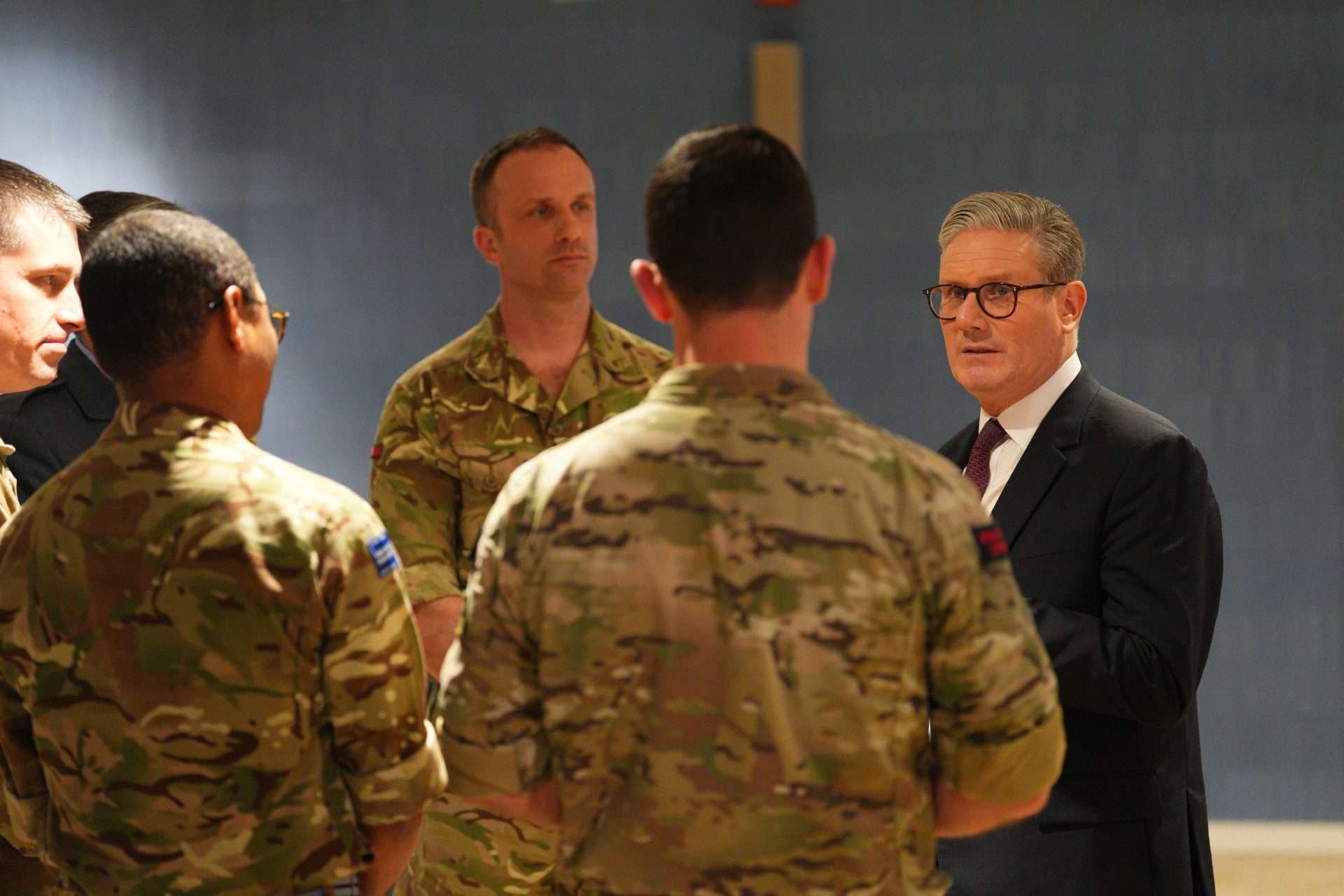
Keir Starmer tours Palantir Technologies headquarters with British military personnel yesterday in Washington
Carl Court/Pool Photo via AP/Alamy
The chair of Cafod said the government should not be ‘balancing the books’ at the expense of the poorest communities around the world
A leading bishop has criticised the government for cutting the overseas aid budget in order to increase military spending.
Bishop of Hexham and Newcastle Stephen Wright, chair of Cafod, said: “Aid cuts cost lives. With so many in the world suffering the impacts of poverty, climate change and conflict – not least in Ukraine, Sudan and the DRC – cuts to international aid removes a lifeline for many of our poorest sisters and brothers.
“Decisions made in the UK have very human consequences around the globe. Families unable to grow food because of the climate crisis, children not able to go to school, and people going untreated and unvaccinated for curable diseases. Reducing aid not only increases suffering, it makes the world less safe for all of us.
“This year is a Jubilee Year for the Church – a time of hope, journeying together, and resetting injustices, not a time for turning our backs on those in need. The government shouldn’t be balancing the books at the expense of the poorest communities around the world.”
He spoke out after the prime minister Keir Starmer said this week that the aid budget will be cut again, taking it to its lowest level since 1999. Cafod warned that as a result, in some of the most vulnerable places on earth, more people will die and many more will lose their livelihoods.
Urging people to write to MPs to oppose the cuts, Cafod said, “At a time when we are seeing other decreases of aid to support the world’s most vulnerable communities, our government should be redoubling its efforts to enable people to emerge from poverty.”
Cafod director Christine Allen said, “Coming so soon after the USAID freeze, this is another lifeline being pulled away from those in desperate need, at a time when the world feels increasingly precarious.
“The UK has a choice to make: to support those in need or turn our backs on them. What we decide speaks to the very core of who we want to be as a society.
“If we are seeing the decline of aid to support the world’s most vulnerable communities, then the government must show serious ambition to reform the global economy – including the broken global debt system – to enable those most in need to emerge from poverty.”
Christian Aid welcomed the stance taken by development minister Anneliese Dodds who resigned over the cuts, saying in a letter to prime minister Sir Keir Starmer that the cuts would remove food and healthcare from desperate people and harm the UK’s reputation.
Pax Christi also condemned the cuts.
“The announcement that a Labour Government is cutting the UK’s international aid budget by 40 per cent to increase military spending to 2.5 per cent is shameful, shocking and self-defeating,” said Pax Christi national chaplain Sr Katrina Alton.
“We know that war is profitable, but the blatant transactional capitalism being trumpeted by the US, and that seems to have influenced this UK policy decision, is beyond cynical. Peace cannot be bought but we know that oil, rare minerals, and prime real estate can. To build peace amidst the ruins and devastation of countries such as Gaza, Ukraine, and Syria, requires investment in people and communities. Peace is relational, never transactional.”
Kathryn Lydon chair of Pax Christi, said, added: “Peace is a process that requires long term commitments to reconciliation grounded in justice and truth.”
Christian Aid’s director of policy, public affairs and campaigns, Osai Ojigho, said: “The world’s most marginalised communities are facing a dramatic and deepening poverty crisis, made worse by conflict and the climate crisis. These cuts, a political decision echoing Trump’s race to the bottom on aid, are nothing short of a betrayal that will erode trust and fan the flames of global insecurity.”
Archbishop of York Stephen Cottrell said: “Defence and development are not competing priorities, they are complementary. Properly used, development funding helps prevent conflicts, tackle instability, and build a safer, more just world. Cutting aid in this way risks exacerbating the very crises that lead to insecurity.”
Bishop of London Sarah Mullally, said, “We need to reject this false choice between defence spending and development spending. They are not competing priorities. This is not just about reputation. Properly used development funding helps to prevent conflict. It tackles instability and provides a greater and more just world.”
World Vision said it was “shocked and concerned” and Tearfund described it as “appalling”.
(Story updated on 4 March)
Stay updated — add us as a preferred news source on Google:


Help us keep The Tablet’s voice independent, clear and far-reaching.
Founded in 1840, The Tablet is the leading independent English-language Catholic weekly, celebrated for great writing, astute analysis, brilliant arts and books reviews and trustworthy reporting from correspondents in Britain, Ireland, Rome and across the world.
Independent, high-quality journalism is at the heart of what we do. The Tablet does not have deep pockets and we are not funded by rich donors. If you appreciate our work please consider supporting The Tablet’s Development Fund. It only takes a moment and you can cancel at any time.
- Support with £5 per month
- Support with £10 per month
- Support with other amount.

MOST READ ARTICLES
-
1
Archbishop of Cardiff-Menevia meets with other worldwide Catholic Church leaders to discuss liturgy
-
2
Let there be light
-
3
World Humanitarian Day: aid workers face a ‘crisis of protection’
-
4
Ruling allows French private hospitals limited exemption from assisted suicide
-
5
A tract for our times
-
6
The wisdom of the saints
FROM THE EDITOR'S DESK