Chad faces crises ahead of December elections, warn bishops


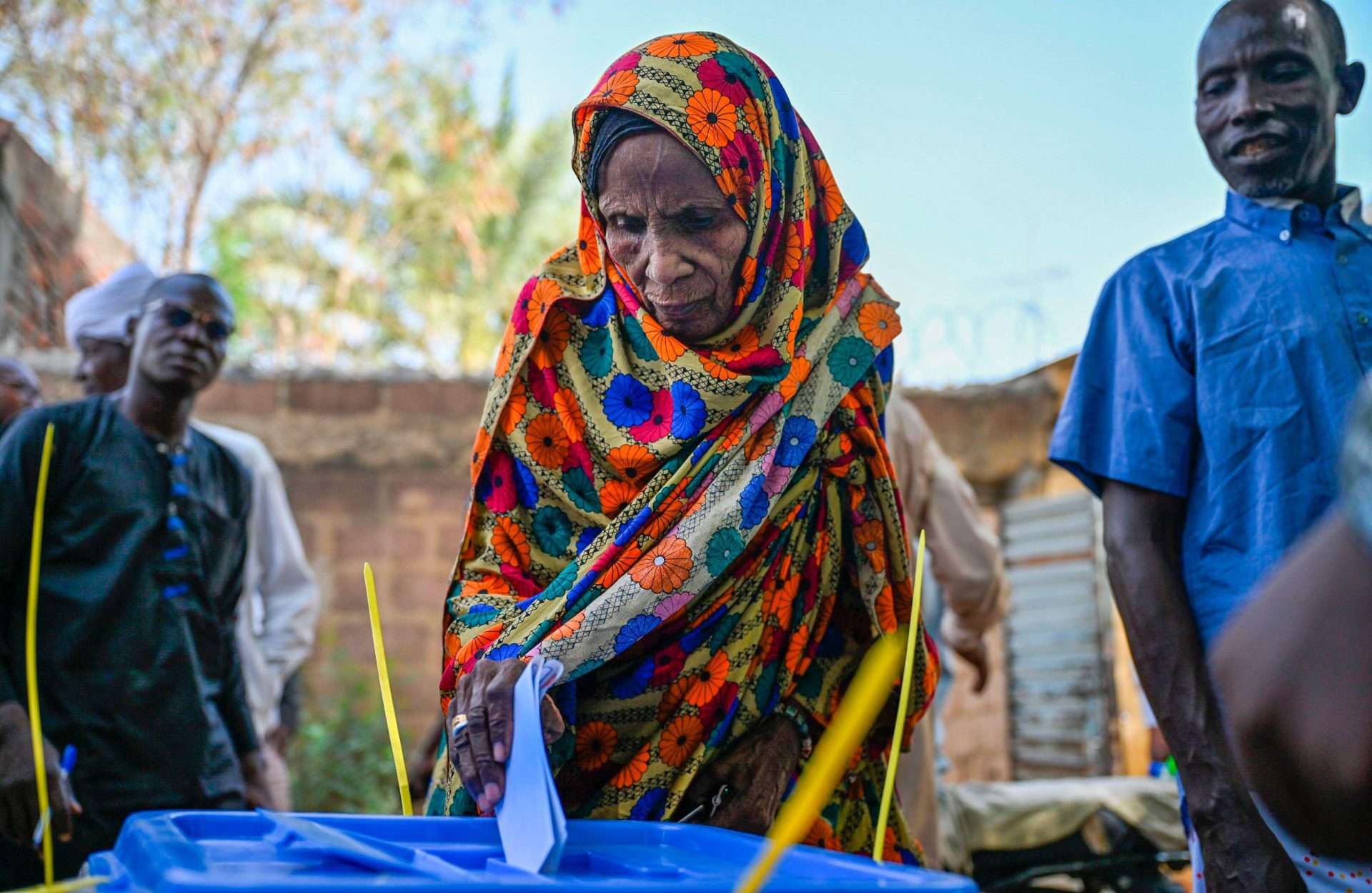
Chadians vote in presidential elections in May 2024 that ended three years of military rule.
Associated Press / Alamy
“We still do not understand why Chadians cannot accept each other, dialogue without a spirit of domination and seek only the common national interest.”
Catholic bishops in Chad said the country faced an array of crisis ahead of elections this month. An appeal issued by the bishops’ conference ahead of their plenary said that floods, terrorist attacks and their humanitarian and economic consequences had devastated the country over the past year.
In late October, Boko Haram militants attacked a garrison in the Lake Chad basin, killing 40 soldiers. Meanwhile floods have affected large parts of west and central Africa, with Chad the worst-hit country. According to the UN, 1.9 million people had been affected by floods in Chad as of 31 October.
Archbishop Edmond Djitangar of N’Djamena, the president of the bishops’ conference, said these challenges would inform discussions at their two-week plenary, which began on 3 December.
He noted that the Church was “gradually taking root in Chad”, which has a population of around 18 million. The 2014-15 demographic estimates recorded that 52.1 per cent of the population was Muslim, 23.9 per cent Protestant, 20 per cent Catholic, 0.3 per cent animist, 0.2 per cent other Christian, 2.8 per cent no religion, and 0.7 per cent unspecified.
“As usual, we will exercise our collegiality for two weeks in examining different aspects of the life of our Church, the Family of God, which is gradually taking root in Chad. We will evaluate the progress of evangelisation in the social and economic context of our country,” Archbishop Djitangar said.
He criticised the lack of dialogue and worsening corruption among the political classes, warning this could upset the democratic process during elections to parliament and to regional and local offices on 29 December.
“From a political point of view, our assembly is situated in the context of legislative, regional and municipal elections that are supposed to restore stable democratic institutions in our country. But we still do not understand why Chadians cannot accept each other, dialogue without a spirit of domination and seek only the common national interest,” he said.
Djitangar warned that without dialogue between political leaders, “we are destined to move forward by trial and error or by running away from the failures of the process and of normalising public life. The failures accumulate and lead to a dead end.”
Stay updated — add us as a preferred news source on Google:


Help us keep The Tablet’s voice independent, clear and far-reaching.
Founded in 1840, The Tablet is the leading independent English-language Catholic weekly, celebrated for great writing, astute analysis, brilliant arts and books reviews and trustworthy reporting from correspondents in Britain, Ireland, Rome and across the world.
Independent, high-quality journalism is at the heart of what we do. The Tablet does not have deep pockets and we are not funded by rich donors. If you appreciate our work please consider supporting The Tablet’s Development Fund. It only takes a moment and you can cancel at any time.
- Support with £5 per month
- Support with £10 per month
- Support with other amount.

MOST READ ARTICLES
-
1
Archbishop of Cardiff-Menevia meets with other worldwide Catholic Church leaders to discuss liturgy
-
2
Let there be light
-
3
World Humanitarian Day: aid workers face a ‘crisis of protection’
-
4
Ruling allows French private hospitals limited exemption from assisted suicide
-
5
A tract for our times
-
6
The wisdom of the saints
FROM THE EDITOR'S DESK