Syrian Christians left in fear by fall of Assad


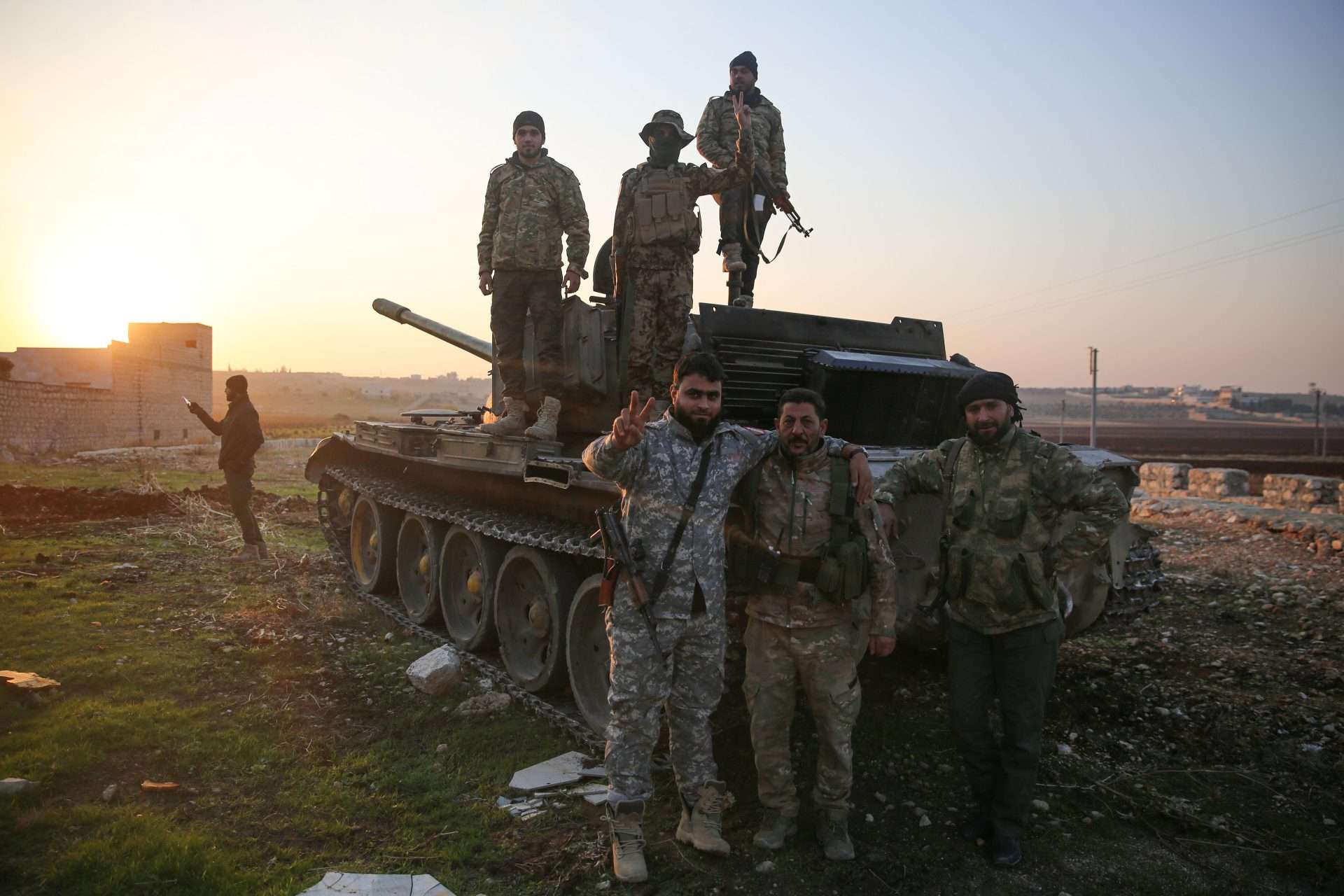
Syrian opposition forces celebrate their capture of Aleppo on 29 November as Bashar al Assad’s regime began to collapse.
Juma Mohammad / ZUMA Press Inc / Alamy
Cardinal Mario Zenari, the apostolic nuncio to Syria, had said that the latest military and humanitarian crisis following 14 years of conflict meant “hope is dead” for the country.
Church leaders of various denominations appealed for international protection for Christian communities in Syria as the rebel offensive rapidly accelerated last week, culminating in the fall of President Bashar al Assad’s regime.
Opposition forces led by the jihadi group Hayat Tahrir al Sham (HTS) seized control of Damascus over the weekend, effectively ending the Assad family’s five-decade reign. Assad subsequently fled the country and was granted political asylum in Moscow.
Western governments called for a peaceful transition and the protection of civilians as well as minorities as the opposition formed a new government. While many Syrians celebrated the dictator’s defeat, the collapse of his regime left a vacuum and fears of uncertainty.
Orthodox leaders had called on international governments to protect their respective communities in Syria as the rebels advanced last week, seizing Syria’s second largest city, Aleppo, and the central city of Hama, in a dramatic reversal of fortunes for Assad.
Archbishop Ieronymos of Athens and All Greece, the primate of the Orthodox Church in Greece, urged the Greek government to increase its diplomatic and humanitarian efforts to stabilise the situation. He warned of “looming danger of the complete eradication and disappearance” of Greek Orthodoxy and other branches of Christianity from Syria.
“The advance of extremist armed groups and the capture of Aleppo threaten the interfaith composition of the region’s population, which, among others, has included since antiquity a Hellenic and Greek Orthodox community – under the auspices of the Greek Orthodox Patriarchate of Antioch and All the East – as well as Christian populations of Syriac Jacobites, Armenians, and other Christians,” Ieronymos said.
Other prominent Orthodox leaders have also warned that the latest unrest in Syria threatened their respective communities in the country.
Archbishop Georgios, the leader of the Church of Cyprus, spoke by telephone with Patriarch John X of Antioch, whose Patriarchate of Antioch and All The East is headquartered in Syria. Georgios offered his support and compassion for the crises facing the Church both in Lebanon and in Syria.
Shortly after the fall of Aleppo, the Church of Albania issued a statement warning that the situation placed “thousands of Orthodox Christians at immediate risk”. It called for “swift and decisive action” from the international community.
Metropolitan Ephraim of the Antioch patriarchate reassured Christians in Aleppo that he and the church would remain with their people in the city despite the threat. He urged residents to stay indoors.
Cardinal Mario Zenari, the apostolic nuncio to Syria, said that the latest military and humanitarian crisis following 14 years of conflict meant “hope is dead” for the country. However, he later reported more hopeful developments from Aleppo, saying that local Christian bishops had held a meeting with rebel leaders and received reassurances that “they would respect the various religious denominations and Christians”.
On 1 December a missile strike by Assad’s Russian allies damaged the Holy Land College in Aleppo, operated by the Franciscans of the Custody of the Holy Land.
Stay updated — add us as a preferred news source on Google:


Help us keep The Tablet’s voice independent, clear and far-reaching.
Founded in 1840, The Tablet is the leading independent English-language Catholic weekly, celebrated for great writing, astute analysis, brilliant arts and books reviews and trustworthy reporting from correspondents in Britain, Ireland, Rome and across the world.
Independent, high-quality journalism is at the heart of what we do. The Tablet does not have deep pockets and we are not funded by rich donors. If you appreciate our work please consider supporting The Tablet’s Development Fund. It only takes a moment and you can cancel at any time.
- Support with £5 per month
- Support with £10 per month
- Support with other amount.

MOST READ ARTICLES
-
1
Archbishop of Cardiff-Menevia meets with other worldwide Catholic Church leaders to discuss liturgy
-
2
Let there be light
-
3
World Humanitarian Day: aid workers face a ‘crisis of protection’
-
4
Ruling allows French private hospitals limited exemption from assisted suicide
-
5
A tract for our times
-
6
The wisdom of the saints
FROM THE EDITOR'S DESK