Rohingya in Bangladesh still wait without hope on World Refugee Day


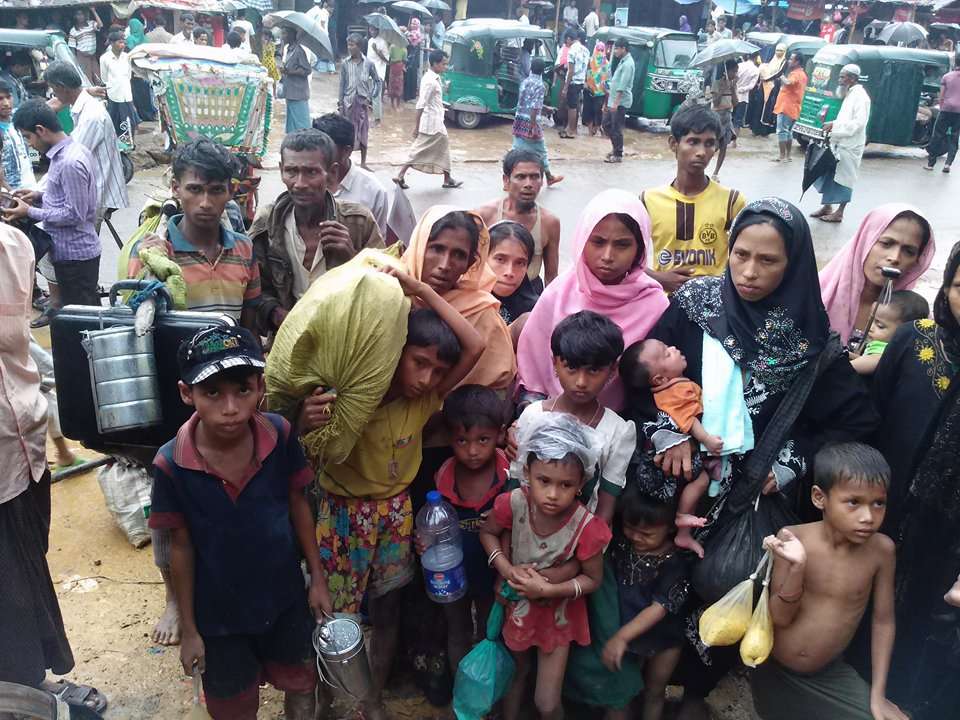
Nearly a decade after fleeing Myanmar, Rohingya refugees in Kutupalong, Balukhali and Nayapara camps remain stranded in uncertainty, with no safe path home.
Sumon Corraya
Across sprawling settlements such as Kutupalong, Balukhali and Nayapara, families who fled violence in Myanmar nearly a decade ago remain trapped in a cycle of dependency, with no clear path home.
Pope Leo urged “everyone to welcome those who are victims of persecution so that they may live in peace, with dignity, and look to the future with hope” as he marked World Refugee Day.
Speaking after the Angelus on Sunday, he reflected on the occasion marked on 20 June and this year celebrating the seventy-fifth anniversary of the signing of the 1951 Refugee Convention. This year’s theme was “Until Everyone Is Safe”.
“I hope that the spirit that inspired the drafting of this important international instrument may also continue to enlighten the consciences of national leaders today,” the Pope said. “No one can turn a blind eye to those who are seeking protection and safety.”
For the more than 1.4 million Rohingya crowded into camps in Cox’s Bazar, the day sharpens memories of loss, exile and a future suspended between dwindling aid and the fading promise of repatriation.
Across sprawling settlements such as Kutupalong, Balukhali and Nayapara, families who fled violence in Myanmar nearly a decade ago remain trapped in a cycle of dependency, with no clear path home. Since the mass exodus beginning on 25 August 2017, not a single Rohingya has returned to Myanmar, and renewed violence in Rakhine State has driven another 152,000 people into the already overcrowded camps.
“When we began our mission in Cox’s Bazar at the end of 2017, we believed that the Rohingya refugees … would soon be able to return home. However, that hope has not yet become a reality,” said Fr Jerry Raymond Gomes SJ, Jesuit Refugee Service (JRS) project director in Bangladesh.
Nearly nine years after the large-scale displacement, most refugees continue to depend entirely on humanitarian assistance, but that support is shrinking. Due to funding shortfalls, food aid has been reduced, leaving families struggling to survive. Budget constraints have forced authorities to introduce tiered rations, with refugees receiving as little as $7 to $12 per person each month depending on need.
“Rice and pulses run out halfway through the month. There is no opportunity to work outside, no way to earn,” said Rubina Begum, a 60-year-old refugee in Teknaf. “Only families receiving money from relatives abroad can manage two meals a day.”
The situation is particularly severe for vulnerable groups, including women, children, older people and persons with disabilities. With opportunities for employment limited and education still restricted, an entire generation risks growing up without prospects.

Since 2018, JRS has supported more than 8,000 Rohingya children through psychosocial care, education and protection programmes in partnership with Caritas Bangladesh. Today, the organisation continues to assist over 1,600 children, adolescents and community members through learning centres and child-friendly spaces.
Fr Gomes said young refugees continue to dream despite their circumstances, recalling a boy he meets regularly, always carrying English-language textbooks. “His commitment to learning reflects the hope he has for his future,” he said, noting that many children pursue education with determination despite overwhelming odds.
Funding shortages threaten the continuation of education and psychosocial programmes, which are essential in a context marked by trauma and uncertainty. The lack of resources also places additional strain on humanitarian workers, who must navigate fluctuating donor support and the complexity of camp life.
Across the camps, hope of returning to Myanmar continues to fade. Some refugees, driven by desperation, embark on perilous journeys by sea in search of a better future. In 2025, nearly 900 Rohingya were reported missing or dead in the Andaman Sea and the Bay of Bengal – the deadliest year on record for such crossings.
Fr Gomes said thar faith plays a central role in sustaining both refugees and those who serve them. “Their resilience, faith and dignity in the midst of hardship are a source of inspiration,” he explained, describing his work among the Rohingya as both a privilege and a calling. He emphasised that the refugees themselves remain deeply rooted in their religious beliefs – most Rohingya are Muslims – which provide strength amid suffering.
He warned that Bangladesh cannot shoulder the burden alone. The United Nations and its partners are seeking more than $700 million to meet urgent humanitarian needs, but sustaining international support is becoming increasingly difficult. Without renewed global commitment, the crisis risks slipping further into neglect.
“Let us remember our refugee brothers and sisters,” Fr Gomes urged ahead of World Refugee Day. “Let us work together to build a future where everyone can live in peace and security.”

Stay updated — add us as a preferred news source on Google:


Help us keep The Tablet’s voice independent, clear and far-reaching.
Founded in 1840, The Tablet is the leading independent English-language Catholic weekly, celebrated for great writing, astute analysis, brilliant arts and books reviews and trustworthy reporting from correspondents in Britain, Ireland, Rome and across the world.
Independent, high-quality journalism is at the heart of what we do. The Tablet does not have deep pockets and we are not funded by rich donors. If you appreciate our work please consider supporting The Tablet’s Development Fund. It only takes a moment and you can cancel at any time.
- Support with £5 per month
- Support with £10 per month
- Support with other amount.

MOST READ ARTICLES
-
1
Pope returns to Vatican after hospital discharge
-
2
Diverse schools that are 100 per cent Catholic
-
3
Under endless skies
-
4
Battling confession fatigue
-
5
Nigerian bishop scorns suggestion of running in presidential election
-
6
Schismatic Spanish nuns strip contents of convent before eviction
FROM THE EDITOR'S DESK


