How Elizabeth Anscombe’s protest changed the course of moral philosophy


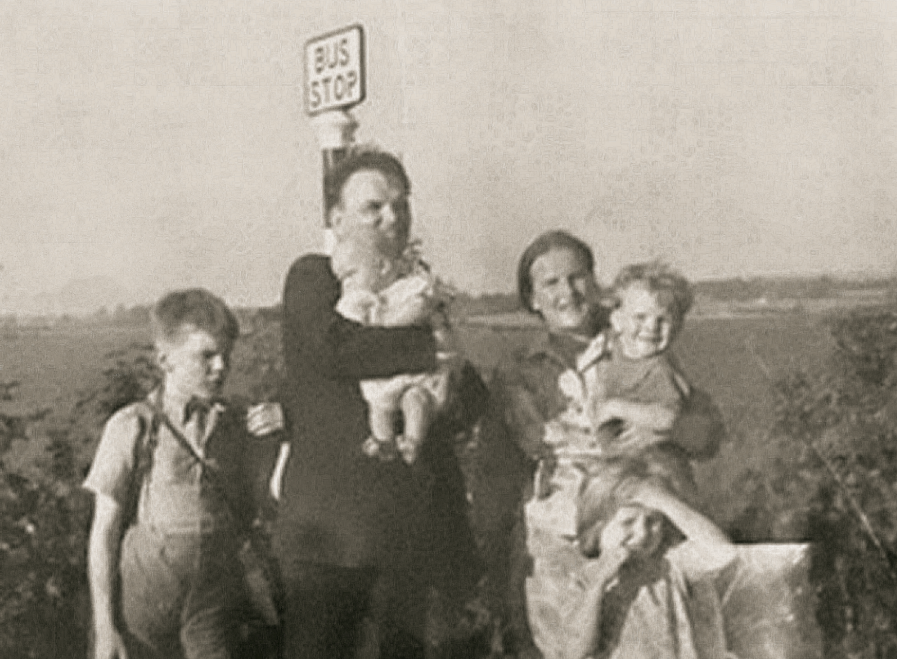
ANSCOMBE FAMILY PHOTO
REPRODUCED WITH THE PERMISSION OF REBECCA MORGAN, G.E.M. ANSCOMBE’S LITERARY EXECUTOR. ALL RIGHTS RESERVED
Seventy years ago, an obscure young Catholic academic launched a protest against Oxford’s awarding of an honorary degree to former US President Harry Truman that would have unexpected consequences for the future of moral philosophy
On 1 May 1956, the front page of the Oxford Mail declared: “An Oxford woman don caused a sensation in Convocation at Oxford today when the names of those to be honoured by the University at the Encaenia [on 20 June] were considered, by opposing the conferment of an honorary degree on Mr Harry Truman, former president of the United States.”
The Oxford don was G.E.M. Anscombe, a research fellow at Somerville College. Although known as “Miss Anscombe”, she was married to another philosopher, Peter Geach, and the mother of five children, the oldest being 12, and the youngest four months. She had converted to Catholicism as a school girl and was formally received into the Church in her first year at Oxford. She was 37, and had a research fellowship, but she did not have a permanent position. She was supported by a modest grant from the Rockefeller Foundation to edit and trans late the Nachlass of the philosopher Ludwig Wittgenstein, who had been her teacher and friend at the time of his death in 1951.
Anscombe’s protest failed miserably, with only three other people voting with her, but she briefly became famous, and when Truman came to receive his honorary degree on 20 June he was asked extensively about it. At the time, Anscombe had not written or lectured on ethics but the academic work she would do to defend her protest against objections by moral philosophers was to become influential in the recovery of modern “just war” thinking, and defending what she argued in her protest led her to write two of the most important works for twentieth-century moral philosophy: her book Intention and her most famous academic article, “Modern Moral Philosophy”.
Get Instant Access
Continue Reading
Register for free to read this article in full
Subscribe for unlimited access
From just £37.50 quarterly
Print copy of The Tablet delivered directly to your door.
Complete access to all Tablet website content including all premium content.
Access to the weekly digital copy of The Tablet.
Full access to The Tablet’s archive – over 180 years of back issues.

Already a subscriber? Login

Help us keep The Tablet’s voice independent, clear and far-reaching.
Founded in 1840, The Tablet is the leading independent English-language Catholic weekly, celebrated for great writing, astute analysis, brilliant arts and books reviews and trustworthy reporting from correspondents in Britain, Ireland, Rome and across the world.
Independent, high-quality journalism is at the heart of what we do. The Tablet does not have deep pockets and we are not funded by rich donors. If you appreciate our work please consider supporting The Tablet’s Development Fund. It only takes a moment and you can cancel at any time.
- Support with £5 per month
- Support with £10 per month
- Support with other amount.

MOST READ ARTICLES
-
1
Archbishop of Cardiff-Menevia meets with other worldwide Catholic Church leaders to discuss liturgy
-
2
Let there be light
-
3
World Humanitarian Day: aid workers face a ‘crisis of protection’
-
4
Ruling allows French private hospitals limited exemption from assisted suicide
-
5
A tract for our times
-
6
The wisdom of the saints
FROM THE EDITOR'S DESK