Cardinal Kurt Koch and the long view of Christian unity


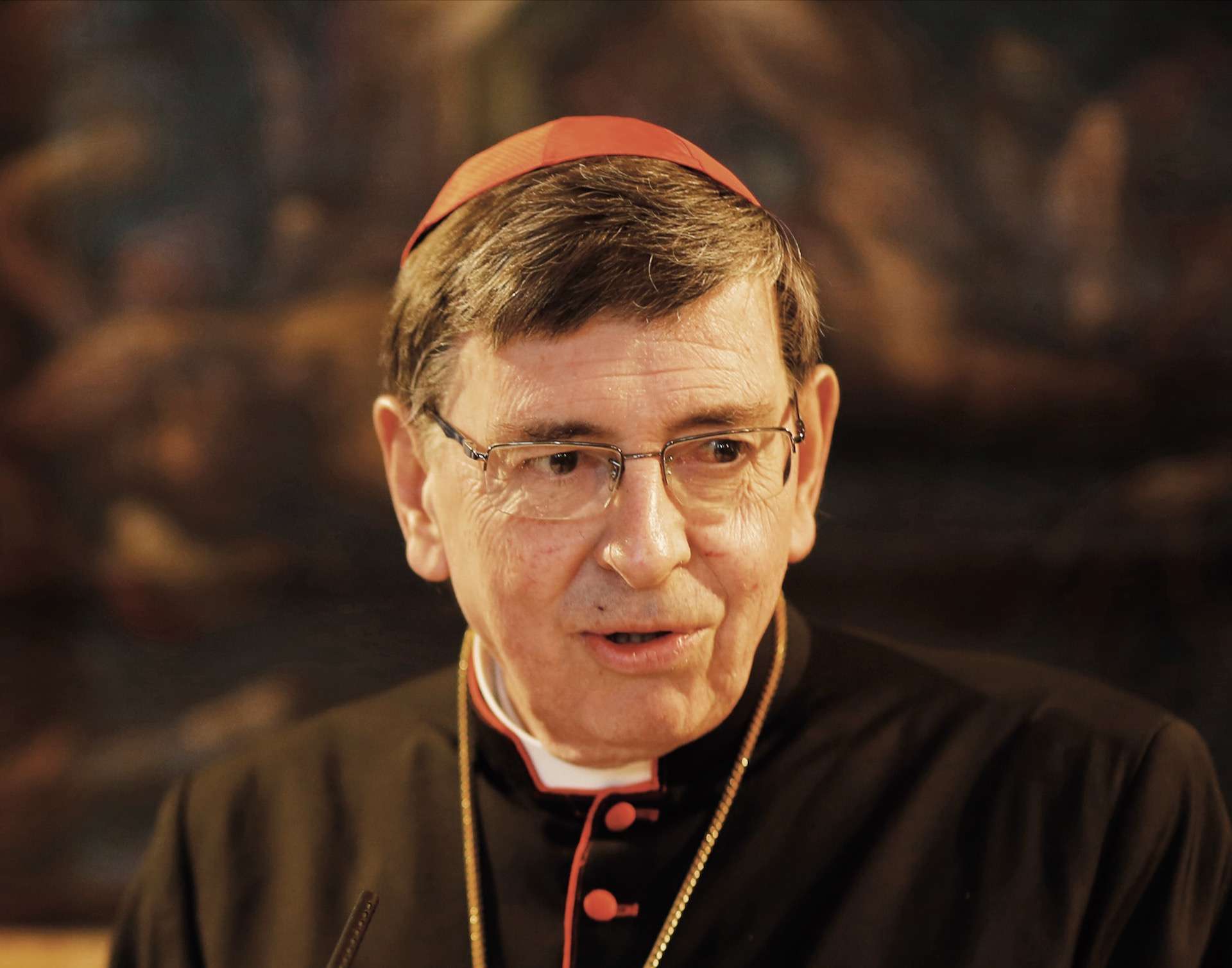
Cardinal Kurt Koch
Wikimedia Commons/RPP-Institut
The phlegmatic Swiss cardinal who has led the Catholic Church’s unity office since 2010 is preparing with cautious optimism for the historic meeting of the first woman Archbishop of Canterbury with Pope Leo XIV
Soon after announcing the Second Vatican Council in 1959, Pope John XXIII established the Secretariat for Promoting Christian Unity. Its initial purpose was twofold: to invite other Christian Churches to send observers to the council, and to prepare documents on ecumenism – an area that would become central to the council’s mission of aggiornamento. Following the promulgation of Unitatis redintegratio in 1964 – a decree that marked a decisive switch in the Catholic Church’s approach to divisions between Christians, from exhorting schismatics to return to Rome to calling for unity among the People of God – and the council’s conclusion the following year, the body was made permanent. Today, as the Dicastery for Promoting Christian Unity, it operates at the intersection of theology, diplomacy and geopolitics, charged with carrying forward one of Vatican II’s most ambitious projects.
For the past 16 years it has been led by Cardinal Kurt Koch, a former Bishop of Basel. Born in Emmenbrücke, Switzerland, in 1950 – he turned 76 on 15 March – Koch’s doctoral dissertation was on the theology of the German Protestant theologian Wolfhart Pannenberg and he has shown particular interest in dialogue with the Orthodox Churches. Appointed by Pope Benedict XVI, he remained in post under Pope Francis and continues to lead the department under Leo: a continuity figure who bridges three papacies. In addition to overseeing dialogue with other Christian Churches and ecclesial communities, Koch is also responsible for relations with Judaism through the Commission for Religious Relations with the Jews. It is an ambitious brief. At a time when geopolitical tensions are increasingly entangled with fraught ecclesial and interfaith divisions, the work of his department is as complex, and as fragile, as ever.
Get Instant Access
Continue Reading
Register for free to read this article in full
Subscribe for unlimited access
From just £37.50 quarterly
Print copy of The Tablet delivered directly to your door.
Complete access to all Tablet website content including all premium content.
Access to the weekly digital copy of The Tablet.
Full access to The Tablet’s archive – over 180 years of back issues.

Already a subscriber? Login

Help us keep The Tablet’s voice independent, clear and far-reaching.
Founded in 1840, The Tablet is the leading independent English-language Catholic weekly, celebrated for great writing, astute analysis, brilliant arts and books reviews and trustworthy reporting from correspondents in Britain, Ireland, Rome and across the world.
Independent, high-quality journalism is at the heart of what we do. The Tablet does not have deep pockets and we are not funded by rich donors. If you appreciate our work please consider supporting The Tablet’s Development Fund. It only takes a moment and you can cancel at any time.
- Support with £5 per month
- Support with £10 per month
- Support with other amount.

MOST READ ARTICLES
-
1
Pope returns to Vatican after hospital discharge
-
2
Diverse schools that are 100 per cent Catholic
-
3
Under endless skies
-
4
Battling confession fatigue
-
5
Nigerian bishop scorns suggestion of running in presidential election
-
6
Schismatic Spanish nuns strip contents of convent before eviction
FROM THE EDITOR'S DESK


