Cameroon must embrace ‘catechism of peace’ after papal visit


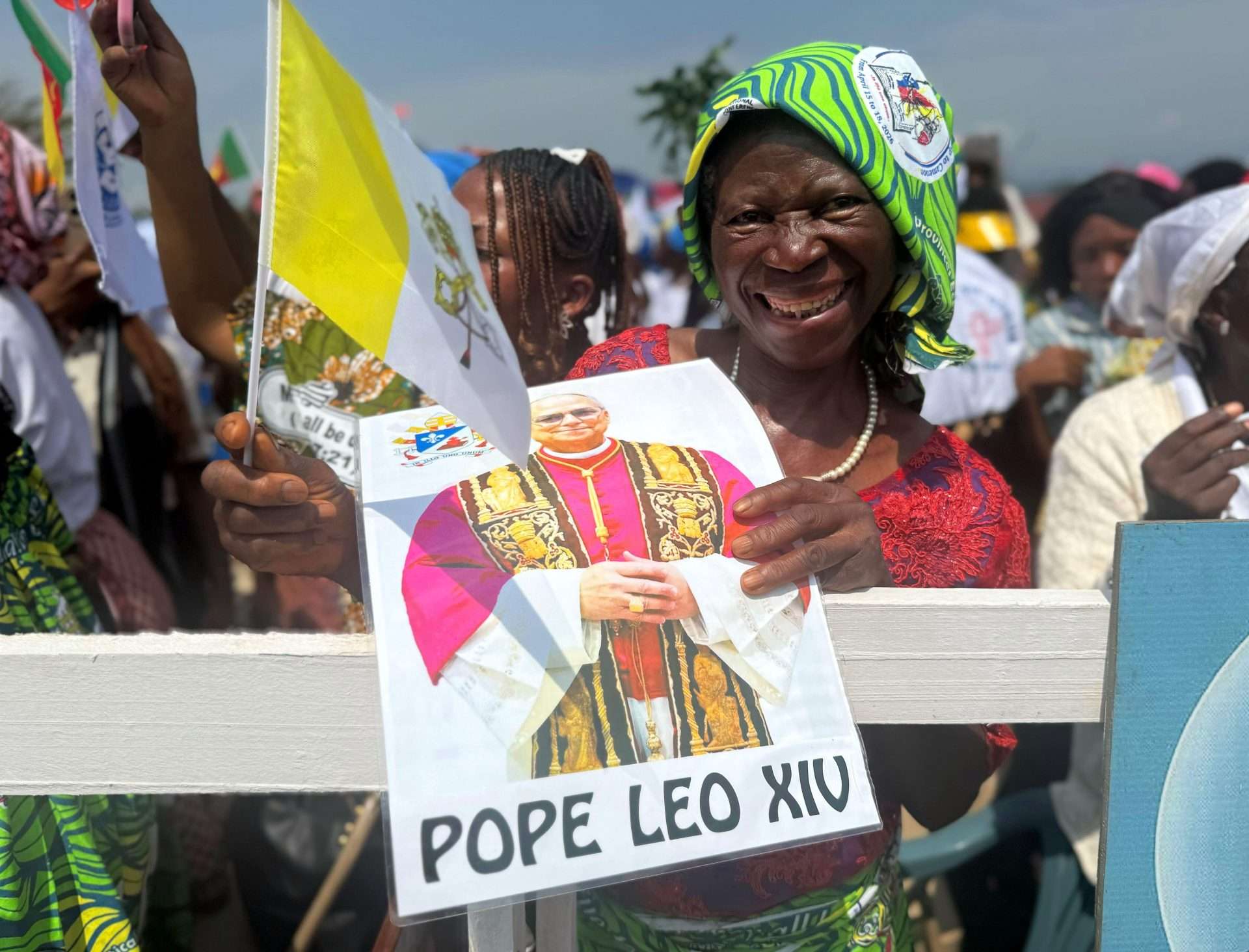
Around 20,000 people attended a Mass with Pope Leo at Bamenda International Airport.
Christoph Sator / DPA / Alamy
‘We may not return to the old landscape, but we must find a way for people to live in harmony. I don’t have the full roadmap, but it is possible to find a positive solution,’ said Bishop George Nkuo.
As Pope Leo XIV departed Cameroon after a four-day visit, Catholic leaders reflect on the meaning of his presence for the Church and Cameroonian society.
During his visit on 15-18 April, the Pope met Cameroon’s President Paul Biya, who has held power since 1982 and last year controversially won another seven-year term that will end in 1932, when the president will be 99 years. Leo also met civil society leaders, clergy and youth groups.
Pope Leo challenged Cameroonian leaders to foster good governance and ensure that development outcomes are inclusive. He urged genuine dialogue that would lead to peace and justice in society.
Archbishop Andrew Nkea Fuanya of Bamenda, the president of the National Episcopal Conference, said there were immediate, tangible benefits from the visit for his archdiocese – troubled by fighting between the government and separatist rebels – and described it as a “tremendous blessing” that was already bearing miraculous fruit.
For the first time in eight years, he said, Bamenda’s airport became operational and roads were tarred in anticipation of the Pope’s arrival, a physical restoration that mirrored a deeper spiritual awakening as both government forces and separatists “spoke the same language” to welcome him.
While the archbishop welcomed the return of life to the streets and the celebrations of the traumatised population, he warned against complacency, urging Cameroon to move beyond applause to a concrete “catechism of peace” that would institutionalise dialogue and turn Pope Leo’s words into lasting reality.
Bishop George Nkuo of Kumbo echoed these sentiments, focusing on the moral courage the Pope displayed by challenging the nation’s leaders to confront the “bad will” and corruption that have stifled development and the equitable sharing of the “national cake”.
He agreed with Leo that injustice breeds violence, and said the ongoing conflict in Cameroon’s English-speaking Northwest and Southwest regions results from “historical grievances”.
“People are disgruntled and suffering because they feel historical injustices must be righted. It requires humility from all of us to acknowledge and address this,” Bishop Nkuo said.
“We may not return to the old landscape, but we must find a way for people to live in harmony. I don’t have the full roadmap, but even amid this crisis, it is possible to find a positive solution.”
He argued that true justice requires a humble acknowledgment of the historical grievances and a radical conversion among those in power, who must serve the common good rather than their own interests.
Calling for an end to the violence in his own diocese, Nkuo emphasised that the Pope’s visit was a divine invitation for all Cameroonians – separatists and state officials alike – to examine their consciences, halt the hostilities and commit to the hard work of rebuilding a just society.
Cameroonians called to ‘transform’ society for ‘fraternity and peace’
Papal visit offers ‘crack of light’ for peace in Africa
Stay updated — add us as a preferred news source on Google:


Help us keep The Tablet’s voice independent, clear and far-reaching.
Founded in 1840, The Tablet is the leading independent English-language Catholic weekly, celebrated for great writing, astute analysis, brilliant arts and books reviews and trustworthy reporting from correspondents in Britain, Ireland, Rome and across the world.
Independent, high-quality journalism is at the heart of what we do. The Tablet does not have deep pockets and we are not funded by rich donors. If you appreciate our work please consider supporting The Tablet’s Development Fund. It only takes a moment and you can cancel at any time.
- Support with £5 per month
- Support with £10 per month
- Support with other amount.

MOST READ ARTICLES
-
1
Pope returns to Vatican after hospital discharge
-
2
Diverse schools that are 100 per cent Catholic
-
3
Under endless skies
-
4
Battling confession fatigue
-
5
Nigerian bishop scorns suggestion of running in presidential election
-
6
Schismatic Spanish nuns strip contents of convent before eviction
FROM THE EDITOR'S DESK


