‘Death presented as solution’ say Spanish bishops after euthanasia of 25-year-old


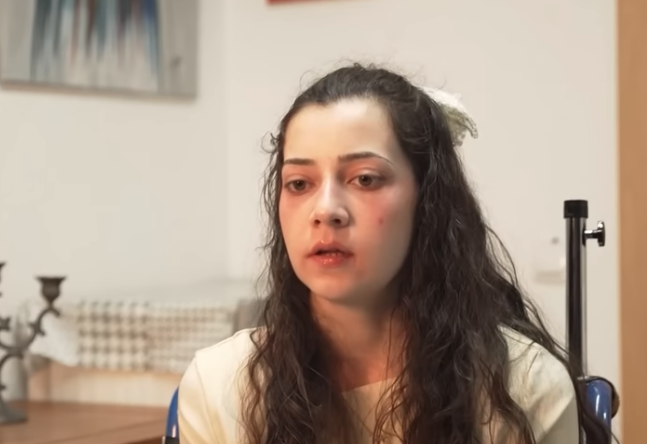
In an interview broadcast before her death, Castillo said: ‘I can’t take everything tormenting me in my head because of what I have gone through.’
Antena 3 / Youtube screenshot
‘Her situation cannot be interpreted only in the context of autonomy, but demands a deeper look, one able to acknowledge the weight of psychological suffering, solitude and despair.’
The death of a 25-year-old by euthanasia is a cause of “profound” sorrow, the Spanish bishops said, calling for stronger psychological support for the most vulnerable.
Noelia Castillo Ramos was left paraplegic after throwing herself from the top of a fifth-floor building after three men raped her in 2022.
She died by euthanasia on 26 March after a protracted legal battle. In a statement on social media the bishops’ conference said: “Today in Spain, death is presented as the solution to suffering,”
The sub-commission for the defence of the family and life of the Spanish bishops’ conference said in a separate statement that Castillo’s life had “reflected an accumulation of personal suffering and institutional deficiencies which challenge the whole of society”.
Castillo entered a children’s home in Catalonia aged 13 after her parents’ divorce. Her estranged father had fought Castillo’s desire for euthanasia with the help of the Catholic legal association Abogados Cristianos.
He argued his daughter had psychiatric problems which meant she was not in a fit mental state to make a decision on euthanasia.
Castillo had been diagnosed with Borderline Personality Disorder and Obsessive-Compulsive Disorder. Videos allegedly released by her father appeared to show Castillo walking with difficulty, aided by crutches and a walking frame.
The European Court of Human Rights in Strasbourg refused to overturn the decision of Spanish Supreme Court authorising Castillo’s death by Euthanasia, which has been legal in Spain since 2021.
In an interview broadcast on the television channel Antena 3 before her death, Castillo said: “Let’s see if I can rest because I can’t take this family any longer. I can’t take the pain. I can’t take everything tormenting me in my head because of what I have gone through.”
She said the first time she had told her father her euthanasia plans “he told me I was heartless and did not think of others and that everything I said was a lie. He hurt me.”
Castillo added: “He never calls me nor does he write to me. Why does he want me alive? To keep me in hospital?”
Her initial request for euthanasia was granted in July 2024 by the Generalitat of Catalonia, which said Castillo could not “recover” from health problems that had generated “severe dependence” and “chronic suffering”, thus fulfilling the state requirements for Euthanasia.
In a statement, Abogados Cristianos said it “deeply regretted” her death. It said this “rendered evident the severe flaws” in Spain’s euthanasia law which “fails to protect the most vulnerable”. It urged politicians to push for “urgent changes” to the law to prevent anything similar ever occurring.
The bishops’ statement continued: “Her situation cannot be interpreted only in the context of individual autonomy, but demands a deeper look, one able to acknowledge the weight of psychological suffering, solitude and despair.”
MPs weighed tangible pain against the hypothetical risk of abuse and coercion
Stay updated — add us as a preferred news source on Google:


Help us keep The Tablet’s voice independent, clear and far-reaching.
Founded in 1840, The Tablet is the leading independent English-language Catholic weekly, celebrated for great writing, astute analysis, brilliant arts and books reviews and trustworthy reporting from correspondents in Britain, Ireland, Rome and across the world.
Independent, high-quality journalism is at the heart of what we do. The Tablet does not have deep pockets and we are not funded by rich donors. If you appreciate our work please consider supporting The Tablet’s Development Fund. It only takes a moment and you can cancel at any time.
- Support with £5 per month
- Support with £10 per month
- Support with other amount.

MOST READ ARTICLES
-
1
Archbishop of Cardiff-Menevia meets with other worldwide Catholic Church leaders to discuss liturgy
-
2
Let there be light
-
3
World Humanitarian Day: aid workers face a ‘crisis of protection’
-
4
Ruling allows French private hospitals limited exemption from assisted suicide
-
5
A tract for our times
-
6
The wisdom of the saints
FROM THE EDITOR'S DESK