Georgian patriarch leaves uncertain legacy after 49-year reign


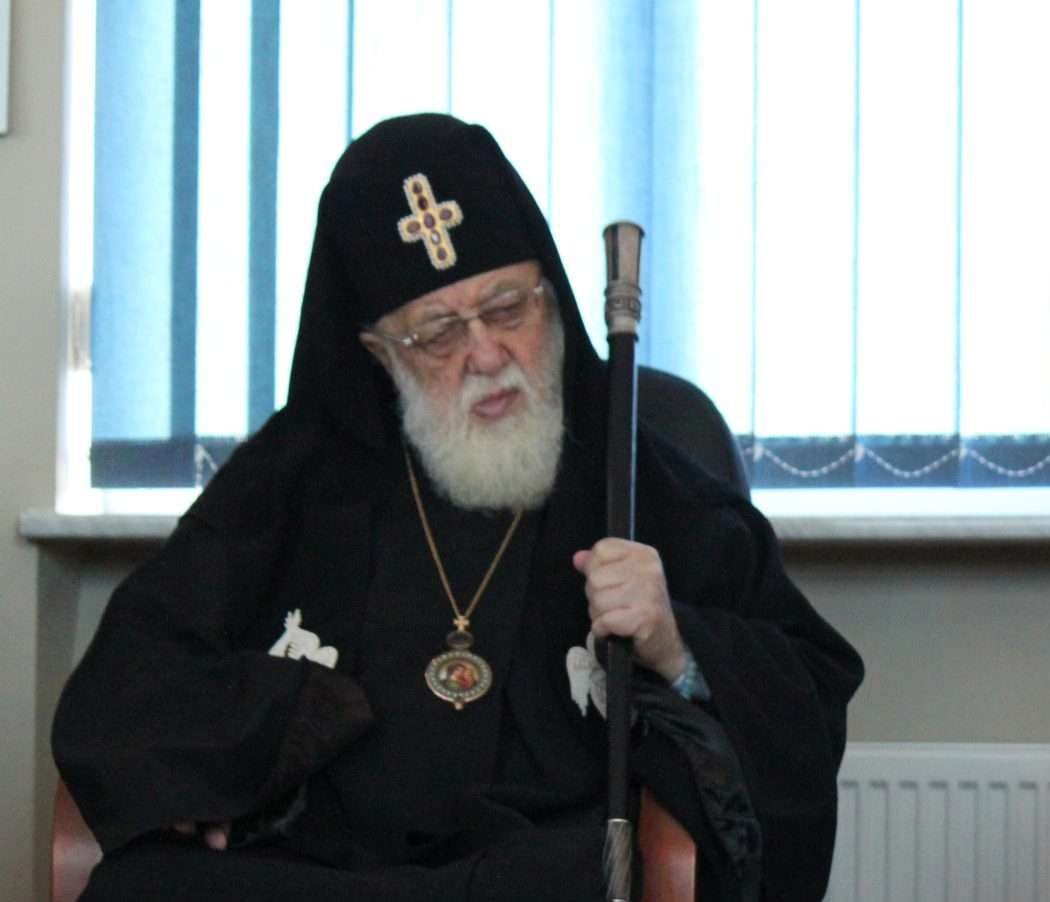
Patriarch Ilia II was elected to lead th Georgian Orthodox Church in 1977.
George Chubini / Wikimedia Commons
Patriarch Ilia II led the Georgian Church during the Soviet era, witnessing the collapse of the Soviet Union, but politicians have criticised the Church for its close ties to Moscow since.
The Patriarch of the Orthodox Church of Georgia Ilia II died on 17 March aged 93, after almost half a century on the patriarchal throne.
“During his long life, Patriarch Ilia II became a witness to the faith of the risen Lord. With his service, he supported the Georgian people in times of difficulty and radical epochal changes, protected traditions with love and filled the hearts of people and the whole society with hope,” said Pope Leo XIV in his message of condolence on Wednesday.
The patriarch remained a spiritual and moral authority in the Georgian society from his election in 1977, despite the Church’s implication in political controversy in recent years.
“In January 2008, in an effort to encourage the birth rate, he promised to become a godfather to all third and subsequent children in families. Mass baptisms were held several times a year in the Tbilisi cathedral, and the [atriarch thus formally became the godfather of more than 40,000 children,” Fr Gintaras Sungaila, an Orthodox priest of the Constantinople Exarchate in Lithuania, recalled in a social media post.
The late patriarch witnessed the reign of six popes, from Paul VI till Leo XIV.
“I cannot help but remember the moments I have witnessed first-hand: meetings with St Pope John Paul II [in 1999] and then Pope Francis [in 2016], whom, as the heirs of Peter, he hosted at his residence, as the heir of Andrew,” Bishop Giuseppe Pasotto, apostolic administrator of the Latin-rite Catholics of the Caucasus, told the news site catholic.ge.
Patriarch Ilia led the Georgian Church during the Soviet era, witnessing the collapse of the Soviet Union and the advent of the new era of religious freedom.
He took part in the major events for the country: on the night of 8-9 April 1989, he addressed the participants of the protest action on Rustaveli Avenue, and during the Russian-Georgian war in 2008 he helped to evacuate the wounded from the conflict zone and organised the transportation of the dead.
Although the Russian attack resulted in the breakdown of diplomatic relations between Georgia and Russia in 2008, and the ecclesiastical provinces of Abkhazia and Southern Ossetia were de facto annexed by the Moscow Patriarchate, the Georgian Orthodox Church maintained contacts with the Moscow Patriarchate and the Russian government.
A number of Georgian politicians and experts criticised the Church for its close ties to Moscow, warning of possible Russian influence. The last visit of Patriarch Ilia to Moscow took place in 2016.
The Georgian Orthodox Church also largely accepted the results of the 2024 parliamentary elections that observers deemed as “fundamentally flawed”, sparking mass protests against the ruling party and creating an ongoing political crisis.
In December 2025, the patriarchate suspended Archimandrite Dorote Kurashvili from priestly duties for his active participation in daily anti-governmental demonstrations in Tbilisi and public criticism of the government.
According to JAMnews, an independent media platform in the Caucasus region, Kurashvili publicly said Georgia is ruled by a pro-Russian and anti-Western government that is “dragging the country toward the abyss”.
“The Church is dying, the country is dying, and priests are staying silent,” Kurashvili said after his suspension.
Fr George Tserodze, an Orthodox archpriest from Tbilisi and an active communicator in social media, told The Tablet that since the Church recognised the legitimacy of the election, the state has no special need to demonstrate its control over the Church.
“The main problem is that our society is not free, and unfortunately the Church contributes to people agreeing to or accepting some new form of feudal relations,” he said.
Stay updated — add us as a preferred news source on Google:


Help us keep The Tablet’s voice independent, clear and far-reaching.
Founded in 1840, The Tablet is the leading independent English-language Catholic weekly, celebrated for great writing, astute analysis, brilliant arts and books reviews and trustworthy reporting from correspondents in Britain, Ireland, Rome and across the world.
Independent, high-quality journalism is at the heart of what we do. The Tablet does not have deep pockets and we are not funded by rich donors. If you appreciate our work please consider supporting The Tablet’s Development Fund. It only takes a moment and you can cancel at any time.
- Support with £5 per month
- Support with £10 per month
- Support with other amount.

MOST READ ARTICLES
-
1
Pope returns to Vatican after hospital discharge
-
2
Diverse schools that are 100 per cent Catholic
-
3
Under endless skies
-
4
Battling confession fatigue
-
5
Nigerian bishop scorns suggestion of running in presidential election
-
6
Schismatic Spanish nuns strip contents of convent before eviction
FROM THE EDITOR'S DESK