Chaldean patriarch resigns as arrested US bishop replaced


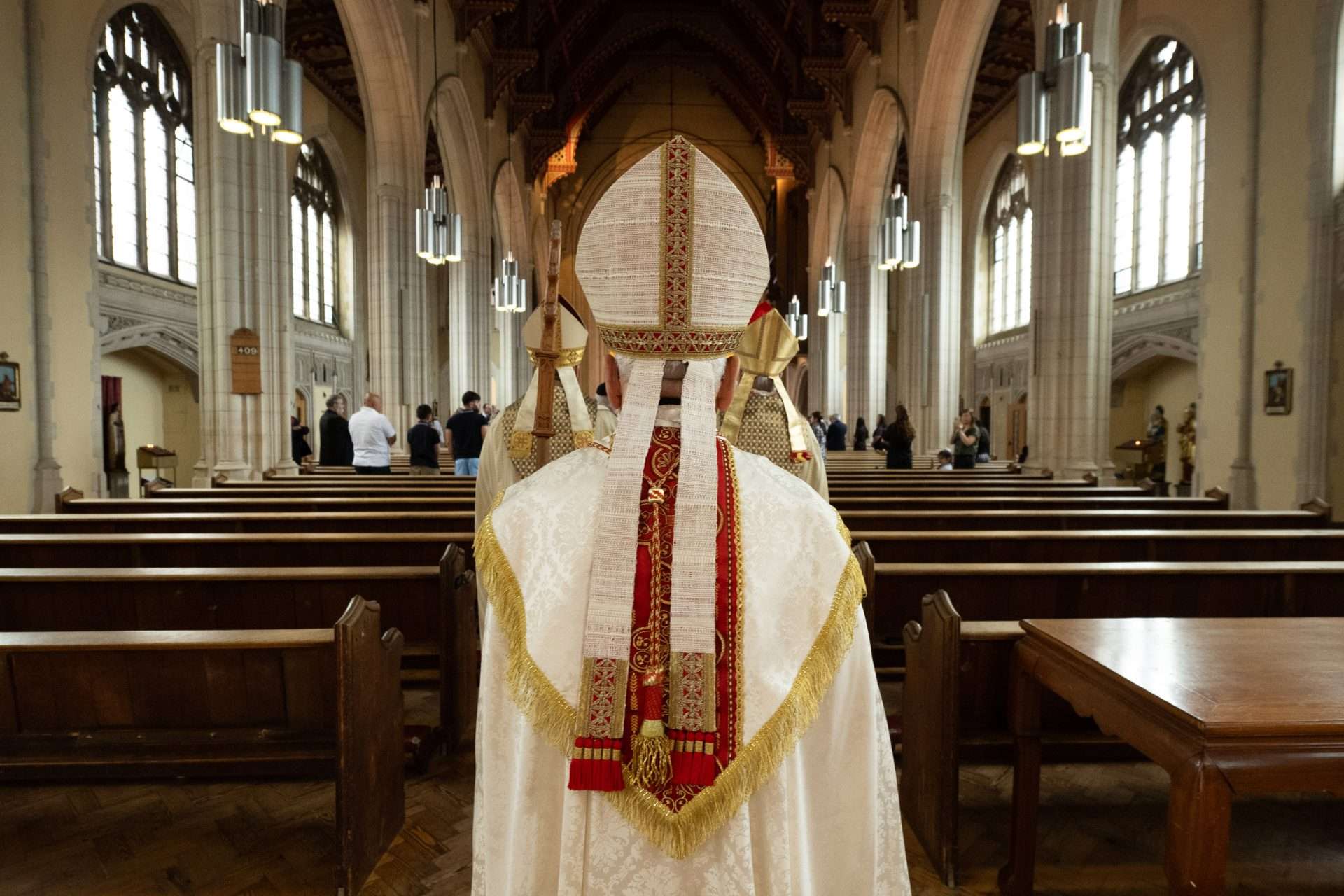
The Patriarch of Babylon Cardinal Louis Raphaël I Sako in Ealing during a visit to the UK in 2023
Catholic Church in England and Wales / Mazur
‘To prevent any misinterpretation, I confirm that no one forced me to do this,’ said Patriarch Sako, ‘rather, I requested the resignation of my own will.’
Cardinal Louis Raphaël I Sako has resigned as Patriarch of Babylon and head of the Chaldean Catholic Church.
The Holy See announced on Tuesday that Pope Leo had accepted the patriarch’s resignation. In his own announcement, the patriarch confirmed he had submitted his resignation on Monday after deciding to “dedicate myself to prayer, writing and simple service”.
“To prevent any misinterpretation, I confirm that no one forced me to do this,” he said, “rather, I requested the resignation of my own will.”
The same day, the Holy See announced the resignation of Bishop Emanuel Hana Shaleta from the Chaldean Eparchy of St Peter the Apostle of San Diego, spanning the western half of the United States.
It also announced the appointment of Bishop Saad Han Sirop as apostolic administrator of the eparchy.
A notice the same day from the US Conference of Catholic Bishops said the Pope had accepted 69-year-old Bishop Shaleta’s resignation in February. The Pillar website reported that he had submitted it in January after a Vatican investigation into allegations of financial and personal misconduct.
Californian police arrested Shaleta on 5 March at San Diego International Airport “while attempting to leave the country”, according to the San Diego County Sheriff’s Office.
On Monday he appeared before a judge and pleaded not guilty to eight counts of embezzlement, eight of money laundering and a further count of “aggravated white collar crime enhancement”, applicable in state law to financial crimes exceeding $100,000.
The sheriff’s office said it had first received information about the bishop from a church representative in August.
Following Shaleta’s arraignment, the eparchy published a statement from its priests asking “the Lord to protect our eparchy and bishop from all of the negative attacks” and declaring “solidarity” with them.
On 21 February, the Chaldean Patriarchate had issued a statement acknowledging that members of the eparchy “have filed complaints concerning Bishop Emmanuel Shaleta in relation to the mishandling of certain diocesan funds and allegations of inappropriate relationships”.
“This information has circulated on social media platforms before all facts were fully clarified,” it said. “Allegations or complaints require careful and objective review and should not be resolved outside of the appropriate process.”
The statement confirmed that the Holy See had investigated the allegations with the cooperation of the patriarchate.
Following Shaleta’s arrest, Patriarch Sako sent a pastoral letter to the eparchy over the weekend urging its members not to “give place to voices lying in wait to attack our Church” but to commit to “unity and harmony with a living conscience and a compassionate, faithful heart, far from the spirit of revenge or vindictiveness”.
“Let the legal procedures take their course in revealing the truth and upholding justice,” he said. “I assure you that I stand with justice, and for this reason I am in communication with the Holy See, hoping that the proper measures will soon be taken for the good of the diocese.”
Bishop Sirop, whom the Pope appointed as its apostolic administrator, is an auxiliary bishop for the Patriarchate of Baghdad and was apostolic visitor for the Chaldean community in Europe until July last year.
As a priest in Baghdad, he was kidnapped by Al-Qaeda in 2006 and held for 28 days, reportedly suffering torture, and has since become a prominent advocate for the Christian community in Iraq.
Sirop was one of five bishops who refused to attend the Chaldean synod of bishops called by Patriarch Sako in July 2024, alleging canonical irregularities, prompting Sako to submit a report to Rome demanding penalties against them. Sirop has clashed with the patriarch on other occasions and reportedly resigned from his post as apostolic administrator last year in protest at his conduct.
The Chaldean Church is one of 23 sui iuris Eastern Catholic Churches in union with Rome, governed by the Code of Canons of Eastern Churches.
Although historically rooted in Iraq, the decline of the country’s Christian population – from 1.5 million before 2003 to less than 200,000 today – has seen many Chaldeans emigrate and much of the Church’s financial support shift to the diaspora, particularly in the US.
As Patriarch of Babylon from 2013, Sako emphasised the importance of Christians remaining in Iraq despite instability and threats from Islamists.
“I led the Chaldean Church under extremely difficult circumstances and amid great challenges,” he said in his resignation announcement on Tuesday. “I preserved the unity of its institutions and spared no effort in defending it and the rights of Iraqis and Christians, taking positions and maintaining a presence both inside and outside the country.”
Sako said that when he turned 75 in 2024 he discussed retirement with Pope Francis who encouraged him to continue in post. The late pontiff had made him a cardinal in 2018, and last year he took part in the conclave that elected Pope Leo.
Under the Code of Eastern Canons, the synod of bishops must meet to elect a successor to Sako within a month of the vacancy.
“In these difficult times, I hope that the leadership of the Chaldean Catholic Church will be entrusted to a patriarch who possesses solid theological culture, courage and wisdom – someone who believes in renewal, openness and dialogue, and who also has a sense of humour,” Sako said.
“I will respect him and never interfere in his work. I am confident that God will take care of His Church.”
Patriarch Sako: Vatican does not respect Eastern Churches
College of Cardinals – a pope from the East?
Stay updated — add us as a preferred news source on Google:


Help us keep The Tablet’s voice independent, clear and far-reaching.
Founded in 1840, The Tablet is the leading independent English-language Catholic weekly, celebrated for great writing, astute analysis, brilliant arts and books reviews and trustworthy reporting from correspondents in Britain, Ireland, Rome and across the world.
Independent, high-quality journalism is at the heart of what we do. The Tablet does not have deep pockets and we are not funded by rich donors. If you appreciate our work please consider supporting The Tablet’s Development Fund. It only takes a moment and you can cancel at any time.
- Support with £5 per month
- Support with £10 per month
- Support with other amount.

MOST READ ARTICLES
-
1
Archbishop of Cardiff-Menevia meets with other worldwide Catholic Church leaders to discuss liturgy
-
2
Let there be light
-
3
World Humanitarian Day: aid workers face a ‘crisis of protection’
-
4
Ruling allows French private hospitals limited exemption from assisted suicide
-
5
A tract for our times
-
6
The wisdom of the saints
FROM THE EDITOR'S DESK