The journey of the Magi is a potent parable of our own lives


The feast of the Epiphany ("manifestation"), which entered the Western calendar from the East in the fourth century, is to all intents and purposes a second celebration of Christmas.
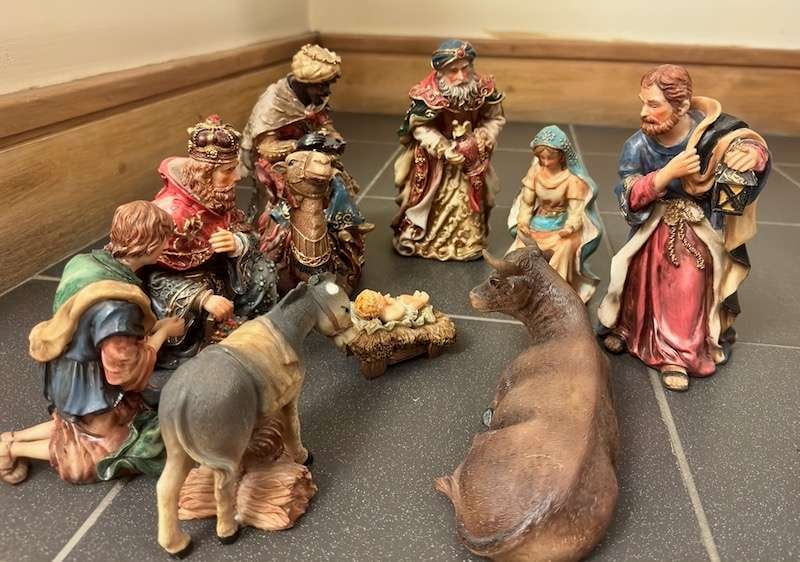
Photo by Ruth Gledhill
EPIPHANY 2026
The feast of the Epiphany (“manifestation”), which entered the Western calendar from the East in the fourth century, is to all intents and purposes a second celebration of Christmas. We in the West have always made more of Christmas Day, but Eastern Christianity still places greater liturgical emphasis on the Epiphany, by gathering together into one celebration all the occasions when Jesus is “manifested” as the Christ: at his birth, at the arrival of the Magi, at his baptism in the Jordan, and at the wedding feast of Cana, the best known and most cheering of all Jesus’ miracles, which John calls “the first of his signs”.
Even in the Western calendar, however, Christmas Day and the Epiphany differ in emphasis. Christmas Day accentuates the particularity of Christ’s birth as an individual human being, in a specific time and place; the Epiphany emphasises that the coming of Christ reaches into every corner of creation, beyond every confine of culture, race or religious identity. The revelation of Christ to the Magi, or Wise Men, from the East (sometimes referred to, though without biblical warrant, as the Three Kings) affirms that the world’s Saviour came to save not a particular élite or sect or nationality or race, but all humankind. It affirms, in other words, that the Church, in its very essence, is Catholic or, as the Second Vatican Council taught, the “universal sacrament of salvation” (§48).
The Epiphany is the feast of hope. It proclaims that there is no doubt about how the drama of existence will end. No matter how trying or tragic our lives may be, no matter what cataclysms the world may face, the Epiphany declares that the purpose of creation is divinely and therefore benignly ordained. In Christ, God himself has entered into the drama, has undergone every aspect of our living and dying, and has risen, victorious, from death to life. All we now need do is follow, in the certain knowledge that no matter what clouds may gather around us, the goal is assured. We now know that even that which we most dread, death, is but our entry into the incomprehensible life of God, the embrace of our tender, loving Father.
That’s why the journey of the Magi is a potent parable of our own lives, as we too journey homewards. No other journey is more certain. God has not only given us his word: he has become flesh in his Word. Nobody who seeks truth, integrity and goodness; nobody, in other words, who, even unknowingly, sincerely seeks Him, will fail to find him, perhaps implicitly in this life, but fully, explicitly and perfectly in the next.
And so, trusting that nothing in our lives is wasted or without value or lost, we can persevere in doing good, in any way we can, however inconspicuous, however modest. We can live generously and selflessly, in the knowledge that kindness is infinitely more precious than cleverness. We can continue steadfast and constant in our relationships and commitments; and if we have fallen away from those commitments or lost our way, the door is open for our return: we need only enter, confident that, as St Paul reminds us, “all things work for the good of those who love him”.
Doubtless each of us brings into the New Year many of our old worries and weaknesses, our “pains and predilections” (Amy Jeffs), and certainly none of us knows what the future will bring or how much longer our lives will last. But we do know that the world God has created, with its entire history and each of our lives, is enfolded in his love and safely kept in his grace.

Help us keep The Tablet’s voice independent, clear and far-reaching.
Founded in 1840, The Tablet is the leading independent English-language Catholic weekly, celebrated for great writing, astute analysis, brilliant arts and books reviews and trustworthy reporting from correspondents in Britain, Ireland, Rome and across the world.
Independent, high-quality journalism is at the heart of what we do. The Tablet does not have deep pockets and we are not funded by rich donors. If you appreciate our work please consider supporting The Tablet’s Development Fund. It only takes a moment and you can cancel at any time.
- Support with £5 per month
- Support with £10 per month
- Support with other amount.