The bells ring out in praise of God, even when the people are silenced


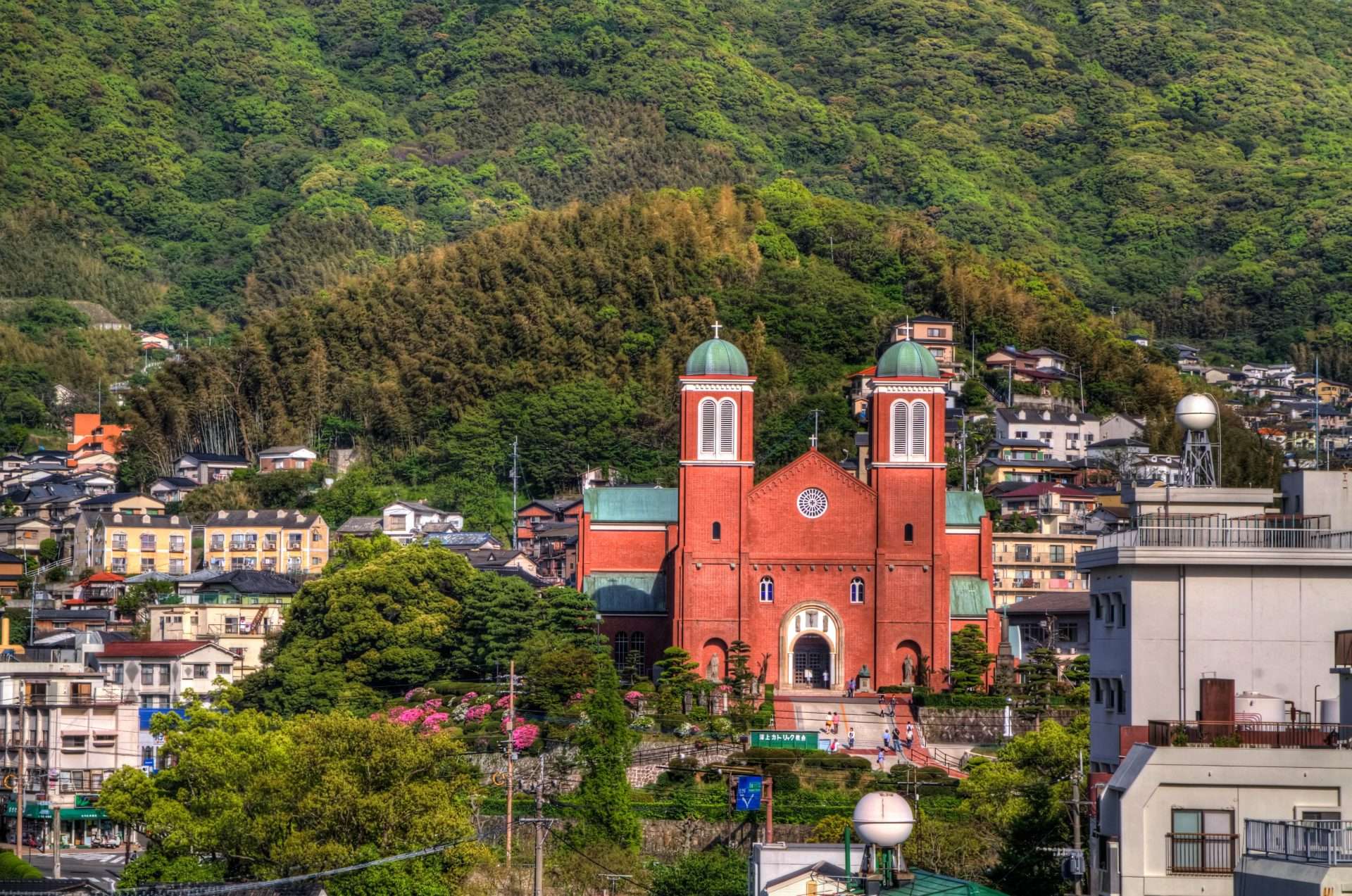
Urakami Cathedral in Nagasaki was destroyed by the atom bomb on 9 August 1945 and rebuilt in 1959, but with only one of its two bells restored.
Ronald Woan / flickr | Creative Commons
An address at the installation ceremony for the Kateri Bell of Hope in Urakami Cathedral on 17 July, to replace the original destroyed in the atomic bombing of Nagasaki on 9 August 1945
In the gospel of Luke, we read of when Jesus, near the end of his earthly life, rode into Jerusalem on a colt. As he did so, the people cried out in praise of Him. The Pharisees instructed Jesus to rebuke his disciples and make them stop, to which he replied, “I tell you, if they keep silent, the stones will cry out.” (Luke 19:40)
This passage is referenced in liturgical and theological understandings of the meaning and importance of church bells. That is, it is the minerals in the stones that comprise the material substance of the bells. When the bells ring, then, they are singing out in praise of God, even when the voices of the people have been silenced.
I think such an understanding is particularly appropriate for the Catholics of Urakami, of Nagasaki, in that they were for years silenced, both by centuries of persecution and then by the destruction of the American-made bomb that was dropped on this cathedral and this community.
The Latin words on the new bell, which are the same words that were on the original bell, convey this idea. The Latin inscribed on the bell reads:
“I sing to God with a constant ringing in the place where so many Japanese martyrs with honour have worshipped and have, by their example, called their brothers and sisters and their descendants to the fellowship of the true faith and of heaven.”
Pope John Paul II came here to Nagasaki in 1981, the first pope in history ever to have done so. Three years later he published an apostolic letter, Salvifici Doloris, his theological reflection on the meaning of suffering. I think he very much had Nagasaki and Hiroshima in mind when he wrote this apostolic letter, in that he makes reference to the heavy burden of death and suffering during the Second World War, of the “incomparable accumulation of sufferings” during the time, and of the horrible threat of nuclear war.
In Salvifici Doloris, Pope John Paul II identifies two responses that suffering evokes, namely, compassion and respect. More than 600 people have given to the bell project. Many of them knew very little of the suffering that occurred on the ground in this place. When they did learn of it, compassion and respect have often characterised their responses. In comments to me and in notes accompanying their donations, American Catholics have expressed sorrow, regret, sadness and a wish for forgiveness and reconciliation. And they have also communicated respect, admiration, appreciation, and a sense of having been deeply inspired by the courage, fortitude, joy, and perseverance of the Nagasaki faithful. Let me provide you a couple of examples.
One person wrote: “May the ringing of these bells continue to remind the people of Nagasaki of our sorrow for what their people have endured and reassure them of ours and God’s love for them.”
Another said: “I … am fascinated by the faith and courage of the Catholics in Japan over the centuries. Every Christian should learn the history of the Catholics in Japan, as an inspiration in a lesson in humility and perseverance and the power of faith.”
Relatedly, others have written more specifically about war, a desire for peace, and a wish to finally bring an end to all nuclear weapons. Here are a couple of examples:
“May the second Nagasaki Church bell be re-installed and ring aloud with its right sibling for the end to war and nuclear disarmament.”
Another wrote: “This donation for the bell is to heal the wounds of this war and progress to world peace.”
We are grateful to Moriuchi-san for first suggesting the idea of giving the bell and to Archbishop Nakamura and Fr Yamamura for cooperating with our efforts. It is our hope and prayer that this “Kateri Bell of Hope” will bear much fruit, including in fostering peace, hope, and greater solidarity between Japanese and American Catholics.
On behalf of all of those who have given to the project, we thank you for the great honour it has been to be a part of restoring this bell to you, to your community, and to your beautiful cathedral.
James Nolan Jr is a professor of sociology at Williams College, Massachusetts, and led fundraising for in the US for the new bell for the Cathedral of the Immaculate Conception in Urakami.

Help us keep The Tablet’s voice independent, clear and far-reaching.
Founded in 1840, The Tablet is the leading independent English-language Catholic weekly, celebrated for great writing, astute analysis, brilliant arts and books reviews and trustworthy reporting from correspondents in Britain, Ireland, Rome and across the world.
Independent, high-quality journalism is at the heart of what we do. The Tablet does not have deep pockets and we are not funded by rich donors. If you appreciate our work please consider supporting The Tablet’s Development Fund. It only takes a moment and you can cancel at any time.
- Support with £5 per month
- Support with £10 per month
- Support with other amount.

MOST READ ARTICLES
-
1
German bishops commit to global Synod process despite delay to reforms
-
2
The Tablet poem
-
3
Battling confession fatigue
-
4
Bangladesh Christians ask president to help ease missionary visa restrictions
-
5
Catholic Social Teaching and universities
-
6
Nigerian first lady suffered death threat for practising Christian faith
FROM THE EDITOR'S DESK