None of us has any grounds for thinking ourselves one whit better than any other human being


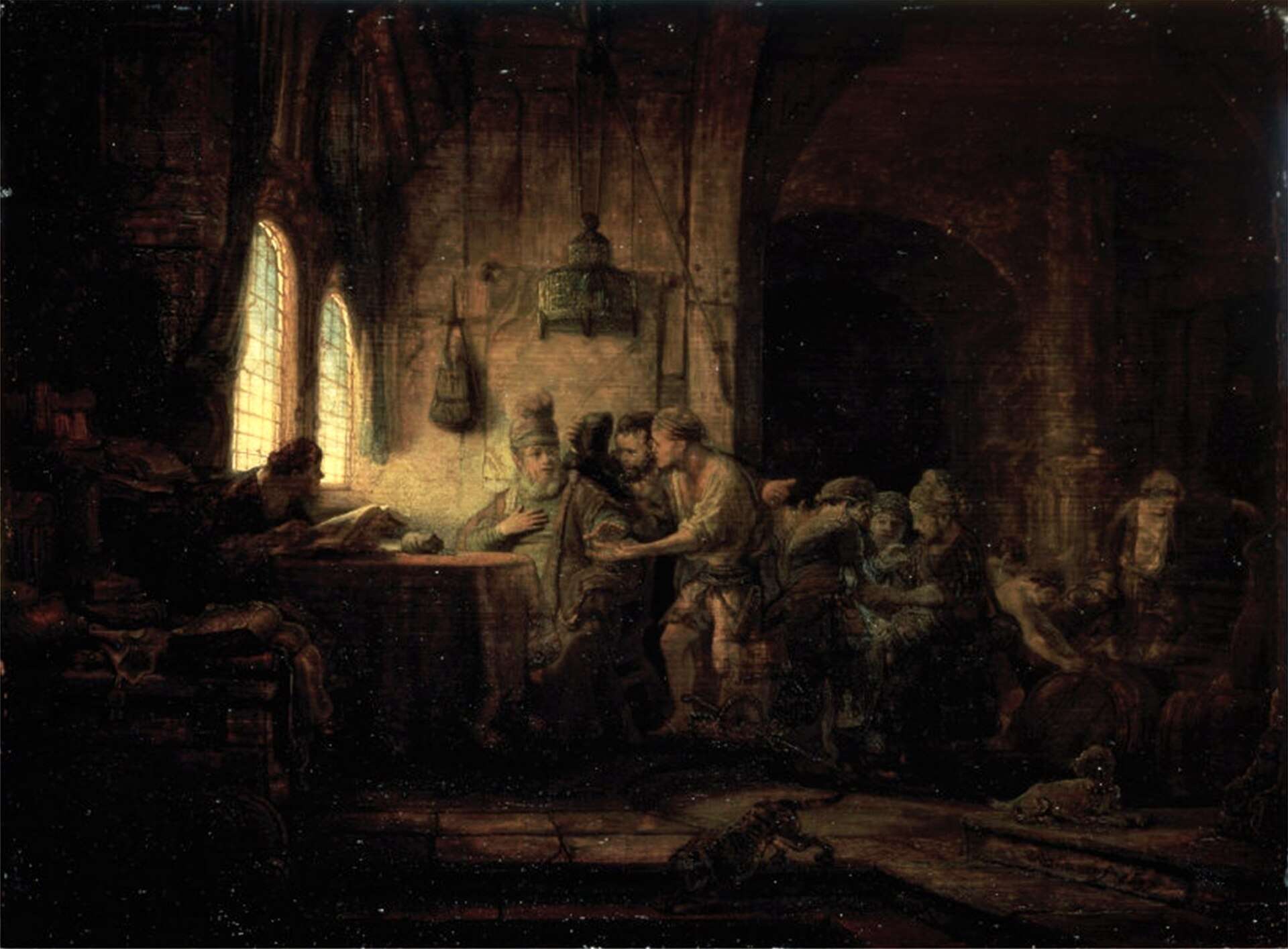
Parable of the Labourers by Rembrandt (1637)
Wikimedia Commons
A 25 |20 SEPTEMBER 2026 | MATT 20:1-16 THE PARABLE OF THE LABOURERS IN THE VINEYARD
The practice of hiring casual labour on a pay-by-day basis was standard at British dockyards until the middle of the last century, but it could be seen still until much more recently in certain parts of the country where men, mainly migrant workers, gathered on designated street corners, waiting to be exploited in backbreaking labour by unscrupulous bosses for a pittance.
The same practice is at the heart of this parable. But, familiar as the scene would have been to those who first heard the parable, its outcome would have been totally unexpected: everyone is hired and all receive a full day’s pay, regardless of how long they have laboured. All benefit equally, in other words, from the vineyard owner’s generosity. That’s the comforting aspect of the parable.
The parable’s disturbing aspect is the attitude evinced by those who had worked the longest: to them, the good fortune enjoyed by the latecomers was unacceptable, amounting to an injustice. In truth, their complaint had nothing to do with justice: it was born of resentment and envy.
Their reaction, however unjustified, was and is not unusual. Most of us would feel badly done by if we discovered that our subordinate or someone who did less was paid as much as we were. Like them, we might have been perfectly content with our own more-than-adequate salary, until we heard that others were being paid the same for doing less work or shorter hours. The tendency to estimate our value by comparison with others is at the heart of this parable about pay-differentials.
At the beginning of the day, the workers first hired were happy to have a day’s work for a day’s wage. But by the end of the day, they were far from happy. But why? After all, nothing had changed: the agreement had been honoured and they had got their expected pay. But those first hired resent the vineyard owner’s generosity, as if somehow the good fortune of the latecomers diminished their own good fortune.
As with last week’s parable of the unjust steward, who refused to show to his debtor the same mercy he himself had been shown by the master, so this further example of dark mindedness leaves us in no doubt of the truth of Original Sin. For what conceivable reason could anyone begrudge the good fortune of others, especially when it neither exceeds nor diminishes one’s own?
This parable of the labourers in the vineyard is one of the so called Parables of the Kingdom, each of which describes an entirely new framework of understanding, different from the conventional expectations and assumptions of the world as we have shaped and fashioned it. They each afford a glimpse into God’s original creation, lost by Original Sin.
Within the perspective of this new understanding, many of this world’s cherished values are shown to be dis-values; what are thought to be critical needs are shown to be ephemeral wants; and within the perspective of the Kingdom, roles are reversed: the first are last and the last first; the powerful are left behind, the lowly exalted; the greatest is the one who serves. Rank, achievement, and self-regard are shown to count for nothing, alongside the New Law of love: “Behold, I give you a new commandment: love one another as I have loved you.”
This parable powerfully illustrates, then, that no matter how grand we are by birth or fortunate by circumstance, or how feted we are for our achievements, or praised even for our virtue, none of us has any grounds for thinking ourselves one whit better than any other human being. We all come into this world with nothing, and each of us leaves it in the same state. In between, the most significant thing about us all, equally and without distinction, is that we are the recipients of unmerited gifts of both nature and grace.
The ultimate and most important truth about us is not gleaned from comparison with anybody else, whether favourable or unfavourable, but only with reference to the glorious gratuitousness of God’s generosity. St Francis of Assisi says in one of his Admonitions, “Blessed is the servant who esteems himself no better when he is praised and exalted, than when he is considered worthless and despicable: for what we are before God, that we truly are.” Nothing more, but also and just as important, nothing less.

Help us keep The Tablet’s voice independent, clear and far-reaching.
Founded in 1840, The Tablet is the leading independent English-language Catholic weekly, celebrated for great writing, astute analysis, brilliant arts and books reviews and trustworthy reporting from correspondents in Britain, Ireland, Rome and across the world.
Independent, high-quality journalism is at the heart of what we do. The Tablet does not have deep pockets and we are not funded by rich donors. If you appreciate our work please consider supporting The Tablet’s Development Fund. It only takes a moment and you can cancel at any time.
- Support with £5 per month
- Support with £10 per month
- Support with other amount.

MOST READ ARTICLES
-
1
The Tablet poem
-
2
Battling confession fatigue
-
3
Pope Leo announces operation to remove growth in lung
-
4
Catholic Social Teaching and universities
-
5
Nigerian first lady suffered death threat for practising Christian faith
-
6
Refugees admire ‘talent’ and ‘understanding of the topic’ of young competition winners
FROM THE EDITOR'S DESK