The light of Christ enlightens all who know their need of sight, insight, and faith


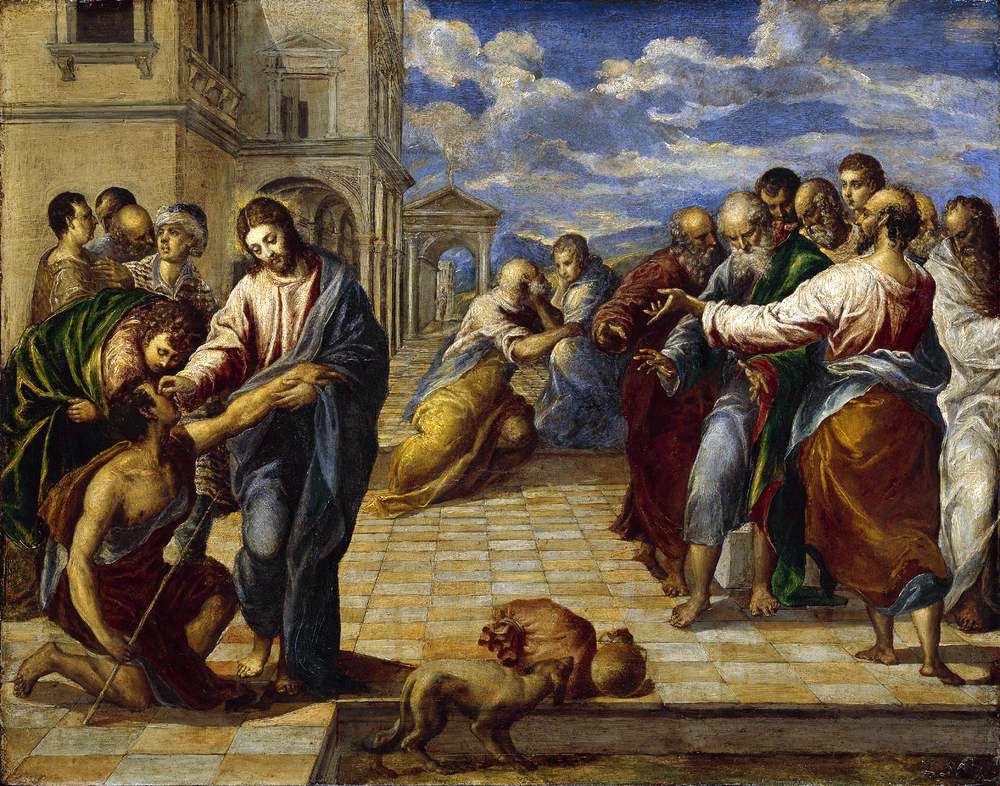
Healing of the Man Born Blind, painted by El Greco in 1567
LENT 4A| 15 MARCH 2026 | JOHN 9 1-41 THE MAN BORN BLIND
There are many instances in the gospels of Jesus restoring sight to the blind, but this is different. This man was blind from birth, so Jesus was giving him something he had never had. The gift of sight is given to him for the first time. The gift of sight, however, is the prelude to an even greater gift: the gift of insight, specifically the insight that is faith. The blind man’s real enlightenment comes about when he’s enabled, by the light of faith, to see who Jesus is, the light of the world. With his words, “Lord, I believe”, he acknowledges that Jesus is the source not only of his sight, but of his whole being. This moving episode makes it clear that the gift of faith, by which we share even now in God’s own knowledge and life, is infinitely more life-changing, even than the gift of sight.
As with last week’s gospel about Jesus’ meeting with the Samaritan woman at the well, John sees this encounter as summing up the entire gospel message, solemnly announced in the majestic prologue to his gospel: Jesus, the Word made flesh, the Light of the World, has come into the world to enlighten all human beings, without exception. The early Church quickly came to see in this encounter a vivid illustration of baptism, the sacrament of faith. Some of the very earliest Christian writers, Justin Martyr (100-65), for instance, spoke of baptism as ‘enlightenment’. Again, there are no fewer than seven catacomb paintings illustrating this miracle, all of them associated with the sacrament of baptism. And from the third century, and possibly earlier, the account of this healing was used liturgically in the preparation of catechumens for baptism. Specifically, it was used in the third Great Scrutiny, when the candidates were asked, as was the man born blind, if they believed that Jesus is the Son of God, to which they would reply, using the blind man’s words: “I do believe, Lord.”
The story’s connection to baptism can be seen in other ways. Jesus’ use of spittle might strike us as odd, but until the reform of the liturgy after Vatican II, the priest would anoint the child’s lips with his own spittle at the beginning of the baptismal rite. Though most moderns would now find it unacceptable from the point of view of hygiene, spittle was widely used for medicinal purposes in the ancient world. The spittle of a distinguished person was thought to be especially curative. The Roman historian, Tacitus (56-120AD), tells of a visit of the Emperor Vespasian (9-79AD) to Alexandria, where he cured a man’s eye-disease with his spittle; Pliny (d.79AD) has a whole chapter of his natural history on the healing power of spittle.
Notwithstanding modern sensibilities, we, along with most other animals, instinctively use spittle to relieve pain, when we, for instance, burn a finger or hit our thumb with a hammer. A parent’s ‘kissing it better’ is an example of the same instinct; and ‘licking your wounds’ had a literal meaning before it became a metaphor. The clinching baptismal significance of the episode is the fact that the blind man’s healing was complete only when he’d washed himself in the pool of Siloam. If, as St Augustine (354-430) says in his commentary on John’s gospel, the man born blind represents the entire human race in need of enlightenment, so his miraculous healing also represents what has been given to each of us in the gift of faith: not mere sight, but insight, the gift which enables us to recognise that Christ, the Light of the World, is the light by which we see everything, in both life and death. And, like the man born blind, what we were given in faith is not just a faculty of recognition, but the capacity for living differently, for living with God’s own life, manifest here and now in faith, hope, and love.
And, finally, as with so many other episodes in the gospels, Jesus turns our conventional perspective inside out. The story starts with the supposed ‘sinner’ – physical defects being then associated with sin – receiving the gift of sight for the first time. But it ends with the supposedly ‘righteous’, in this case the Pharisees, being blinded by their prejudice and self-assuredness. The episode ends, in other words, on the sober note of judgment, not judgment from on high but from within, the self-judgment of the Pharisees who, despite all they have witnessed, are nevertheless still blind, not only to the Light of the World, but even to their own blindness. The light of Christ enlightens all who know their need of sight, insight, and faith; but it serves only to deepen the darkness of those who think they see more clearly than anyone else.

Help us keep The Tablet’s voice independent, clear and far-reaching.
Founded in 1840, The Tablet is the leading independent English-language Catholic weekly, celebrated for great writing, astute analysis, brilliant arts and books reviews and trustworthy reporting from correspondents in Britain, Ireland, Rome and across the world.
Independent, high-quality journalism is at the heart of what we do. The Tablet does not have deep pockets and we are not funded by rich donors. If you appreciate our work please consider supporting The Tablet’s Development Fund. It only takes a moment and you can cancel at any time.
- Support with £5 per month
- Support with £10 per month
- Support with other amount.

MOST READ ARTICLES
-
1
Under endless skies
-
2
Leo pleas for besieged Ukrainian town in call with Putin
-
3
Battling confession fatigue
-
4
Restless statelessness
-
5
Pope Leo thanks staff at Mass in Gemelli Hospital
-
6
Study finds German dioceses failed to guard against spiritual abuse in lay groups
FROM THE EDITOR'S DESK


