Ignore the penny catechism on prayer: it is pure gift


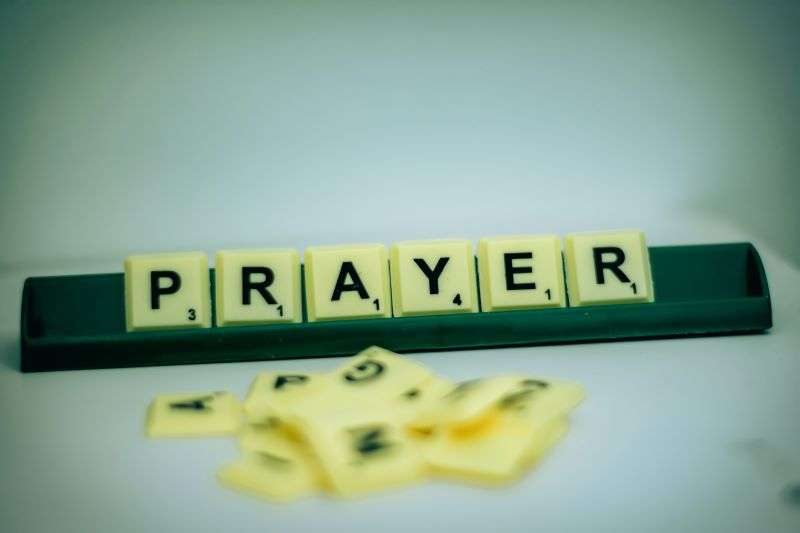
Photograph by Alex Shute on Unsplash
C17 | 27 JULY 2025 | PRAYER | LUKE 11:1-13
Having seen him praying, the disciples in this gospel ask Jesus to teach them how to pray. What follows, from his own lips, has been known since the time of St Cyril of Carthage (d 258) as ‘The Lord’s Prayer’, or, more recently, especially among Catholics, the ‘Our Father’. It is, on any reading, one of the most precious parts of the gospel. Commenting on the gospel of Matthew’s version, St Thomas Aquinas calls it “the most perfect of prayers”, adding that “God himself taught us this prayer”1 and, echoing St Augustine, that “…people are not praying as they ought if they are not asking for something contained in the Lord’s Prayer.”2
As with all prayer, the Lord’s Prayer is rooted in both the experience of need and the confidence that our needs will be met. What greater expression of confidence could there be than to address our Creator as ‘Father’, as Jesus himself does? We know from elsewhere in the gospels that in his native Aramaic, Jesus used a much more intimate word than the one used here: he called his Father, ‘Abba’, a highly unusual usage, found nowhere else in Jewish liturgy or prayer. It’s the word that a child would use, but which often persisted into adulthood, rather as Italians, even when older, sometimes still call their father, ‘Babbo’. Jesus, the Word made flesh, shares with us the intimacy which he himself enjoys with God, the creator of all that exists.
The next two lines of the prayer (three in Matthew) amplify this expression of total confidence in our Father, by praising his holiness and praying for the coming of his kingdom (as well as, in Matthew, the fulfilling of his will for us). The rest of the prayer gives voice to our most essential needs, namely, physical sustenance, forgiveness, and preservation for ultimate harm.
Understood aright, praying is as natural and necessary as breathing. As a Carthusian monk once put it, asking people to pray is like asking the wind to blow, or the ear to listen, or the eye to see. We can’t not pray, once we have been given the gift of existence. Prayer is the response of our total selves to the Mystery that has given us life. It arises, in other words, from the deepest truth of our existence: namely that our life is marvellously gratuitous, given to us by God out of sheer love. As a recent biographer of John Donne has it: “it is an astonishment to be alive, and it behoves us to be astonished.”3
Prayer can, however, be shut out or, even, shut down in different ways. One way, for instance, is when we harbour the illusion that we are sufficient unto ourselves, without need. Another is when we try to fill that un-fillable space within us which only God can fill with something other than God: when, in other words, we place our ultimate confidence in or set our hearts on something less than God.
For some, prayer is too personal to talk about; for others, it’s an impenetrable mystery impossible to talk about; for yet others, it’s an esoteric practice to be talked about only by so- called experts. Jesus here makes it plain that all these views are wide of the mark. Prayer is a gift given to all, along with the gift of life itself, not an achievement or accomplishment of our own.
But how is the view that prayer is not an achievement of our own compatible with what Catholics of a certain age – mine – will have learned from the Penny Catechism (or, in the United States, the Baltimore Catechism), namely, that prayer is “the raising of the mind and heart to God”? That definition may well have originated in a misreading of Aquinas, who says, citing St John Damascene (c.676-749),that prayer is the rising of the mind and heart to God – the ascensus intellectus in Deum – not the raising of the mind and heart to God.
The difference couldn’t be more significant. ‘Raising’ the mind is something we do; the ‘rising’ of the mind is something that is done or happens to us. Only God can raise our minds and hearts to himself, which he does through the beauty of persons and things, through his presence within and around us in creation and, most explicitly, in the Sacraments. It is the Spirit who prays within us, who hears our prayer and who answers our prayer, always, even if in ways we may realise only much later were an answer to prayer. Like everything else in creation, prayer is the work of God’s benevolent providence.
And we pray, primarily, with our hearts, long before words reach our lips. Our explicit prayers are only, as it were, the tip of an iceberg: whatever words we might (or might not) use are always consummated in silence, though not the mere absence of sound but the silence of a Word that ineffably surpasses all words, the Word made flesh.
In essence, prayer is communion, and communion is the goal of God’s gift of life. Nowhere is that made more explicit than in the Mass, the prayer of the whole Church, in which Christ makes explicit his presence around us, within us, and among us: in Bread from heaven, in his Body, the Church, and in each one of us, in order to share his life and love with us. In the sacrament of the Eucharist, the prayer of the whole Church reaches its climax in explicit, sacramental communion. But even this is only a foretaste in this life of the perfect and complete communion in the life to come: an assurance, in other words, of “the glory that one day will be ours.” (Aquinas, O Sacrum Convivium, in the liturgy for Corpus Christi).
1 Summa Theologiae 2a2ae 83.9 & Lectures on St Matthew, cited in Albert and Thomas: Selected Writings, trans. Simon Tugwell, (1988), p. 445
2 Paul Murray, Praying with Confidence: Aquinas on the Lord’s Prayer, (2010), p. 13, citing Tugwell. p. 13.
3 Katherine Rundell, Super-Infinite: The Transformations of John Donne, Faber & Faber 2022, p. 8.
4 ST 2a2ae 83.12 and Damascene, On Orthodox Faith III, 24, PG 94, 1089.

Help us keep The Tablet’s voice independent, clear and far-reaching.
Founded in 1840, The Tablet is the leading independent English-language Catholic weekly, celebrated for great writing, astute analysis, brilliant arts and books reviews and trustworthy reporting from correspondents in Britain, Ireland, Rome and across the world.
Independent, high-quality journalism is at the heart of what we do. The Tablet does not have deep pockets and we are not funded by rich donors. If you appreciate our work please consider supporting The Tablet’s Development Fund. It only takes a moment and you can cancel at any time.
- Support with £5 per month
- Support with £10 per month
- Support with other amount.

MOST READ ARTICLES
-
1
Pope Leo diagnosed with lung cancer after operation
-
2
Breaking up … for now
-
3
The future lies with the laity
-
4
A tiny gem
-
5
Archbishop bars Catholics from firing squad for US military execution
-
6
Thousands arrested as Delhi locked down for protest over voter roll scandal
FROM THE EDITOR'S DESK