How to relate to God and each other with humility as taught by Jesus


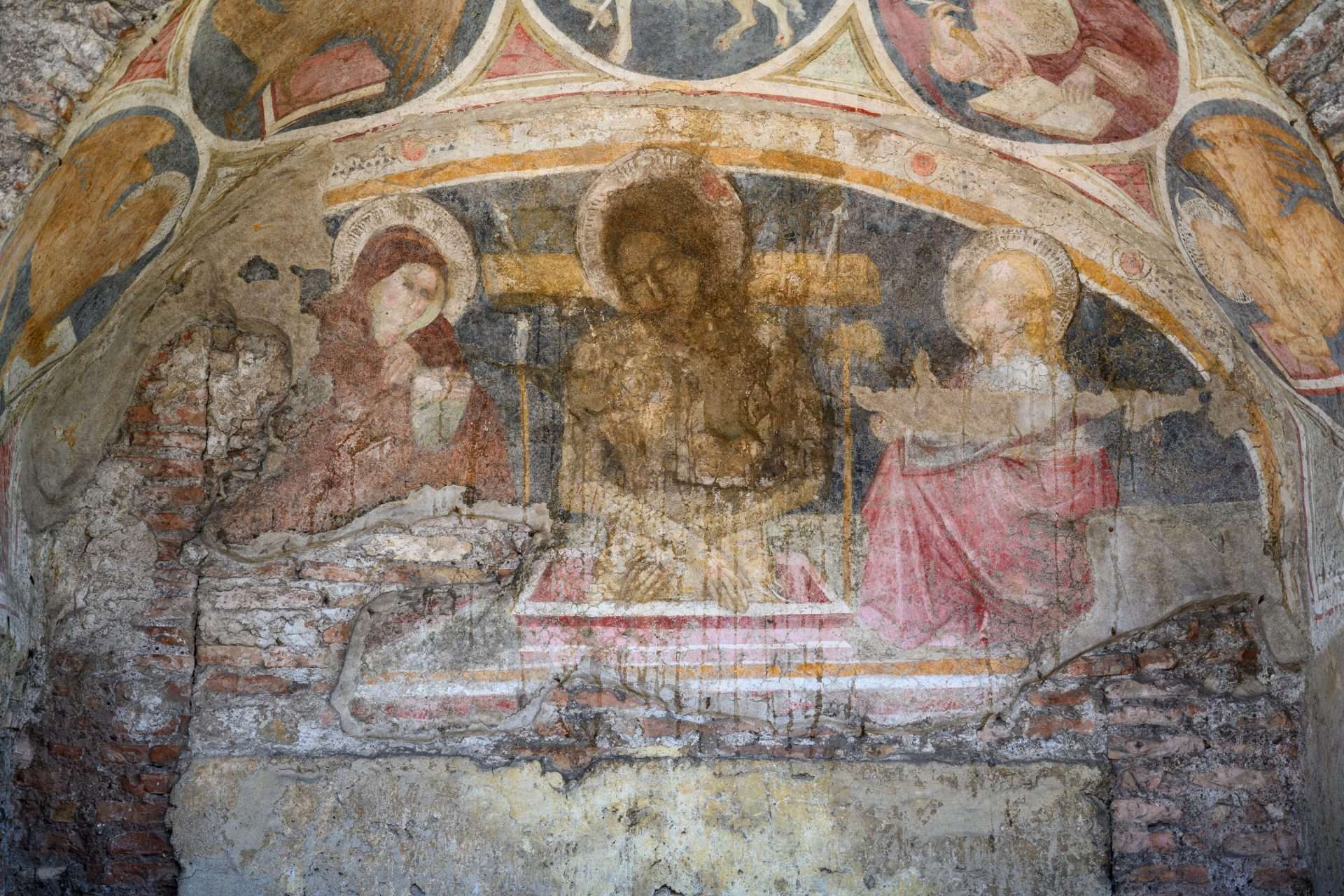
An arcosolium decorated with a fresco of the Extreme Humility of Christ [
Adam Ján Figeľ, Alamy
C22 | 31 AUGUST 2025 | LUKE 14:1,7-14
To get the point of this powerful and perplexing, but also, if read aright, humorous parable, you have to remember that dining protocol in the ancient world for the upper strata of society was a social minefield, made all the more so because most smart dinners were held in public, usually outdoors, and under the gaze, admiring or otherwise, of all and sundry. So, the very real possibility of slighting one of your guests by an ill-thought-out seating plan was, even more than now, every host’s worst nightmare. Prestige, precedence and hierarchy were the only salient factors, not who might get on with whom.
But, of course, this gospel is not about the niceties of dining etiquette. Nor, contrary to what is often thought, is it about humility, not primarily, anyway, though it does shed important light on that vital virtue. As with all the parables, there is more than one layer of meaning, so that, while seeming on the surface to be making a conventional point about precedence, a point paralleled widely in many ancient near eastern sources, this parable is a broadside against the Pharisees – Jesus’ host is a Pharisee – and a direct challenge to wake up to a greater reality than their own religious self-assuredness. (It’s aimed also, of course, at the ‘Pharisees’ of every generation and, as such, challenges all of us to examine whether we fall into that category.)
Throughout this whole section of Luke’s gospel, Jesus continues with ever greater urgency and at ever-increasing risk to his life as he nears Jerusalem, to shake the Scribes and Pharisees out of their complacency, principally by associating himself with precisely the people of whom they, the Pharisees and other officially religious persons, so heartily disapproved. He touches the untouchable and calls nobodies and even notorious public sinners to follow him, while denouncing the deference demanded by the Scribes and the Pharisees. And here, he subverts their pious expectations and cherished certainties and undermines their publicly trumpeted religious superiority by advising his host to invite the indigent rather than the distinguished to dinner.
So it is that, here, he uses platitudes about table manners and the niceties of social etiquette to teach deep and universal truths about our relationship with God and how we are to relate to one another. He teaches, for instance, that the only recognition and respect that matters eludes precisely those who either crave or demand it; that true dignity belongs primarily to those who hold precious the dignity of others; and true honour is never expected or thought to be deserved by those most worthy of it. So here, as elsewhere in the gospels, Jesus parodies worldly wisdom, only to subvert it by the radical perspectives of the Kingdom. The conventional advice to take the lowest place at table was, of course, disingenuous: the point of such faux humility was to secure exaltation. But Jesus’ advice is loaded with irony: he’s criticising the very mind-set that seeks exaltation in the first place. God and only God exalts. But though humility is not its primary point, this parable does, en passant, remind us that it is an indispensable virtue that should inform every part of our lives. The fourth-century monk, John Cassian (360-430), says that humility is the foundation of all the other virtues; and it is no coincidence that the chapter on humility in St Benedict’s Rule, which is arguably pivotal to the whole document, begins with reference to this parable.
But, like a smile, humility can’t be feigned. Just as a genuine smile comes from within, so humility is deeper than external behaviour and not even always visible on the surface at all. False humility, on the other hand, and humility’s counterfeits abound, can, like a false smile, only be on the surface, because it consists precisely of learned, self-conscious and ultimately inauthentic behaviour. Real humility is, at root, an attitude of mind and a disposition of the heart that influences and informs who we are, everything we do, and how we conduct all our relationships. It is one of the defining dispositions of those who lives in the real world, that is, those who acknowledge and live in absolute dependence on the source of reality itself, namely, God.
Humility enables us to see others and ourselves with accepting and merciful eyes, as God sees us. That’s why the scriptures see humility as intimacy with God; Moses is said to be the humblest man on earth precisely because he comes face to face with God as with a friend. (Numbers 12:13) St Ignatius of Loyola says in The Spiritual Exercises that humility enables us not just to acknowledge but to glory in the gifts God has given us. That’s why the genuinely humble person can accept compliments with gratitude rather than faux modesty, always remembering, of course, the sage advice given to a particularly gifted monk by the late Cardinal Hume when Abbot of Ampleforth: “Enjoy the praise, but don’t inhale.” Another Cardinal, St John Henry Newman, said that humility is not only the hardest virtue to attain but sometimes the hardest to ascertain. The tale is told that the late Lord Longford once bowled into Hatchard’s, the London bookshop, furiously demanding to know from the manager why his latest book wasn’t on display in the window. The title of the book was Humility.

Help us keep The Tablet’s voice independent, clear and far-reaching.
Founded in 1840, The Tablet is the leading independent English-language Catholic weekly, celebrated for great writing, astute analysis, brilliant arts and books reviews and trustworthy reporting from correspondents in Britain, Ireland, Rome and across the world.
Independent, high-quality journalism is at the heart of what we do. The Tablet does not have deep pockets and we are not funded by rich donors. If you appreciate our work please consider supporting The Tablet’s Development Fund. It only takes a moment and you can cancel at any time.
- Support with £5 per month
- Support with £10 per month
- Support with other amount.

MOST READ ARTICLES
-
1
Budapest archdiocese warns priest off politics after PM’s complaint
-
2
Women already act as deacons
-
3
Nurturing young Catholics in STEM
-
4
News Briefing: Britain and Ireland
-
5
Bolsonaro leads in first round of Brazil election despite Aparecida alarm
-
6
Reform’s God squad
FROM THE EDITOR'S DESK