A Catholic Bible? The Holy Bible: English Standard Version Catholic Edition


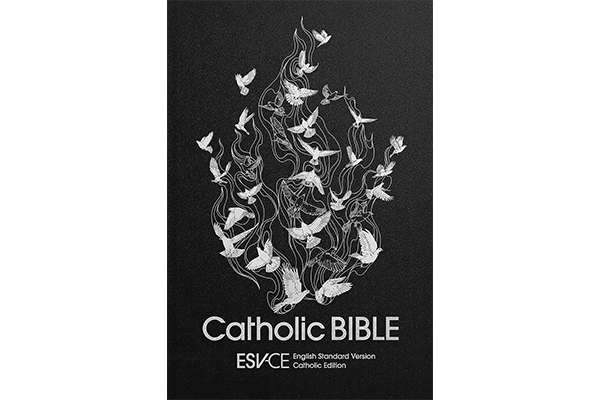
The ESV-CE1 has been approved as the basis for the new Lectionary and for all future liturgical texts used by Catholics in England and Wales. A Catholic biblical scholar reviews the translation
With the establishment of the English Liturgy after the Second Vatican Council, lectionaries using two different Catholic Bibles were approved for use in England and Wales: the Jerusalem Bible (JB), published in 1966, which became the dominant text, and the Revised Standard Version (RSV) in its Catholic edition, which was also published in 1966. The English Standard Version (ESV), first published in 2001, sets out to correct ‘liberal’ features of the RSV. The ESV-CE draws Catholics into the sad history of Protestant disputes.
Some backstory is necessary to understand how the ESV came about. The progress of scholarship in the nineteenth century, particularly in the area of textual criticism, the quest to establish the original text with greater precision, made it necessary to revise the King James Authorized Version (AV), which was produced in 1611. Two Cambridge scholars, Brooke Foss Westcott (1825–1901) and F. J. A. Hort (1828–92), were leaders in this revision.
As Peter Thuesen reports in his book In Discordance with the Scriptures, there was extensive opposition in America to the Revised Version (RV), when it was completed in 1885.2 Some fundamentalist Christians considered the AV to be the unique inerrant version of Scripture. They were particularly incensed by the use of the fourth-century Greek Bible, the Codex Vaticanus, stored for centuries in the Vatican, but now made available for the use of scholars. Codex Vaticanus and Codex Sinaiticus, which had been rescued from St Catherine’s Monastery in Sinai, were viewed with suspicion.
In the twentieth century, scholarship continued to throw new light on the biblical text, and, with the use of even older manuscripts, such as the second-century Chester Beatty papyri, unearthed in Egypt, work began on a further revision, the Revised Standard Version (RSV). The New Testament was published in 1946, and the Old Testament in 1952.
Opposition to the RSV from many Evangelical Christians was fierce, with the burning of Bibles, and the persistent accusation that the translation team, some of whom were proponents of social justice, included Communists. The issue was deeply polarized and deeply political. A further revision, the New Revised Standard Version (NRSV), was published in 1990, but was rejected by fundamentalist Christians owing to its use of ‘inclusive language’.
An online interview with Wayne Grudem, a leading Southern Baptist scholar, and ‘creator’ of the English Standard Version (ESV), reveals how Grudem and his team obtained permission from the National Council of Churches of the US to produce a ‘conservative’ revision of the RSV.3 Some changes were stipulated in advance, but Grudem recalls that permission was given for any changes that were ‘exegetically defensible’. As a result, approximately 60,000 words, an estimated 8 per cent of the text, were changed.
The ESV had great success among evangelical Christians the world over. It has also been criticised. Biblical scholar Byron G. Curtis, a friend of Wayne Grudem, describes the ESV as ‘a stilted translation that obscures the transforming message of the Bible’. He continues, ‘it deafens our ears to God’s word’.4
When the Catholic Bishops of India required a new English translation for use in the Church in India, this Bible came to their attention. The Foreword to the ESV Catholic Edition reports that a committee of scholars ‘scrutinized’ the ESV text for possible use in the Catholic Church. The deuterocanonical books needed to be added, but we are not told of any other changes made to ensure the Catholic ethos of the translation. The ESV-CE was published first in Bengaluru in 2017, and subsequently in London in 2021 by SPCK.
We do not need to go far to encounter a problem. When, in Genesis 3, God delivers punishments to the snake, to the woman and to the man, the punishments for the woman are pain in childbirth and abuse from her husband. Her desire is ‘for her husband’, yet he will ‘rule over her’. ESV, in its edition of 2016, changed the English text of Genesis 3.16 to ‘your desire shall be contrary to your husband’. The Hebrew preposition involved in our text, ’el, does not mean ‘contrary to’ or ‘against’, but ‘to’ or ‘for’. ESV appeals to Genesis 4.7, which contains similar words, to support its erroneous reading. This mistaken reading of Scripture, condemned by many Evangelicals, seeks to justify the subordination of women to men. The translators misinterpret the text of Scripture presenting the ‘desire’ of the woman in a negative way, and justifying the dominant role of the male, who ‘shall rule over you’. This is a dangerous misinterpretation of Scripture, for such a reading can be used to legitimise the domination and abuse of women, so prevalent in today’s society.
For Wayne Grudem, Isaiah 7.14 needed revision. The RSV reads ‘the young woman is with child’, using an accurate rendering of the Hebrew term ‘almah. ESV translates not ‘young woman’ but ‘virgin’. The revisors are determined to reinstate the AV translation, and to have the prophet Isaiah speak of a ‘virgin birth’. Anything else in their view is a betrayal of biblical truth. They are reading the text through Matthew 1.23 which, when it quotes Isaiah 7, uses the Greek term parthenos, which often, though not always, means ‘virgin’. Imposing a later biblical reading to change an earlier text is natural to the fundamentalist mindset, which sees biblical truth as one, and accepts no distinction between what Isaiah says and what Matthew writes. The ESV employs a simplistic understanding of prophecy as word-for-word fulfilment, which is in conflict with Catholic biblical scholarship, and it disregards the progress of revelation from the Hebrew Scriptures to the New Testament. It fails to notice the heavy emphasis in 7.14 on ‘immanuel.
There are in fact no references to virginal conception in the Hebrew Scriptures. The only honest translation of the word ‘almah in Isaiah 7.14 is ‘young woman’. This in no way undermines the truth of faith proclaimed in Matthew 1 (and Luke 1) that Jesus was conceived in the womb of Mary by the action of the Spirit. Matthew 1.23 proclaims a fulfilment of Scripture with the text of Isaiah 7.
A further difficulty of translation is found later in Matthew l. In a Catholic Bible one would expect meticulous attention to texts which have a bearing on the virginity of Mary. Both the RSV and the ESV-CE offer an ambiguous translation of the phrase in 1.25 which begins with the words heos hou. We read in a rather archaic rendering that Joseph ‘knew her not until she had given birth to a son’. Once again closeness to the AV has influenced translation. The implication in this English translation is that after the birth of Jesus Joseph did indeed have sexual relations with Mary. This is not the sense of the Greek, which is concerned only with the time before Mary gave birth to Jesus. The Revised New Jerusalem Bible (RNJB, 2019) gives us ‘he had not had intercourse with her when she gave birth’. One would have expected the ESV-CE to provide a more accurate translation of this tricky text. It also appears strange that ESV-CE renders Luke 1.34, ‘How will this be, since I am a virgin?’ A translation which sets out to honour each single word of Scripture would have done better with what we find in the RNJB: ‘I have no knowledge of man.’
Moving deeper into Matthew’s Gospel, and to the Sermon on the Mount, we come across a text that has puzzled congregations ever since the English lectionary was introduced. The RSV reads vaguely in Matthew 5.32 that divorce is only permitted ‘on the ground of unchastity’. Debate over the precise meaning of the term porneia, with insights from contemporary rabbinic writings, has led to an emerging consensus among Catholic scholars, witnessed in the Italian and French lectionaries, in the New American Bible (Revised Edition) (NABRE) and in the RNJB, where the phrase is translated ‘except for the case of an illicit marriage’. In Acts 15.20 and 29, there is a similar use of porneia in reference to marriage between Jew and Gentile. Jesus forbids divorce, but there can be ‘divorce’ in cases where the marriage was not valid. The ESV-CE makes no progress here and offers the ambiguous rendering, ‘except on the ground of sexual immorality’. This Bible is suspicious of the new proposals of scholarship.
A further missed opportunity is seen in Matthew 6.13, with the final phrase of the Lord’s Prayer, which is increasingly translated ‘save us from the evil one’, when the presence of the article tou, hitherto neglected, is acknowledged in the penultimate word. The ESV-CE once again denies access to the progress of scholarship, preferring time-bound words to new insights. This is not the Catholic way.
The Prologue of John’s Gospel is treasured by Christians, so it is sad to see here a questionable translation, which Catholics will not recognise. The word exousia in John 1.12 is regularly translated as ‘power’. It refers to the possibility of becoming children of God given to those who believe. The ESV-CE translation as ‘right’ jars with Johannine thought. Is there a suggestion of Calvinist predestination here? Salvation is a grace offered, not a right grabbed. Later in the Gospel, the ESV reduces the RSV’s ‘Counsellor’ to the weak sounding ‘Helper’ (John 14.16 etc.). The RNJB, amid so many possible options, wisely offers ‘Paraclete’.
The determination of Wayne Grudem to remove concepts which had been refined by the ecumenical RSV translators, and to reinstate translations from the AV and RV, is displayed again in the use of the term ‘propitiation’.
The hilasterion in Romans 3.25 has God putting Christ forward as ‘mercy seat’. The mercy seat was a component of the ark of the covenant, as described in Exodus 25.17. Essentially, God presents Christ as the way of mercy, by which believers are saved. The mercy seat is a symbol of God’s mercy. The translation of hilasterion is difficult. The Latin Vulgate opted for propitiatio, the absolving of guilt. The concept of ‘propitiation’ took over and was suited to a certain type of soteriology, which stressed the need to propitiate the anger of God by paying back the debt of sin. The AV used ‘propitiation’, but understanding was evolving and in time it was judged to be an unfaithful translation of hilasterion. Amid intense theological discussion, a preference emerged for ‘expiation’, which removed the sense of appeasing an angry God, which was judged to be absent from the original text. This was adopted in the RSV.
Once the ESV revisors had obtained permission to make changes to the RSV text the word ‘propitiation’ was reinstated in Romans 3.25 (and also in 1 John 2.2 and 4.10, for the related term hilasmos), and considered a vindication of the genuine sense of Scripture. The ESV Study Bible maintains that this must be a reference to God’s wrath being appeased. This decision exemplifies the deficiency of fundamentalist translations and revisions. Nothing in Romans 3 suggests the appeasement of an angry God. As Pope Benedict explains, everything suggests a merciful God who through Christ delivers mercy to humanity.5 The text is not about placating an angry God, but showing that God makes Christ the means of forgiveness. RSV with its use of ‘expiation’ was attempting to unveil the true sense of hilasterion. Years later, the NRSV proposed not ‘expiation’ but ‘sacrifice of atonement’. Nevertheless, in 2001, the ESV reinstated the problematic understanding of the Conservative Evangelicals. Once again, the ESV-CE takes the reader back to an earlier interpretation, which is in conflict with contemporary Catholic understanding. It reverses the progress made in the RSV and is suspicious of the new insights of biblical scholarship.
Evangelical Christians are free to choose their translation options in accordance with the emphases of their theology, but they are often not in accord with the understandings of Catholic faith. Honesty in scholarship, wisdom, and faith are needed to evaluate the true meaning of words. The temptation to read particular beliefs into texts where they are not found is clearly not the way to interpret Scripture.
What is meant by a ‘Catholic Bible’? Is the ESV-CE truly a ‘Catholic Bible’? A ‘Catholic Bible’ must respect the truths which emerge from Scripture and are cherished by the Church of today. If a Bible does not do this, it risks being unreliable, and the people who use it will be deprived of the truth of Scripture.
To list every problematic text in the ESV-CE would require considerable time and resource. In addition, the style of this translation will often surprise and disturb the reader. The stated policy, clearly displayed on the back cover of the book, of translating ‘word for word’ makes the translation archaic and stilted. This is particularly noticeable in the obsessive translation of the conjunctions waw and kai. Scholarship has established that they should not always be translated with ‘and’, but often with ‘but’, ‘yet’, ‘however’, or even the capital letter of a new sentence. Semitic speech lacks the variety of conjunctions of other languages, and this persists in the narrative texts of the Greek New Testament. The story of the finding of Jesus in the temple in Luke 2.41–52 presents 11 uses of the conjunction ‘and’ in 11 verses. Respect for the receptor language, and concern for fluency and intelligibility, should have ruled out such exaggerated literalism.
The reader of this review may like to explore some further verses. In Matthew 4.19, ESV-CE insists on the translation ‘fishers of men’, when other translations have long since realised that ‘men’ is not a proper translation of anthropoi. In Luke 1.28, is it really appropriate to continue with the archaic translation ‘o highly favoured one!’, when the usual translation ‘full of grace’ respects the presence of the term charis at the heart of the greeting? It is extraordinary to hear the words given to Mary in Luke 1.48, ‘he has looked on the humble estate of his servant’. Such translation will delight those attached to the AV but will leave a large number of people confused. In Romans 16.1, subterfuge might be suspected when diakonos in relation to Phoebe is rendered ‘servant’, while in the use of the word for males we always have ‘deacon’. And surely they could have found a better translation of 2 Corinthians 6.14 than the AV-inspired ‘do not be unequally yoked with unbelievers’. The ESV offers many more such awkward phrases.
Some people will delight in the language and style of the ESV. Mark Giszczak in Bible Translation and the Making of the ESV Catholic Edition affirms that this Bible provides ‘more majestic, biblical English’.6 The Catholic biblical translator, however, is called to offer fresh theological and scriptural insights, so that the faith of the Church is nourished. The translator, well-advised by the likes of St Jerome and St Thomas Aquinas, uses intelligible language, which is faithful to the original text, but which fully respects the rules of the receptor language too.7
Adrian Graffy is a parish priest in east London and a member of the Pontifical Biblical Commission.
___________________________________________
1 ESV-CE Catholic Bible, Anglicized: English Standard Version – Catholic Edition, London: SPCK, 2021.
2 Peter J. Thuesen, In Discordance with the Scriptures: American Protestant Battles Over Translating the Bible, New York: Oxford University Press USA, 1999.
3 Podcast ‘Wayne Grudem on his life, love of theology and translating the Bible’ at https://www.youtube.com/watch?v=
KsvwtUhaQ2E (accessed 31 July 2024).
4 Byron G. Curtis, ‘Why the ESV Falters as a General Purpose Bible’, https://www.academia.edu/24536103/Why_the_ESV_Falters_as_a_General_Purpose_Bible?auto=view&campaign=weekly_digest (accessed 31 July 2024).
5 Joseph Ratzinger/ Pope Benedict XVI, Jesus of Nazareth, Part 2: Holy Week: From the Entrance Into Jerusalem to the Resurrection, San Francisco: Ignatius Press, 2011, pp. 231–2.
6 Mark Giszczak, Bible Translation and the Making of the ESV Catholic Edition, Greenwood Village, CO: Augustine Institute, 2022, p. 72.
7 I would like to express my gratitude to my colleague Fr John J. Henry for valuable advice.