US bishops ‘heartbroken’ to end government partnership


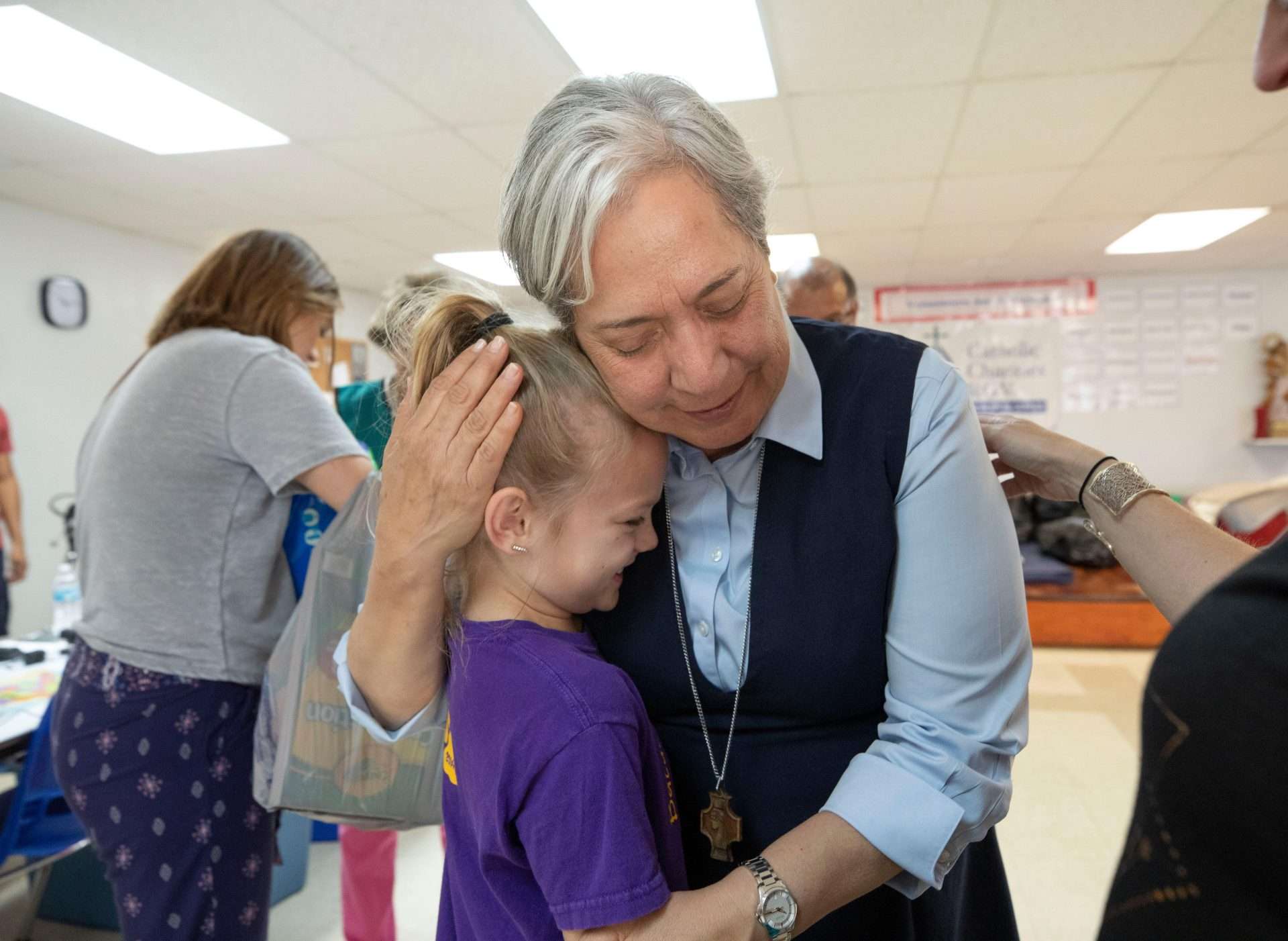
Sr Norma Pimentel MJ at a Catholic Charities facility in Texas for immigrant families awaiting rulings in deportation cases.
Bob Daemmrich / Alamy
During the Biden administration, the federal government awarded more than $100 million annually to the USCCB, who redirected the funds to run support programmes.
The US Conference of Catholic Bishops (USCCB) announced that it will not renew cooperative agreements with the federal government related to children’s services and refugee support.
This “heartbreaking announcement” followed the Trump administration’s decision to cut funding from refugee programmes.
Archbishop Timothy Broglio, president of the USCCB, said in a statement: “While this marks a painful end to a life-sustaining partnership with our government that has spanned decades across administrations of both political parties, it offers every Catholic an opportunity to search our hearts for new ways to assist.”
He said the funding cut “forces us to reconsider the best way to serve the needs of our brothers and sisters seeking safe harbour from violence and persecution”.
The Trump administration has prevented the entry of new refugees and ended federal aid for programmes that fund migrant and refugee support organisations, alleging that they strain both federal and local social services and facilitate unsustainable migration into the US.
During the Biden administration, the federal government awarded more than $100 million annually to the USCCB, who redirected the funds to affiliated Catholic organisations that provided relevant services. In recent years, the federal funding has covered over 95 per cent of operating costs and expenses.
Archbishop Broglio said the USCCB “cannot sustain the work on our own at current levels or in current form” and that the bishops “will work to identify alternative means of support for the people the federal government has already admitted to these programmes”.
The announcement came as Brian Burch, President Donald Trump’s nominee for US Ambassador to the Holy See, defended the Trump administration’s cuts to foreign aid at at a Senate hearing earlier this week.
Burch, president of CatholicVote – a right-leaning political advocacy organisation that mobilised Catholic support for Trump’s presidential bid – told the Senate Foreign Relations Committee: “I am deeply honoured and humbled to be nominated by President Trump to serve as the United States ambassador to the Holy See.”
The Senate considered Burch’s nomination as well as nominees for ambassadors to Chile and Croatia.
In response to questions by New Hampshire Senator Jeanne Shaheen regarding the administration’s move to dissolve the US Agency for International Development (USAID), Burch said that “this is going to be a very challenging issue”.
“Of course, I think the partnership with the Holy See can be a very good one,” Burch continued, “but I think those partners have to understand that our foreign aid is not endless, that we can’t fund every last programme.
“Millions, if not billions, of our dollars have been going to places around the world that are not aligned with [the] United States’ interests.”
Burch went on to praise the “unique and vital” relationship between the US and Holy See which “transcends traditional diplomacy, rooted instead in our shared commitments to religious freedom, human dignity, global peace, and justice”.
Florida Senator Rick Scott further questioned what Burch believed he could achieve through diplomacy with the Vatican for hostages still being held by Hamas in Gaza, including American citizens.
Burch said that the Holy See “can play a very significant role” by being “a partner in that conversation and [delivering] the necessary moral urgency of ending this conflict and hopefully securing a durable peace”.
Where have all the ‘illegal’ migrants to the US gone?
Stay updated — add us as a preferred news source on Google:


Help us keep The Tablet’s voice independent, clear and far-reaching.
Founded in 1840, The Tablet is the leading independent English-language Catholic weekly, celebrated for great writing, astute analysis, brilliant arts and books reviews and trustworthy reporting from correspondents in Britain, Ireland, Rome and across the world.
Independent, high-quality journalism is at the heart of what we do. The Tablet does not have deep pockets and we are not funded by rich donors. If you appreciate our work please consider supporting The Tablet’s Development Fund. It only takes a moment and you can cancel at any time.
- Support with £5 per month
- Support with £10 per month
- Support with other amount.