UK ‘must press for ceasefire’ as humanitarian crises unfold across Middle East


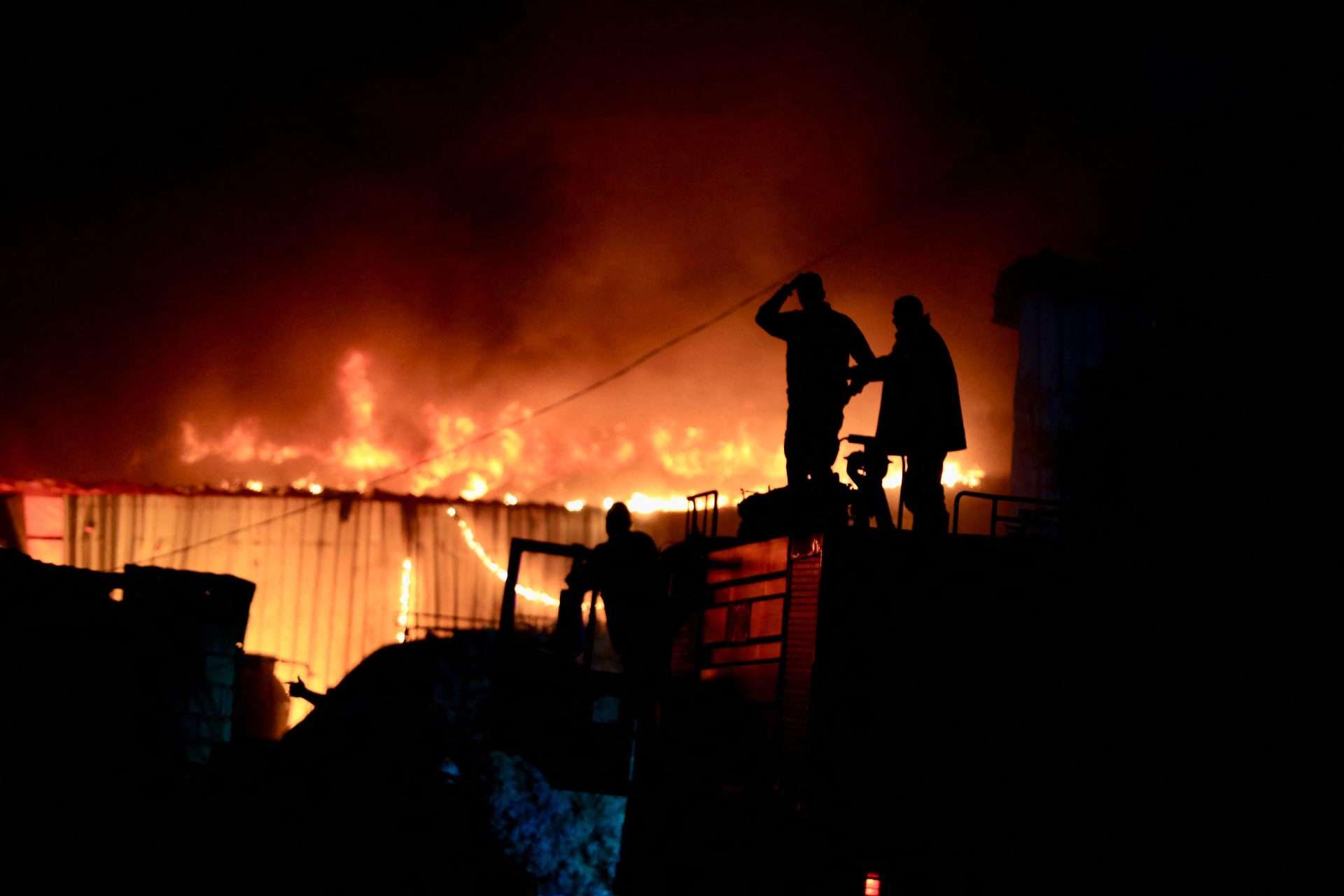
Rescuers arrive after Israeli airstrikes in Sidon, southern Lebanon, 3 March.
Ali Hashisho/Xinhua/Alamy Live News
The Iranian-born Anglican Bishop of Chelmsford, Dr Guli Francis-Dehqani, encouraged prayer to ‘get the leaders of nations back around the table, talking and putting down their weapons and guns’.
The humanitarian and international development charity Christian Aid has called on the UK government to “work urgently to press for an immediate ceasefire” in the Middle East, as their partners across the region report worsening humanitarian crises.
Since the US and Israeli strikes on Iran began on 28 February, which killed Iran’s supreme leader and reportedly over 1,000 civilians, Iran and its Lebanon-based ally Hezbollah have launched retaliatory attacks on Israel and US-allied states in the Gulf, and the fighting has escalated rapidly, with casualties and damage mounting in countries across the Middle East.
Christine Allen, the director of Cafod, said the situation is “very worrying”: “A series of violent acts across borders has increased tension and instability in the region, and jeopardised prospects of peace at a critical moment.
“Our concern is for the millions of innocent people caught up in this new conflict. Cafod joins our Caritas partners all around the world, in urging all parties to heed Pope Leo’s advice to step back from the brink before it’s too late, refrain from further military action, and uphold their shared obligation and moral duty to protect civilians.
“Urgent restraint and a renewed commitment to diplomacy is needed to prevent any further loss of life. Justice, restraint and the sanctity of human life should guide every decision by national leaders.
“We urge swift action from international leaders, to prevent any further loss of innocent life and to ensure a genuine path toward peace.”
Patrick Watt, the chief executive officer of Christian Aid, also said, “Innocent civilians are paying the price for international political failure in the Middle East.
“As an advocate of international law, the UK Government must reject the ‘might is right’ approach to politics, and work to secure an immediate ceasefire so that humanitarian aid can reach those most in need.”
Christian Aid partners in southern Lebanon said that it has become impossible to evacuate priority cases such as the elderly and disabled amid widespread emergency displacement, because there is no space left in Beirut’s shelters, and people in Gaza said they risk running out of food while most border crossings are closed.
In the West Bank, reports of Israeli settler violence increased immediately in the West Bank following the launch of air strikes, according to Israel-based human rights group B’Tselem, a Christian Aid partner.
Under cover of the Israeli-American offensive on Iran, armed settler militias continue to launch organised violent attacks against Palestinian communities, B’Tselem reported. They said two Palestinian brothers from the village of Qaryut in the West Bank were killed on Monday, when settlers started levelling a Palestinian olive grove in the village.
Christian Aid partners also said that Palestinian Bedouins in the Naqab are particularly vulnerable due to very limited public shelters or infrastructure, compounded by the fact that Israeli nuclear facilities in this area may make it a target.
The co-presidents of Justice and Peace Europe, Antoine Hérouard and Maria Hammershoy, also expressed “profound concern” over the ongoing spiral of violence.
They said, “We particularly hold in our hearts the affected populations in Iran and across the region who now undergo yet another trial, following years of tribulation and distress.
“No country, however powerful, should place itself above the core principles of international law and the Charter of the United Nations. Mutual threats and the use of weapons can never constitute a lasting solution to conflicts.
“On the contrary, they only amplify them: they deepen resentment and hatred, destabilise entire regions and erode the very foundations of global peace and security.
“In the face of a tragedy of immense proportions, the present escalation reflects a confrontational logic that increasingly dominates global politics, rather than adherence to the principles of legitimate defence, which require that all possible peaceful means be exhausted before recourse to force as a last resort.”
They called upon the European Union and the international community to engage in “tireless and united efforts” towards de-escalation and the full respect of international law, including humanitarian law.
“Respect for the inherent dignity of every human person and particular concern for the poorest and most vulnerable must remain at the heart of these efforts,” they said.
“The good of the people – those living in the Middle East, those temporarily present there, and all who suffer the wider consequences of this conflict – must prevail over every political, strategic or economic consideration.”
The bishops of Ireland also prayed for the innocent lives lost and for all the families experiencing injury and trauma.
“War is utterly destructive,” they said in a statement. “In an era of change and readjustment of geopolitical balances and cultural paradigms, war is not the answer. No political leader has the authority to unleash war at will.
“The uncertainty incited by the current situation in the Middle East is destabilising for the world on many fronts – politically, socially and economically. This is a time for international diplomacy to work for peace based on justice.
“We ask for prayers for peace and healing; that the voices of hatred will be replaced by a politics dedicated to upholding the God-given dignity of every human person, the common good and solidarity with those in need.”
Pope warns of ‘unbridgeable chasm’ of violence in the Middle East
Stay updated — add us as a preferred news source on Google:


Help us keep The Tablet’s voice independent, clear and far-reaching.
Founded in 1840, The Tablet is the leading independent English-language Catholic weekly, celebrated for great writing, astute analysis, brilliant arts and books reviews and trustworthy reporting from correspondents in Britain, Ireland, Rome and across the world.
Independent, high-quality journalism is at the heart of what we do. The Tablet does not have deep pockets and we are not funded by rich donors. If you appreciate our work please consider supporting The Tablet’s Development Fund. It only takes a moment and you can cancel at any time.
- Support with £5 per month
- Support with £10 per month
- Support with other amount.