Religious organisations fail to offer redress for mother and baby homes


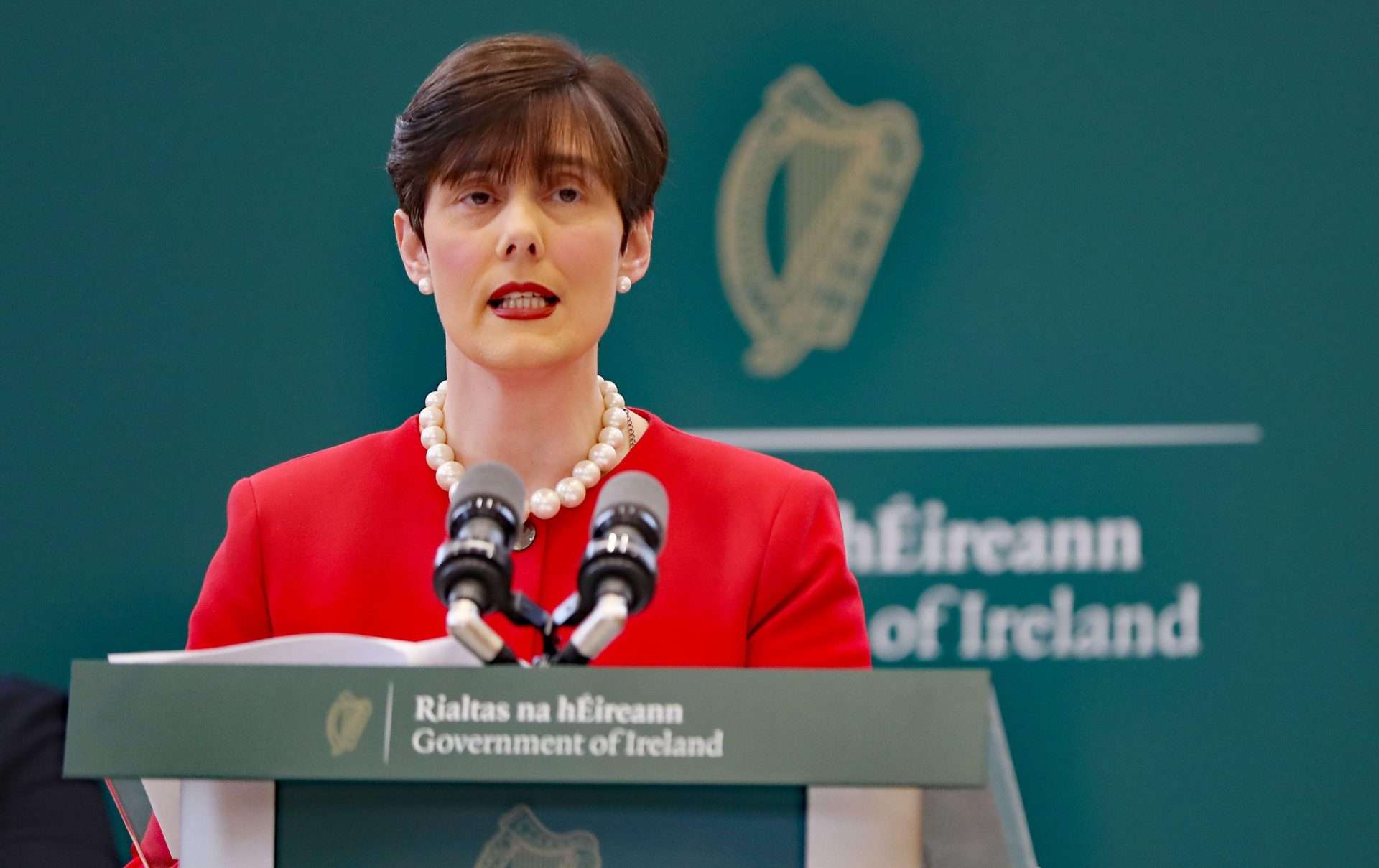
Norma Foley is “deeply disappointed” by the failure of six of the eight religious bodies that had a historical involvement in mother and baby homes to offer financial redress
Niall Carson/PA/Alamy
Ireland’s Minister for Children, Norma Foley, has said she is “deeply disappointed” by the failure of six of the eight religious bodies that had a historical involvement in mother and baby homes to offer financial contributions to a government-backed redress scheme.
Sheila Nunan, the liaison between the government and the religious orders as well as the Church of Ireland, published her final report last week after almost two years of negotiations.
It shows that one of the eight bodies, the Bon Secours Sisters who ran the Tuam mother and baby home, has offered a cash contribution of about €13m.
The Sisters of St John of God offered a conditional donation of €75,000 to be used towards a charitable purpose associated with survivors, while the Daughters of Charity of St Vincent de Paul offered a building.
The religious organisations which have offered no financial contributions are the Sisters of Mercy, who were asked for €21m; the Legion of Mary, which was asked for €26.2m; the Church of Ireland, which was asked for almost €14m; the Sisters of Our Lady of Charity of the Good Shepherd, who were asked for €10.46m; and the Sacred Hearts of Jesus and Mary Sisters, who were asked for €96.5m.
The process overseen by Sheila Nunan was voluntary and the religious organisations cannot be compelled to offer contributions.
Ms Foley has indicated that the government will now explore what options are open to it to, including legal action, to force those who have not contributed to pay their share.
The Commission of Investigation into Mother and Baby Homes published its report in 2021 into the harm caused to women and children at 14 mother and baby homes and four county homes across Ireland between 1922 and 1998.
The report found that 9,000 children died in mother and baby homes with the death rate in the years 1945-46 almost twice that of the national average for children born out of marriage.
It also found no evidence that women were forced to enter the homes by the Church or the State but that most often the women had no alternative as they had no money and nowhere to go. Many of the women were brought to the homes by their families.
Stay updated — add us as a preferred news source on Google:


Help us keep The Tablet’s voice independent, clear and far-reaching.
Founded in 1840, The Tablet is the leading independent English-language Catholic weekly, celebrated for great writing, astute analysis, brilliant arts and books reviews and trustworthy reporting from correspondents in Britain, Ireland, Rome and across the world.
Independent, high-quality journalism is at the heart of what we do. The Tablet does not have deep pockets and we are not funded by rich donors. If you appreciate our work please consider supporting The Tablet’s Development Fund. It only takes a moment and you can cancel at any time.
- Support with £5 per month
- Support with £10 per month
- Support with other amount.

MOST READ ARTICLES
-
1
Church warns Zambian government against division after archbishop’s arrest
-
2
Breaking up … for now
-
3
A craving for beauty
-
4
The technological paradigm, AI and the human person
-
5
Bishops demand security investment to promote ‘common good’ in Nigeria
-
6
Rival church occupies Kyiv monastery in latest blow to Moscow-linked Orthodox
FROM THE EDITOR'S DESK