‘Preventative war’ claims erode international law, warns Parolin


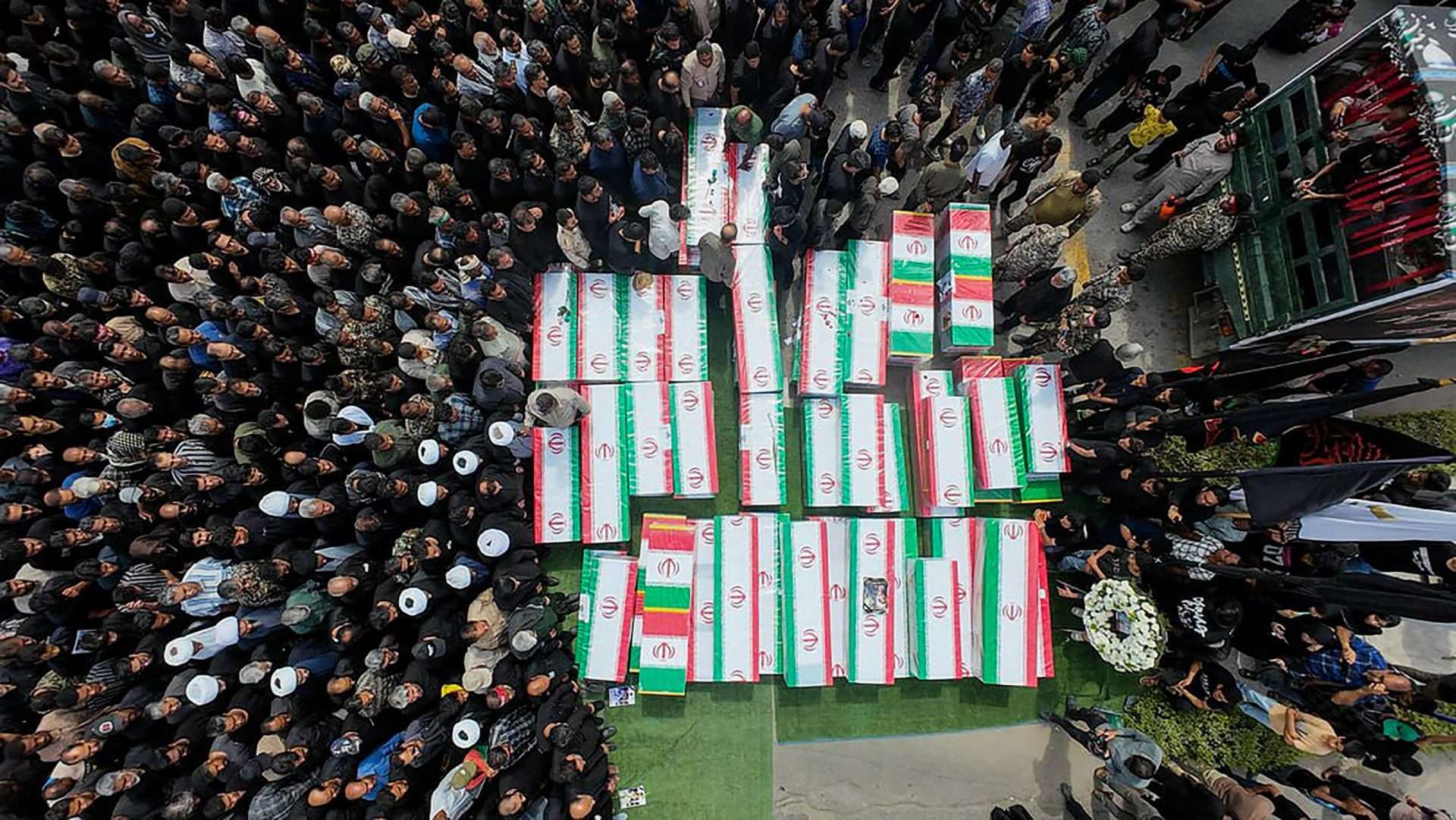
Coffins of children killed in an airstrike that hit a school on Saturday
UPI / Alamy
‘There are no first-class and second-class dead, nor people who have a greater right to live than others because they were born on one continent rather than another, or in a particular country.’
The Secretary of State of the Holy See questioned the justification of the US and Israeli attack on Iran as a “preventative war”.
Speaking on Wednesday, Cardinal Pietro Parolin warned that if states could pursue such wars “according to their own criteria and without a supranational legal framework, the whole world would risk being set ablaze”.
“This erosion of international law is truly worrying: justice has given way to force,” he told Vatican News. “The force of law has been replaced by the law of force, with the conviction that peace can arise only after the enemy has been annihilated.”
Strikes on Tehran on Saturday killed Ayatollah Ali Khamenei and other senior figures in the Iranian regime. Some US officials have insisted that Iran posed an imminent threat, while others have said they were prompted to join an Israeli attack.
Iranian officials have reported more than 1,000 deaths since the weekend, including 168 people killed in a strike on a girls’ school on Saturday.
“When speaking of the causes of a war, it is complex to determine who is right and who is wrong,” Parolin said. “What is certain, however, is that war will always produce victims and destruction, as well as devastating effects on civilians.”
While condemning the Iranian regime’s violent suppression of protests and asserting Iranians’ rights, he questioned “whether anyone truly believes that the solution can come through the launching of missiles and bombs”.
He continued: “History has already taught us that only politics – through the hard work of negotiation and attention to balancing interests – can increase trust among peoples, promote development and preserve peace.”
The cardinal defended the United Nations Charter and other international initiatives to prevent conflict after the Second World War, arguing that they now suffer from a widespread loss of “awareness that the common good truly benefits everyone – that is, that the good of the other is also good for me”.
He warned that “the system of multilateral diplomacy in relations among states is undergoing a profound crisis”, in part “because of the distrust states harbour towards legal constraints that limit their action”.
“A multipolarism marked by the primacy of power and self-referentiality is dangerously taking hold,” he said. “The whole body of international law built up in areas such as disarmament, development cooperation, respect for fundamental rights, intellectual property and trade and transit is being questioned and gradually set aside.”
Parolin referred to a principle set out by the philosopher Immanuel Kant in 1795 – “A violation of right in one part of the world is felt in all parts” – which he said was undermined by the difference between “cases in which the international community is outraged and mobilises, and cases in which it does not”.
This difference, he said, suggests “there are violations of the law to be punished and others to be tolerated, civilian victims to be mourned and others to be regarded as ‘collateral damage’”.
“There are no first-class and second-class dead, nor people who have a greater right to live than others simply because they were born on one continent rather than another, or in a particular country,” said Parolin.
“I would like to recall the importance of international humanitarian law, whose observance cannot depend on circumstances or on military and strategic interests.”
Pope Leo said that the war threatened to become “a tragedy of immense proportions” in his address after the Angelus on Sunday, praying that diplomacy may “regain its proper role”.
Speaking to reporters in Castel Gandolfo on Tuesday evening, Pope Leo warned that “hatred in the world is constantly increasing”.
“Let’s pray for less hatred and more peace,” he said. “And work for authentic dialogue.”
Christians fear renewed violence in the Holy Land during Iran war
Stay updated — add us as a preferred news source on Google:


Help us keep The Tablet’s voice independent, clear and far-reaching.
Founded in 1840, The Tablet is the leading independent English-language Catholic weekly, celebrated for great writing, astute analysis, brilliant arts and books reviews and trustworthy reporting from correspondents in Britain, Ireland, Rome and across the world.
Independent, high-quality journalism is at the heart of what we do. The Tablet does not have deep pockets and we are not funded by rich donors. If you appreciate our work please consider supporting The Tablet’s Development Fund. It only takes a moment and you can cancel at any time.
- Support with £5 per month
- Support with £10 per month
- Support with other amount.