Pope declares Newman co-patron of Catholic education for ‘whole person’


Catholic Church in England and Wales / Mazur
‘At universities and schools, the heart dialogues with the heart, and the method is that of listening, which recognises the other as a good, not as a threat.’
A Catholic education should teach the whole human person amid contemporary challenges to schools and universities, Pope Leo XIV said in a new apostolic letter.
In “Drawing New Maps of Hope”, Leo marked the sixtieth anniversary of the proclamation of Gravissimum Educationis, the Second Vatican Council’s declaration on Christian education, on 28 October 1965, reflect on the role of Catholic education over the past 60 years.
“The Church celebrates a fruitful educational history but also faces the imperative to update its proposals in light of the signs of the times,” the Pope writes in the letter, published in Italian on Tuesday.
“We are aware of the difficulties: hyper-digitalisation can fragment attention; the crisis of relationships can wound the psyche; social insecurity and inequalities can extinguish desire,” he says. “Yet, it is precisely here that Catholic education can be a beacon: not a nostalgic refuge but a laboratory of discernment, pedagogical innovation, and prophetic witness.”
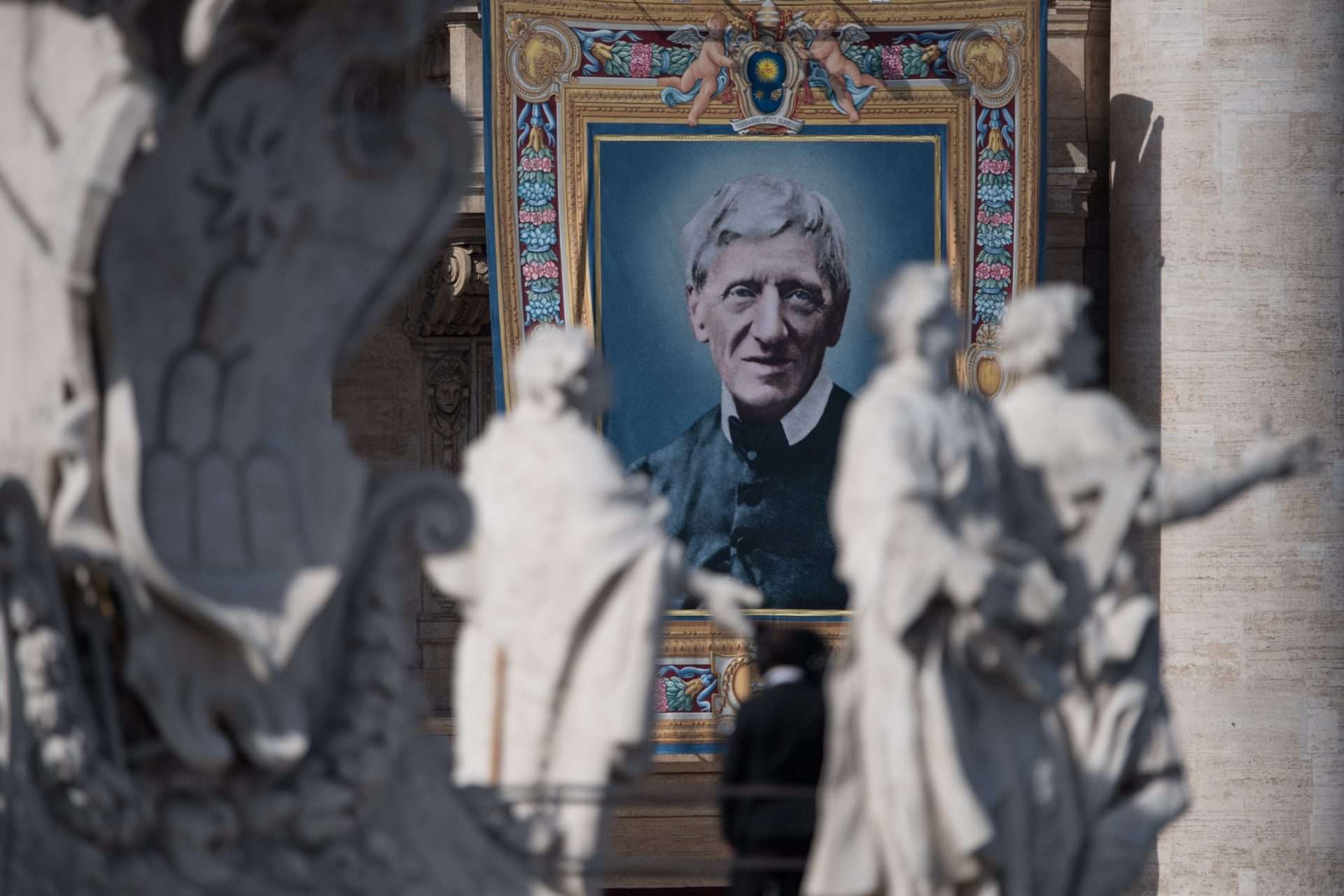
The Pope cites St John Henry Newman throughout the letter, naming him a new co-patron saint of the Church’s educational mission alongside St Thomas Aquinas.
Quoting the saint, whom he will declare a Doctor of the Church on Saturday, Leo writes that “religious truth is not only a part but a condition of general knowledge”.
These words, he explains, “are an invitation to renew our commitment to knowledge that is as intellectually responsible and rigorous as it is deeply human. We must also be careful not to fall into the enlightenment of a fides that is exclusively paired with ratio.”
He says this means Catholic universities and schools should be places where questions and doubt are accompanied, not silenced.
“There, the heart dialogues with the heart, and the method is that of listening, which recognises the other as a good, not as a threat,” he says, referring to Newman’s motto as a cardinal, cor ad cor loquitur, taken from a letter of St Francis de Sales: “Sincerity of heart, not abundance of words, touches the hearts of men.”
In the eight-page document, Pope Leo identifies three priorities for the educational community: cultivation of an interior life through space for silence, discernment, and dialogue with one’s conscience and with God; formation in a wise use of technology and artificial intelligence that puts the human person first; and education in language that is peace-building, nonviolent, and open to others.
He also notes the importance of making Catholic education financially accessible: “Where access to education remains a privilege, the Church must push open doors and invent new paths, because ‘losing the poor’ is equivalent to losing the school itself.”
Pope Leo’s letter draws attention to the digital environment and its impact on education, emphasising that “technologies must serve the person, not replace them. They must enrich the learning process, not impoverish relationships and communities.”
“A Catholic university and school without vision risks soulless efficiency, the standardisation of knowledge, which then becomes spiritual impoverishment.”
He urges schools to avoid “technophobia” while strengthening teachers’ training in the digital sphere and promoting service-learning and responsible citizenship.
“No algorithm can replace what makes education human: poetry, irony, love, art, imagination, the joy of discovery, and even education in error as an opportunity for growth. The decisive point is not technology but the use we make of it,” the Pope writes.
The document also provides a vision of Christian education that “embraces the whole person: spiritual, intellectual, emotional, social, and physical. … [Education] measures [its value] on the basis of dignity, justice, and the ability to serve the common good.”
He opposes this Catholic vision to a “purely mercantilist approach” that measures education in terms of functionality and practical utility.
Leo said forming the whole person means avoiding compartmentalisation, because “when faith is true, it is not an added ‘subject’ but a breath that oxygenates every other subject. Thus, Catholic education becomes leaven in the human community.”
Schools are communities of families, teachers, students, administrative and service staff, pastors, and civil society, founded on God, Leo writes, and the family remains the primary place of education: “Catholic schools collaborate with parents, they do not replace them.”
The Pope also addresses Catholic schools’ responsibility in the social and ecological spheres.
“Forgetting our common humanity has led to divisions and violence; and when the earth suffers, the poor suffer most,” he writes. “Catholic education cannot remain silent. It must combine social justice and environmental justice, promote sobriety and sustainable lifestyles, and form consciences capable of choosing not only what is convenient but what is right.”
Pope Leo’s three-step guide to becoming a Catholic school
Doctor Newman’s prescription: between error and excess
Stay updated — add us as a preferred news source on Google:


Help us keep The Tablet’s voice independent, clear and far-reaching.
Founded in 1840, The Tablet is the leading independent English-language Catholic weekly, celebrated for great writing, astute analysis, brilliant arts and books reviews and trustworthy reporting from correspondents in Britain, Ireland, Rome and across the world.
Independent, high-quality journalism is at the heart of what we do. The Tablet does not have deep pockets and we are not funded by rich donors. If you appreciate our work please consider supporting The Tablet’s Development Fund. It only takes a moment and you can cancel at any time.
- Support with £5 per month
- Support with £10 per month
- Support with other amount.

MOST READ ARTICLES
-
1
Pope Leo diagnosed with lung cancer after operation
-
2
Breaking up … for now
-
3
The future lies with the laity
-
4
A tiny gem
-
5
Archbishop bars Catholics from firing squad for US military execution
-
6
Thousands arrested as Delhi locked down for protest over voter roll scandal
FROM THE EDITOR'S DESK