Plea for dialogue in Congo after peace deal fails


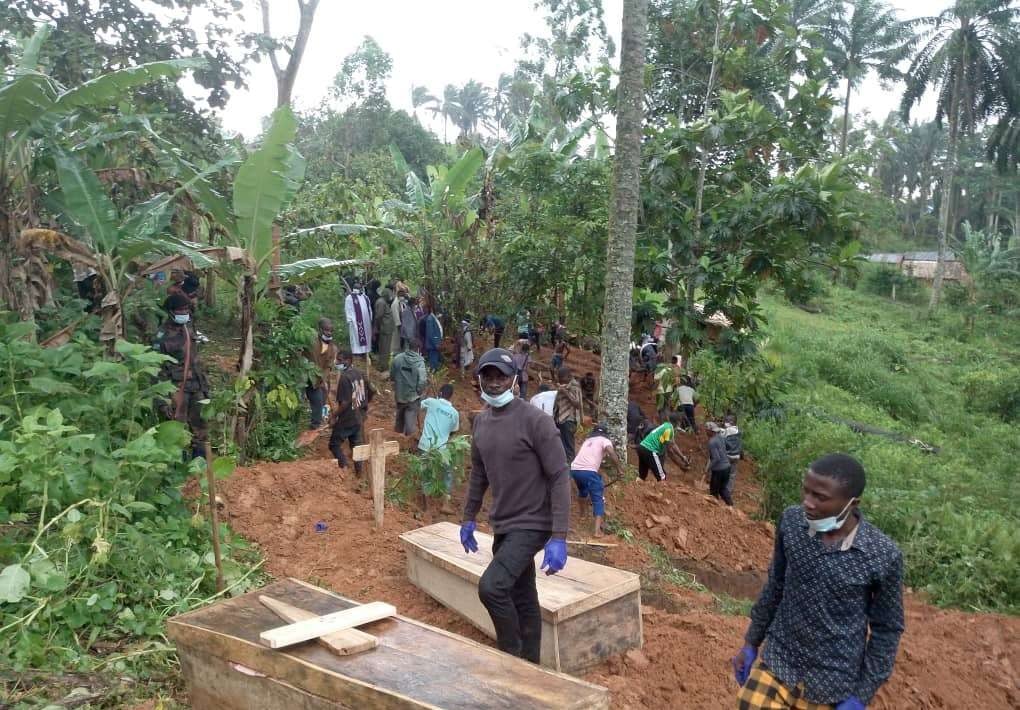
Burials in Nyoto, North Kivu, after massacres by the IS-affiliated Allied Democratic Forces
© ACN
Armed groups have been fighting for control of the vast reserves of gold, tin, coltan and tungsten in eastern DR Congo for three decades, with the mineral wealth estimated at US$24 trillion.
A bishop in the Democratic Republic of Congo’s North Kivu province appealed for dialogue to end the violence still blighting the east of the country.
Speaking at the close of the National Day for Justice and Peace organised by the Congolese bishops’ conference on 21 September, Bishop Paluku Sikuli Melchisédek of Butembo-Beni urged all warring parties to stop fighting and begin in meaningful talks.
“We must be willing to engage in dialogue, even with the enemy. It is perhaps through this dialogue that they can come to their senses. As soon as they start talking, it is already a step towards peace,” he said.
Bishop Paluku those he said were obstructing peace negotiations and urged them to “stop killing and violating human rights”. He continued: “What they are doing is wrong, and evil will not triumph over good.”
He urged Congolese youth to commit themselves to the culture of peace, saying it is only when there is peace that they could have a brighter future.
“The Congo of tomorrow belongs to them, as does Church of tomorrow. It is essential that they learn today to become peacemakers,” he said.
Bishop Paluku’s latest appeal followed a new wave of violence in the eastern DR Congo in recent months, driven by fighting between around 120 armed groups with various political and financial backers struggling for control of minerals and territory.
On 8 September, an attack carried out by the Islamic State-affiliated Allied Democratic Forces (ADF) in North Kivu killed nearly 90 people in the village of Ntoyo, within the Saint Joseph of Maguredjipa parish. In a message to Aid to the Church in Need, Bishop Paluku said it was an “umpteenth and horrible carnage”.
The United Nations reported at least 319 deaths in a series of attacks in Rutshuru, also in North Kivu, on 9-23 July by the M23 rebel forces backed by the Rwanda government.
ADF fighters also killed at least 40 Christians in an attack in Komanda village in Ituri province on 12 July, also burning least 27 shops, four houses, and three cars, three days after killing at least 70 civilians in the same province’s village of Pikamaibo
Armed groups have been fighting for control of the vast reserves of gold, tin, coltan and tungsten in eastern DR Congo for three decades. The country’s mineral wealth is estimated at US$24 trillion.
Peace negotiations have repeatedly stalled, while the US-brokered peace agreement signed by the governments of DR Congo and Rwanda in June failed to stop the conflict despite President Donald Trump’s claims to the contrary. Both the M23 rebels or the ADF, which were not included in the deal, rejected its terms and continued fighting. Visiting New York last week for the UN General Assembly, the Congolese President Felix Tshisekedi admitted it had failed.
Congolese cardinal demands end to ‘plundering’ of resources
Beatified martyrs are ‘seeds of peace’ for Congo
Stay updated — add us as a preferred news source on Google:


Help us keep The Tablet’s voice independent, clear and far-reaching.
Founded in 1840, The Tablet is the leading independent English-language Catholic weekly, celebrated for great writing, astute analysis, brilliant arts and books reviews and trustworthy reporting from correspondents in Britain, Ireland, Rome and across the world.
Independent, high-quality journalism is at the heart of what we do. The Tablet does not have deep pockets and we are not funded by rich donors. If you appreciate our work please consider supporting The Tablet’s Development Fund. It only takes a moment and you can cancel at any time.
- Support with £5 per month
- Support with £10 per month
- Support with other amount.

MOST READ ARTICLES
-
1
The Tablet poem
-
2
A craving for beauty
-
3
Battling confession fatigue
-
4
Massachusetts abuse report finds over 1,000 victims in three dioceses
-
5
Bishops demand security investment to promote ‘common good’ in Nigeria
-
6
Woman religious becomes first female president of Pontifical Mission Societies
FROM THE EDITOR'S DESK