Philippines bishops back mass campaign for law banning political dynasties


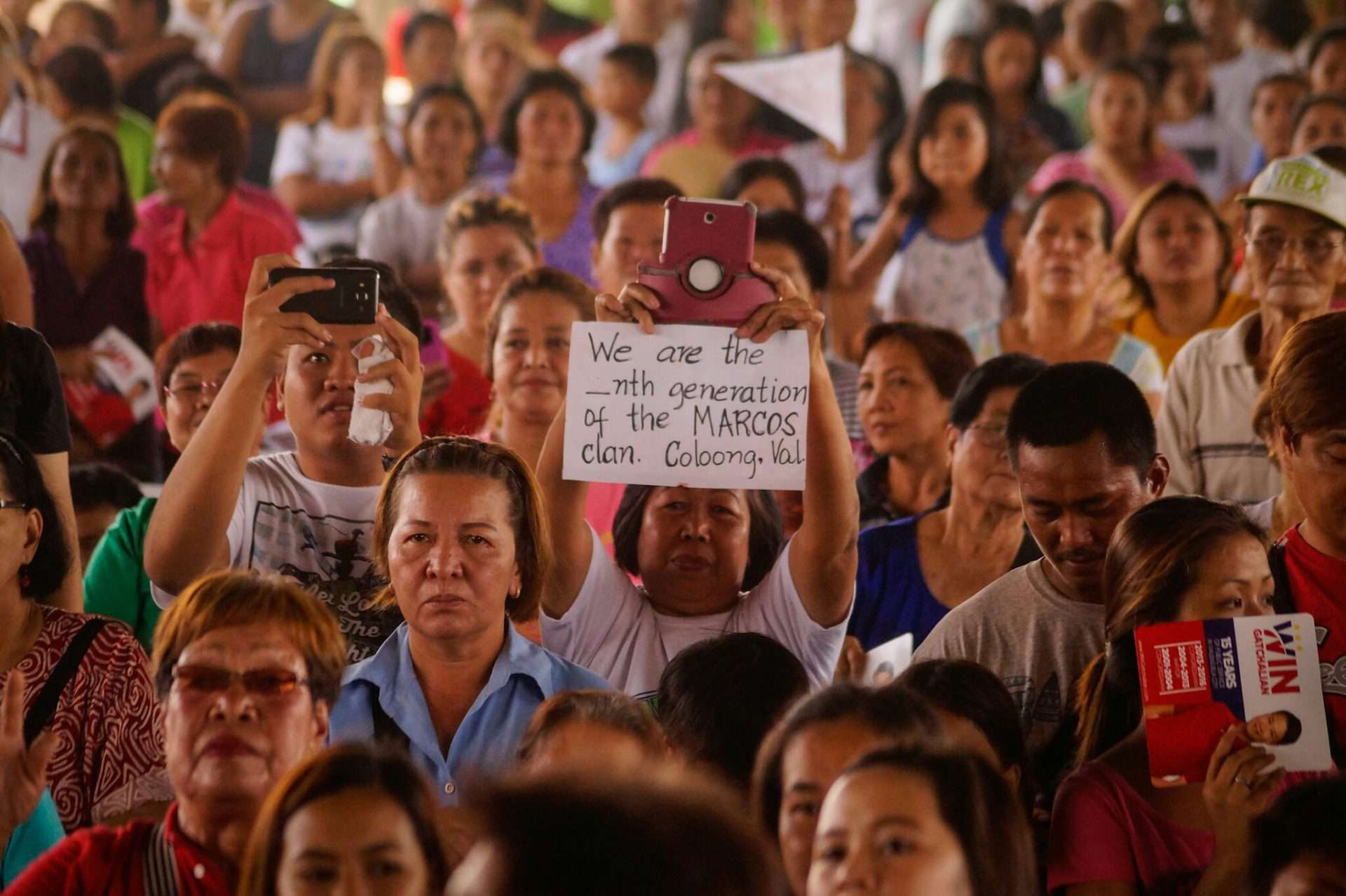
The Marcos Family Reunion in 2016
Bongbong Marcos
On the anniversary of the declaration of martial law on 21 September, commemorating the dictatorship of the late Ferdinand E. Marcos, Cardinal Pablo Virgilio David noted that his son Ferdinand Marcos Jr is now president.
The Catholic Church in the Philippines stepped up its drive against political dynasties, as religious leaders criticised how the incumbent president himself belongs to one of the country’s most powerful clans.
For the first time, the Catholic Bishops’ Conference of the Philippines (CBCP) endorsed a lay-led signature drive to pass an anti-dynasty law through the “people’s initiative” legislative mechanism.
The signature drive, called Dapat Isa Lang (“One Is Enough”), seeks to end political dynasties by prohibiting members of the same family from holding public office simultaneously.
Data from the Anti-Dynasty Network show that 83 per cent of nationally elected senators and 76 per cent of the locally elected members of the House of Representatives belong to political dynasties.
Given the composition of the Philippine Congress, organisers believe the people’s initiative is the only way to pass an anti-dynasty law because lawmakers will never act against their own interests.
The people’s initiative is a mode of legislation that allows citizens to bypass Congress by collecting a required number of signatures – 10 per cent of the country’s 71 million registered voters. Once the signatures have been collected, a referendum can be held to determine if the proposal at hand can become a national law.
The Archbishop of Lipa Gilbert Garcera, president of the CBCP, said in a statement that “the Filipino family is one of our nation’s great strengths”, yet “this strength can become harmful when family influence is transformed into the concentration and perpetuation of political power”.
“Public office must never become a family inheritance. It is a public trust, entrusted by the people to serve all,” said Garcera, 67, in a statement signed on 25 September.
The problem of political dynasties also surfaced when the Philippines marked the fifty-fourth anniversary of the declaration of martial law on 21 September, commemorating the 14-year dictatorship of the late Ferdinand E. Marcos, a period when thousands of activists were tortured or disappeared, and billions of dollars were stolen from public coffers.
The Bishop of Koolakan Cardinal Pablo Virgilio David noted how, 40 years after the late Marcos was ousted in a Church-backed uprising, the Philippines is once again led by a member of the Marcos family: the dictator’s son and namesake, President Ferdinand Marcos Jr.
David, 67, said the situation highlights an important lesson “from that painful period” in history: “the danger of allowing political power to become concentrated in the hands of one person, one family, or a small circle of privileged families”.
“After all, the democracy we recovered in 1986 was never intended to become the exclusive inheritance of a few privileged families. It was meant to belong to the Filipino people,” the cardinal said.
Ban dynasties destroying Philippines like ‘Herod’s household’, demands cardinal
Stay updated — add us as a preferred news source on Google:


Help us keep The Tablet’s voice independent, clear and far-reaching.
Founded in 1840, The Tablet is the leading independent English-language Catholic weekly, celebrated for great writing, astute analysis, brilliant arts and books reviews and trustworthy reporting from correspondents in Britain, Ireland, Rome and across the world.
Independent, high-quality journalism is at the heart of what we do. The Tablet does not have deep pockets and we are not funded by rich donors. If you appreciate our work please consider supporting The Tablet’s Development Fund. It only takes a moment and you can cancel at any time.
- Support with £5 per month
- Support with £10 per month
- Support with other amount.

MOST READ ARTICLES
-
1
The Tablet poem
-
2
Battling confession fatigue
-
3
Pope Leo announces operation to remove growth in lung
-
4
Catholic Social Teaching and universities
-
5
Nigerian first lady suffered death threat for practising Christian faith
-
6
Refugees admire ‘talent’ and ‘understanding of the topic’ of young competition winners
FROM THE EDITOR'S DESK