News Briefing: Church in the World


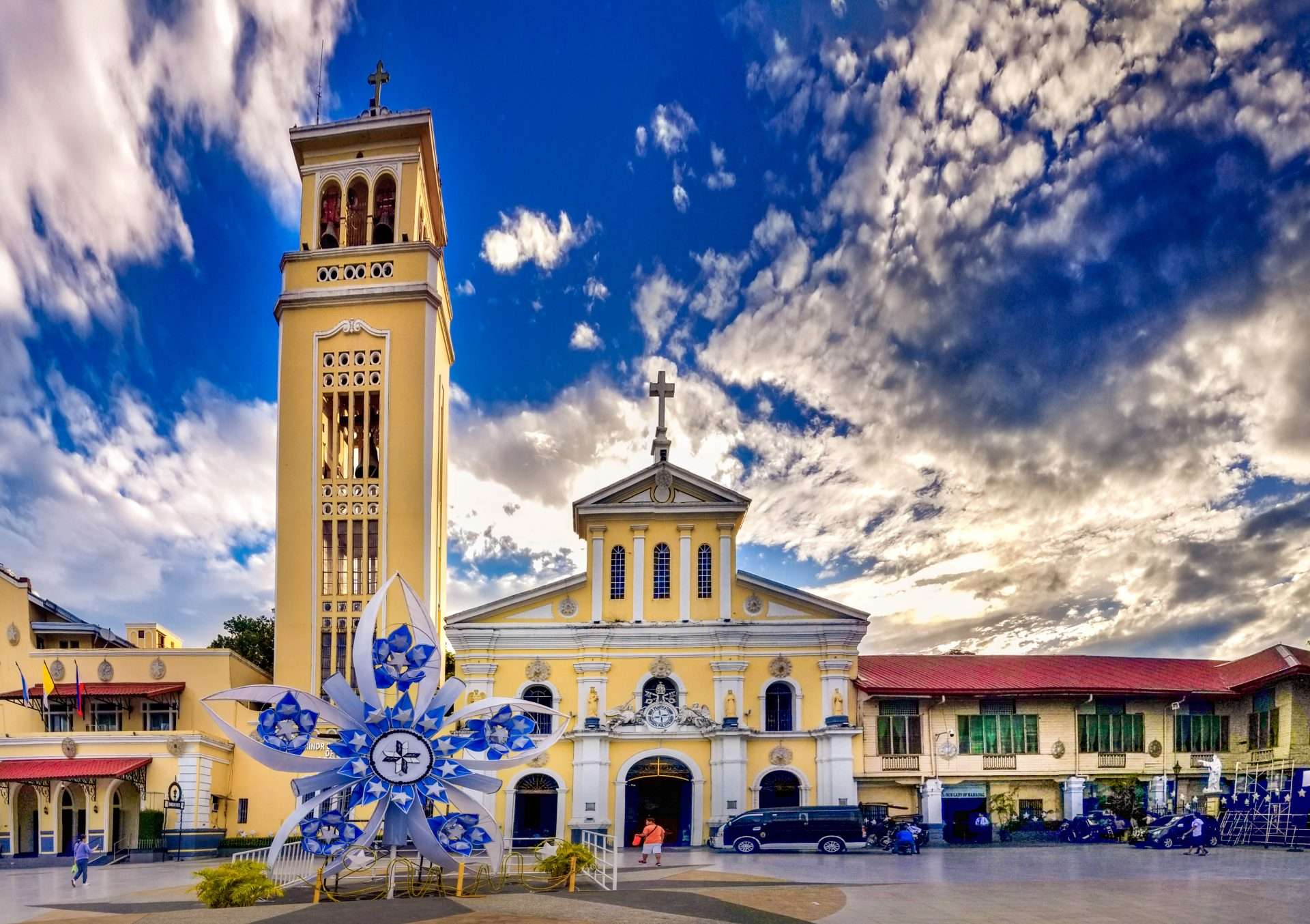
The Shrine of Our Lady of Manaoag expects up to two million pilgrims to attend celebrations of the centenary of its canonical coronation on 22 April.
Wayne S. Grazio / flickr / Creative Commons
The Ukrainian government accused Russian forces of violating an Easter truce announced by President Vladimir Putin.
The Kremlin announced last week that its forces would halt hostilities from 4 p.m. on 11 April until the end of 12 April for the celebration of Easter according to the calendar observed by both the Russian Orthodox Church and Eastern-rite Churches in Ukraine.
However, the Ukrainian parliament’s human rights commissioner Dmytro Lubinets alleged that Russian forces had conducted attacks during the truce, executing four prisoners of war and killing an evacuation team in the Zaporizhzhia region. Russia previously rejected Ukrainian proposals for an Easter ceasefire.
Preaching for Good Friday on 10 April, the head of the Ukrainian Greek Catholic Church Major Archbishop Sviatolslav Shevchuk said: “It is in Jesus that all prisoners find hope for liberation. Our captured soldiers, civilian hostages and abducted Ukrainian children find hope for freedom. We, the wounded people of Ukraine, have hope today for healing from the trauma of war.”
The Franciscan Cultural Centre in Vilnius cancelled the reservation of their conference hall on 1 May for an event with the Polish nationalist politician Grzegorz Braun, notorious for his public anti-Semitic actions including putting out a Hanukkah menorah in the Polish parliament with a fire extinguisher in 2023.
The announcement of his visit weeks before the scheduled event caused an immediate outcry among local Catholics, but also puzzled the wider public because of Braun‘s 2023 statement that “the Polish army should not lift a finger in the defence of a small, depopulated, nasty, anti-Polish, Bismarck, Anglo-Saxon and Jewish creature, that is modern Lithuania”. Braun was reportedly coming to meet the local Polish population.
“Churches, monasteries and their premises should definitely not be used for the activities of political figures … especially for such meetings that … divide society,” said Fr Mykolas Sotničenka, communications coordinator for the Archdiocese of Vilnius.
Initially, the representatives of the Conventual Franciscans who run the centre said they had not organised Braun’s visit but only rented the premises, without looking into the views of the politician. However, the Franciscan Cultural Centre later issued a statement that it “has no and has never had any connection with Grzegorz Braun”.
It continued: “The hall reservation was made through a third party, therefore, at the time of the reservation, it was not known that the planned event could be of a political nature. When these circumstances became apparent, the reservation was immediately cancelled. The Franciscan Cultural Centre does not participate in politics, consciously distances itself from it and does not support any political force.”
Pope Leo appointed Archbishop Hubertus van Mengen as apostolic nuncio to Germany. The 64-year-old Dutchman was previously nuncio to Kenya, and from there also took on diplomatic responsibilities for South Sudan. He joined the Vatican diplomatic service in 1994 and has served at the United Nations in Geneva, in Somalia, Brazil, Israel and Slovakia. Van Mengen succeeds Nikola Eterović who offered his resignation after 12 years in office on reaching the age of 75.
Bishop Heiner Wilmer of Münster, the president of the German bishops’ conference, welcomed the new nuncio: “Your many years of experience in Vatican diplomacy, particularly in crisis-stricken regions … demonstrate that you are a person who proclaims the Gospel with fearlessness and conviction and who seeks dialogue. This international experience will be of great assistance to you in your ministry in our country.”
Thieves broke into the cathedral in Speyer, in Rhineland-Palatinate in southwest Germany, on Easter Sunday night. They forced the cathedral gates open and removed a heavy free-standing safe containing around €5,000 in cash.
“Due to the size of the safe it is likely that a vehicle was used to take it away,” KNA reported, referring to police reports.
It was unclear why such a large sum of money was kept overnight in the cathedral and to whom it belongs. The Diocese of Speyer declined to comment on the incident during the investigation, saying: “We want to avoid giving perpetrator knowledge to the public.” The police appealed for witnesses.
The cathedral in Speyer, consecrated in 1061, is the largest extant Romanesque cathedral in the world and a UNESCO World Heritage site.
The Dicastery for the Doctrine of Faith reportedly halted an abuse inquiry involving the former Bishop of Cádiz and Ceuta owing to uncertainty over the age of the alleged victim when the abuse reportedly began.
The ex-seminarian alleged in a complaint to Rome last summer that he had been 14 when Rafael Zornoza, then rector of the seminary for the Spanish Diocese of Getafe, began to climb into his bed to “caress” him after the victim had acknowledged homosexual acts during Confession.
After he entered major seminary, Zornoza would enter his bed “nearly every morning and night” to kiss and touch him, the complainant added.
In a preliminary inquiry conducted by the Tribunal of the Roman Rota, a witness stated they had found Zornoza lying in bed on top of the alleged victim, who told El País he had not been informed of the dicastery’s decision. He was not angered by the news, he said, but it had “disappointed” him: “The Church could have undertaken a process of healing.”
Zornoza denies the accusations. In November, Pope Leo accepted Zornoza’s resignation, submitted the previous July when he turned 75.
The Dicastery for the Causes of Saints halted the Cause of Jorge Novak SVD, the founding bishop of the Diocese of Quilmes in Argentina and a leading critic of human rights abuses by the dictatorship in the 1970s.
The dicastery’s prefect Cardinal Marcelo Semeraro revoked the nihil obstat for the Cause “due to a possible canonical procedure not carried out … with regard to the conduct of a priest”, according to a statement from the diocese.
Cardinal Semeraro said this decision expressed “no moral judgment on the life, virtues or pastoral action of the Servant of God” and confirmed Novak would retain that title, bestowed when his Cause opened in 2017.
Bishop Manuel de Jesús Rodríguez of Palm Beach, Florida said the suffering of the people of Cuba has now “reached truly inhumane proportions”.
Speaking after a visit to the Caribbean island in March for the installation of Osmany Massó Cuesta as Bishop of Bayamo-Manzanillo, he said: “Our solidarity and response are urgently needed.” Electricity blackouts and food shortages have intensified since January after the US effectively blocked oil shipments to Cuba from Venezuela and Mexico.
Bishop Rodríguez called for Cubans to have greater access to the internet, and more political freedom and freedom of self-expression. The prelate, born in the Dominican Republic, lived in Cuba as a missionary in 1999-2000.
“I have found a people who still possess the same faith, a people filled with hope, and a Church that has continued to grow and renew itself. However, suffering and distress in general have multiplied. When I was here more than 25 years ago, the humanitarian and social situation was already appalling,” he said.
President Ferdinand Marcos Jr celebrated 75 years of diplomatic relations between the Philippines and the Holy See at a reception in the former walled city of Intramuros on 8 April.
The Philippines established diplomatic ties with the Holy See on 8 April 1951, five years after gaining independence from the United States. In his speech, Marcos paid tribute to more than four centuries of Catholic presence in the Philippines, noting how Catholicism is now an integral part of Filipino identity.
“At the heart of our relationship with the Holy See is a shared commitment to peace, human dignity and social justice,” the 68-year-old Philippine leader said, also paying tribute to Filipino migrants who serve as missionaries overseas.
The apostolic nuncio Archbishop Charles Brown commended “the innate virtue of the Filipino people, their deep religious faith, wonderful family traditions, and profound love for the freedom and independence of the nation” at a Mass before the reception.
In his homily, Brown pointed out that the anniversary was taking place against the international backdrop of conflict and violence. “Permit me, in closing, to re-echo the call of Pope Leo XIV for diplomacy that promotes dialogue, that builds relationships, that seeks consensus – a diplomacy, in short, that works for peace,” the nuncio said.
A centuries-old shrine in the northern Philippines is preparing to receive up to two million pilgrims on 22 April, the centenary of the canonical coronation of Our Lady of Manaoag.
According to folk tradition, the seventeenth-century image of Our Lady of Manaoag appeared to a farmer and asked that a church be built in her name. Through the centuries, the Marian shrine eventually attracted millions of Filipinos to the town of Manaoag, around 200 km (1245 miles) from the capital Manila, to seek success in exams, employment and health.
The local ordinary, Archbishop Socrates Villegas of Lingayen-Dagupan, said the Virgin can teach the world that “tenderness is a strength” in this age of terror and wars.
“Look at those responsible for wars: they are all men. I think we need women who show tenderness,” Villegas said on 7 April. He added that the current oil crisis cannot stop the grand celebration on 23 April.
“My question is: when did we ever have no crisis? If crisis will be the reason for not celebrating, then we will not celebrate at all, because there is always a crisis somewhere, sometime, in the world,” said Villegas, adding that the “determinant factor” in celebrating is “our faith in God”.
The Socialist Republic of Vietnam extended an official invitation to Pope Leo. The chairman of Vietnam’s National Assembly presented the Pope with an “official invitation” from To Lam, the General Secretary of the Communist Party and President of Vietnam, on 11 April.
The Pope expressed his “sincere thanks” and said he wished to visit “in the near future”, the Vietnam News Agency reported. He also said he hoped to “further deepen bilateral ties”.
Since the end of the Vietnam War in 1975, the Holy See has lacked official diplomatic relations to Vietnam where Communist authorities considered the Church too close to France, the former colonial ruler. However, a joint working group between Hanoi and the Vatican has been meeting since 2009 in a bid to restore relations.
In 2023, the group agreed the Holy See could send a “resident papal representative” to Vietnam. In April 2024, Archbishop Paul Gallagher, the Holy See’s Secretary for Relations with States, made a six-day visit to Vietnam where the 100-million strong population is roughly seven per cent Catholic. Pope Francis was also invited to visit Vietnam.
Catholics in the city of Loikaw in Myanmar’s Kayah state celebrated Easter in the Cathedral of Christ the King for the first time since the army occupied the building complex in November 2023.
Bishop Celso Ba Shwe of Loikaw and 80 clergy and laity sheltering the cathedral were forced to flee when the military seized it to use as a base for operations against rebel forces in the state. Two priests were able to return to the cathedral when the army left it in recent weeks, although the bishop remains with the displaced community away from Loikaw.
“I stand by their side and, with other priests and religious, we make our solidarity known to these faithful,” he told Vatican News. The Archbishop of Yangon Cardinal Charles Maung Bo said Easter was “an opportunity to make peace”.
Humanitarian agencies appealed for a ceasefire in Lebanon as Israeli strikes continued after the pause in US-Iran hostilities on 8 April. More than 250 people were killed and more than 2,000 injured in a “drastic escalation” of airstrikes last week, according to the Christian relief and development agency Tearfund.
One in every five people in Lebanon – more than 1.2 million people – has been forced to leave their home since the start of the conflict. Marielle Boutros, project coordinator for Aid to the Church in Need, said people believed they were safe in their own homes.
“Two days ago more than 100 bombs fell over Beirut. It was here and there, not just the south of the capital, it was around the whole city – you could hear the bombs from our office,” she said.
“Some areas were not previously targeted so the people thought that they were safe but actually they were not. It was scary, it caused anger, it caused sadness especially when you hear a ceasefire is happening elsewhere. It was really tragic.”
The apostolic nuncio to Lebanon Archbishop Paolo Borgia led an aid convoy to the south of the country on 8 April, but was forced to turn back when it came under fire.
A former member of the Knight of St John International who publicly renounced Christianity was made a “bishop” in a Nigerian traditional religion movement.
Sir James Louis, also known as Ebube Anaedo, denounced the Church on 14 January during the dedication of the Our Lady of Assumption Cathedral in Nnewi, Anambra State, expressing anger that the late Ifeanyi Ubah, a businessman and senator, was not honoured at the service despite funding much of the construction.
He questioned why the Church honoured foreign saints while forgetting Ubah. A viral video showed him removing his knight’s hat and leaving the Cathedral while screaming “Akacham”, meaning “I’m done with Church”.
A new video shared last week by vocal Igbo traditionalist Mathias Ezeaku showed Louis being ordained as a senior bishop in the Omenala Bu Eziokwi Na Ndu movement, whose name means “Tradition is the truth in life movement”.
Speaking at the ceremony, he stated that he served in various capacities in the Catholic church, including in Block Rosary, the choir, and as a knight, but he has now seen the light in traditional religion.
A former nun from Nigeria said she has received more than 80 marriage proposals since leaving the convent amid allegation of inappropriate conduct by priests. However, she said she had declined all of them because she wanted to make careful decisions about her future.
Kinse Shako Annastasia, previously a member of the Congregation of Mother of Perpetual Help of the Archangels Sisters, based in Auchi, Edo state, also shared her dismissal letter online and the document showed that she was given a payment of 100,000 Naira (£55) after her removal from the religious institution.
Annastasia first became widely known in August 2025 when she publicly claimed that some priests had made sexual advances toward her. After this led to her dismissal, she continued to speak about her experience, claiming Church authorities were unhappy that she refused to compromise her vows and personal values.
Since leaving the convent, Annastasia has also attracted attention on social media by recording her new lifestyle and fashion choices.
Stay updated — add us as a preferred news source on Google:

Dicastery for the Causes of Saints
The Catholic Church in Germany
The Catholic Church in Nigeria

Help us keep The Tablet’s voice independent, clear and far-reaching.
Founded in 1840, The Tablet is the leading independent English-language Catholic weekly, celebrated for great writing, astute analysis, brilliant arts and books reviews and trustworthy reporting from correspondents in Britain, Ireland, Rome and across the world.
Independent, high-quality journalism is at the heart of what we do. The Tablet does not have deep pockets and we are not funded by rich donors. If you appreciate our work please consider supporting The Tablet’s Development Fund. It only takes a moment and you can cancel at any time.
- Support with £5 per month
- Support with £10 per month
- Support with other amount.



