McElroy condemns ‘assault’ on migrants as Church celebrates their hope


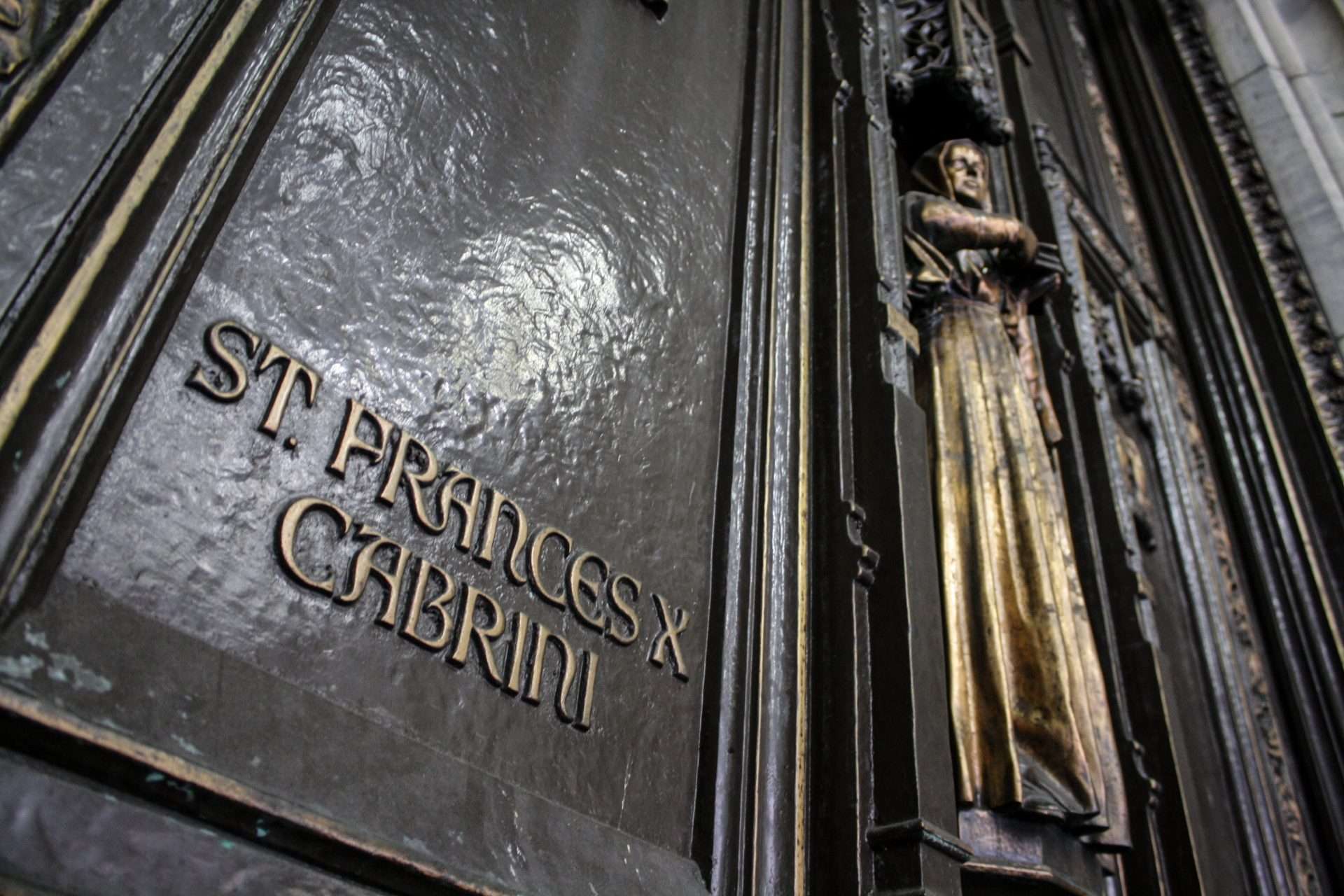
The US Conference of Catholic Bishops marked National Migration Week by calling on Catholics to take the ‘Cabrini Pledge’.
Jason John Paul Haskin / flickr | Creative Commons
‘Migrants and refugees remind the Church of her pilgrim dimension, perpetually journeying towards her final homeland, sustained by a hope that is a theological virtue.’
The Archbishop of Washington Cardinal Robert McElroy condemned the “comprehensive governmental assault” on migrants in the United States.
Preaching at a Mass for National Migration Week in the Cathedral of St Matthew the Apostle on Sunday, Cardinal McElroy called on Catholics to respond to this threat.
“Our first obligation as a Church is to embrace in a sustained, unwavering, prophetic and compassionate way the immigrants who are suffering so deeply because of the oppression they are facing,” he said.
“Our Catholic community here in Washington has witnessed many people of deep faith, integrity and compassion who have been swept up and deported in the crackdown which has been unleashed in our nation.”
He said the Trump administration’s policy was “designed to produce fear and terror among millions of men and women who have through their presence in our nation been nurturing precisely the religious, cultural, communitarian and familial bonds that are most frayed and most valuable at this moment in our country’s history”.
“This assault seeks to make life unbearable for undocumented immigrants,” McElroy said. “It is willing to tear families apart, separating grieving mothers from their children, and fathers from the sons and daughters who are the centre of their lives.”
The US Conference of Catholic Bishops (USCCB) marked National Migration Week by calling on Catholics to take the “Cabrini Pledge”.
Named for St Frances Xavier Cabrini, the patron saint of immigrants, the pledge instructs Catholics “to affirm, in word and deed, the inherent dignity of every person, regardless of immigration status or country of origin, seeing each as a child of God before all else”.
The USCCB noted that Cabrini, the first US citizen to be canonised, faced “discrimination and seemingly impossible odds [yet] she never succumbed to hopelessness. With relentless faith, she accompanied her fellow immigrants and others living on the margins of society with a great missionary zeal.”
Bishop Mark Seitz of El Paso, chair of the bishops’ committee on migration, said, “during her life of service, Mother Cabrini often faced great trials as an immigrant, a woman, and an advocate for the poor, but she never relented in her determination to build an empire of hope, sustained by her relationship with Christ in the Eucharist and in the face of those she served.”
The week concludes with the World Day of Migrants and Refugees on 5 October, a date chosen by Pope Francis to coincide with the celebration in Rome of the Jubilees of Migrants and of the Missions.
In his message for the day, published in July, Pope Leo said that “migrants and refugees stand as messengers of hope” because their “courage and tenacity bear heroic testimony to a faith that sees beyond what our eyes can see and gives them the strength to defy death on the various contemporary migration routes”.
“Migrants and refugees remind the Church of her pilgrim dimension, perpetually journeying towards her final homeland, sustained by a hope that is a theological virtue,” he said.
“In a special way, Catholic migrants and refugees can become missionaries of hope in the countries that welcome them, forging new paths of faith where the message of Jesus Christ has not yet arrived or initiating interreligious dialogue based on everyday life and the search for common values.”
Cardinal Luis Antonio Tagle, the pro-prefect of the Dicastery for Evangelisation, told a gathering of migrant workers in Taiwan on 21 September that the Church’s care for migrants was “a sacred duty, a mission that draws down blessings”.
Around 8,000 people, primarily workers from Vietnam, Indonesia, Thailand and the Philippines, attended the event in the Diocese of Hsinchu, along with bishops, around 400 priests, consecrated men and women, and members of church communities.
Migrants “are never to be regarded as a problem, but rather as persons who bear the living face of Christ … to be welcomed into the life of the community”, Tagle said, describing them as “authentic missionaries of the Gospel”.
The diocese said it was preparing a plan for the pastoral care of migrant workers and itinerant people in Taiwan “which responds to the urgent needs of their daily lives and expresses the gratitude of the entire Church community towards migrants and their contribution to the growth of Taiwanese society”.
Cardinal Michael Czerny SJ, the prefect of the Dicastery for Promoting Integral Human Development, said the Church’s first response to the challenges faced by migrants must be encounter.
“What matters is that, in each place, the Church asks: how can we respond?” he said ahead the World Day of Migrants and Refugees, which he will mark in South Africa – where there have been significant outbreaks of hostility towards migrants from elsewhere in the region.
“Sometimes all we can do is be with people,” he said, “and that is already something powerful, because they know they are not alone.”
Evelio Menjivar – bishop without borders
Iowa bishops insist immigration is ‘moral matter’ amid Trump rhetoric
Stay updated — add us as a preferred news source on Google:


Help us keep The Tablet’s voice independent, clear and far-reaching.
Founded in 1840, The Tablet is the leading independent English-language Catholic weekly, celebrated for great writing, astute analysis, brilliant arts and books reviews and trustworthy reporting from correspondents in Britain, Ireland, Rome and across the world.
Independent, high-quality journalism is at the heart of what we do. The Tablet does not have deep pockets and we are not funded by rich donors. If you appreciate our work please consider supporting The Tablet’s Development Fund. It only takes a moment and you can cancel at any time.
- Support with £5 per month
- Support with £10 per month
- Support with other amount.

MOST READ ARTICLES
-
1
Pope Leo diagnosed with lung cancer after operation
-
2
The Tablet Lecture 2026: Keeping the dream of peace alive
-
3
Battling confession fatigue
-
4
Vatican confirms Pope’s Latin America travel plans despite operation
-
5
Archbishop bars Catholics from firing squad for US military execution
-
6
Under endless skies
FROM THE EDITOR'S DESK


