Laws ‘not fit for purpose’ to fight trafficking, warns campaigner


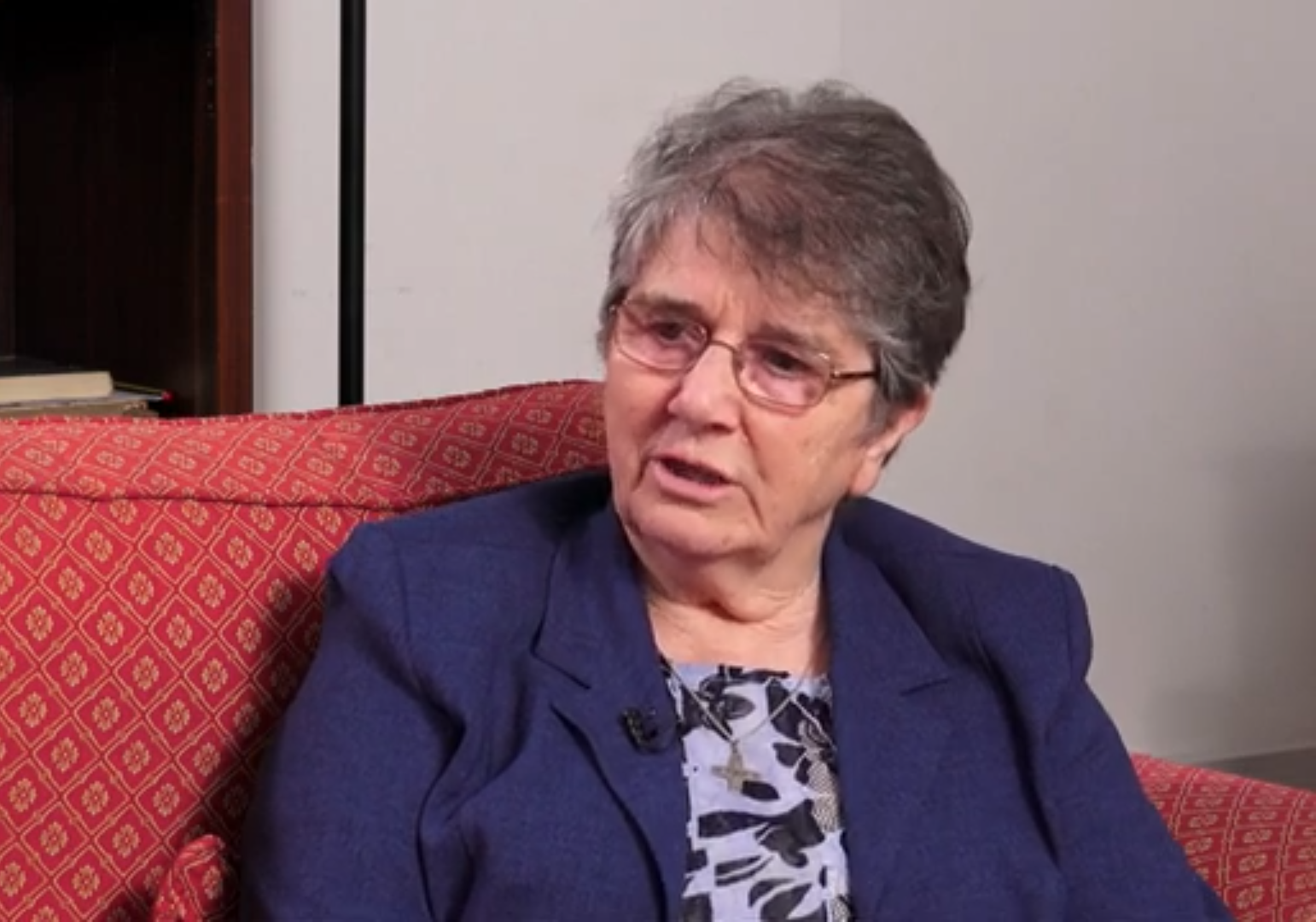
Sr Imelda Poole said campaigners are facing ‘huge, huge evil systems of injustice that are being developed by the criminals’.
Las Casas Institute / Youtube screenshot
‘We need to face this horror and speak out more. The only answer is total collaboration across the world to combat this crime,’ said Sr Imelda Poole IBVM.
Artificial Intelligence, deep fakes and the use of cryptocurrencies are making it increasingly difficult to criminalise traffickers, a leading anti-trafficking advocate has warned.
Sr Imelda Poole IBVM, who has worked with vulnerable women and survivors of trafficking in Albania for 20 years, said the situation has changed “hugely” in the past two to three years with the traffickers increasingly able to disguise their activities while the trafficked are criminalised.
Speaking at a Pastoral Review webinar titled “Mission Influenced by the Charism of Mary Ward: Social Action and Education in Albania and Beyond”, Sr Imelda stressed that there is “no law fit for purpose to combat human trafficking today in any country because of these changes by the traffickers”.
She paid tribute to the work of the Medaille Trust which provides refuge to those escaping modern slavery and exploitation, as well as to Catholic education which is forming young people as leaders for change.
“Schools are one of the great sources of advocacy,” she said in response to remarks by Jane Beever, headteacher of Loreto Grammar School Altrincham, about Catholic education’s approach to trafficking and other social justice issues.
Setting out the context in which anti-trafficking campaigners work, Sr Imelda told the webinar: “Dani [Wardman, CEO of the Medaille Trust], Jane in her school, and I are like little, tiny people trying to work to face these huge, huge evil systems of injustice that are being developed by the criminals.”
“We need to face this horror and speak out more. The only answer is total collaboration across the world to combat this crime,” she said.
Speaking about the partnerships between education, faith communities and social action initiatives in fighting trafficking, Dani Wardman emphasised that no one organisation can do it alone: “We have to collaborate across borders. We have to collaborate with each other in lots of different sectors.”
“A lot of the provisions that were put in place 10 years ago have been eroded. You just have to look at what is happening with Reform,” she said. “We are starting to talk about modern slavery as a loophole, rather than as a response to a crime that has happened to someone’s human dignity. We really have got a long way to go.”
She continued: “I think the only way to turn empathy into action is to collaborate across the networks that we have and pull all of those things together and tackle it from lots of different levels.”
Speaking about the work of the Medaille Trust, which next year is 20 years old, Wardman told the webinar that it was deeply rooted in Catholic Social Teaching around social justice, people on the margins, restoring human dignity and the need for people to have dignity and agency to thrive.
“We have safe houses, and they are places of safety, but we can’t just create places of safety – we have to create places of healing as well.”
The Medaille Trust’s work with hundreds of people every year for the last 20 years has allowed it to understand the impact that slavery has on people. “Every day we learn something new from the people coming through our doors and telling us their stories,” Wardman said.
“We help them to rebuild trust, not just trust in other people but also trust in themselves. A lot of the time, their ability to make choices, to trust their own decision-making has been eroded by the trauma they have experienced. We need to give them agency back in a trauma-informed way.”
She said understanding what slavery looks like in the UK compared to other places was very important: “What people don’t often understand is that the majority of people who go through the National Referral Mechanism – the place where we sort of officially recognise victims – are British nationals.”
People of faith and parishes communities should educate themselves on what trafficking looks like and what to do if they suspect someone is the victim of trafficking, she said, appealing to people to avail of the national helpline which provides advice.
Parishes can also play an important role in building safe environments: “Often the people that we work with, because they have a deep faith themselves, seek sanctuary from parishes. So the people there who receive them need to be able to understand what they are describing is slavery, and be able to give them good advice and help get them referred somewhere that can help them.”
Human trafficking – listen, dream, act
Anti-trafficking work demands ‘ethical leadership’, say campaigners
Stay updated — add us as a preferred news source on Google:


Help us keep The Tablet’s voice independent, clear and far-reaching.
Founded in 1840, The Tablet is the leading independent English-language Catholic weekly, celebrated for great writing, astute analysis, brilliant arts and books reviews and trustworthy reporting from correspondents in Britain, Ireland, Rome and across the world.
Independent, high-quality journalism is at the heart of what we do. The Tablet does not have deep pockets and we are not funded by rich donors. If you appreciate our work please consider supporting The Tablet’s Development Fund. It only takes a moment and you can cancel at any time.
- Support with £5 per month
- Support with £10 per month
- Support with other amount.

MOST READ ARTICLES
-
1
Church warns Zambian government against division after archbishop’s arrest
-
2
A craving for beauty
-
3
Breaking up … for now
-
4
Nurturing young Catholics in STEM
-
5
Bishops demand security investment to promote ‘common good’ in Nigeria
-
6
Rival church occupies Kyiv monastery in latest blow to Moscow-linked Orthodox
FROM THE EDITOR'S DESK