Kukah defends cardinal’s criticisms of Nigerian government


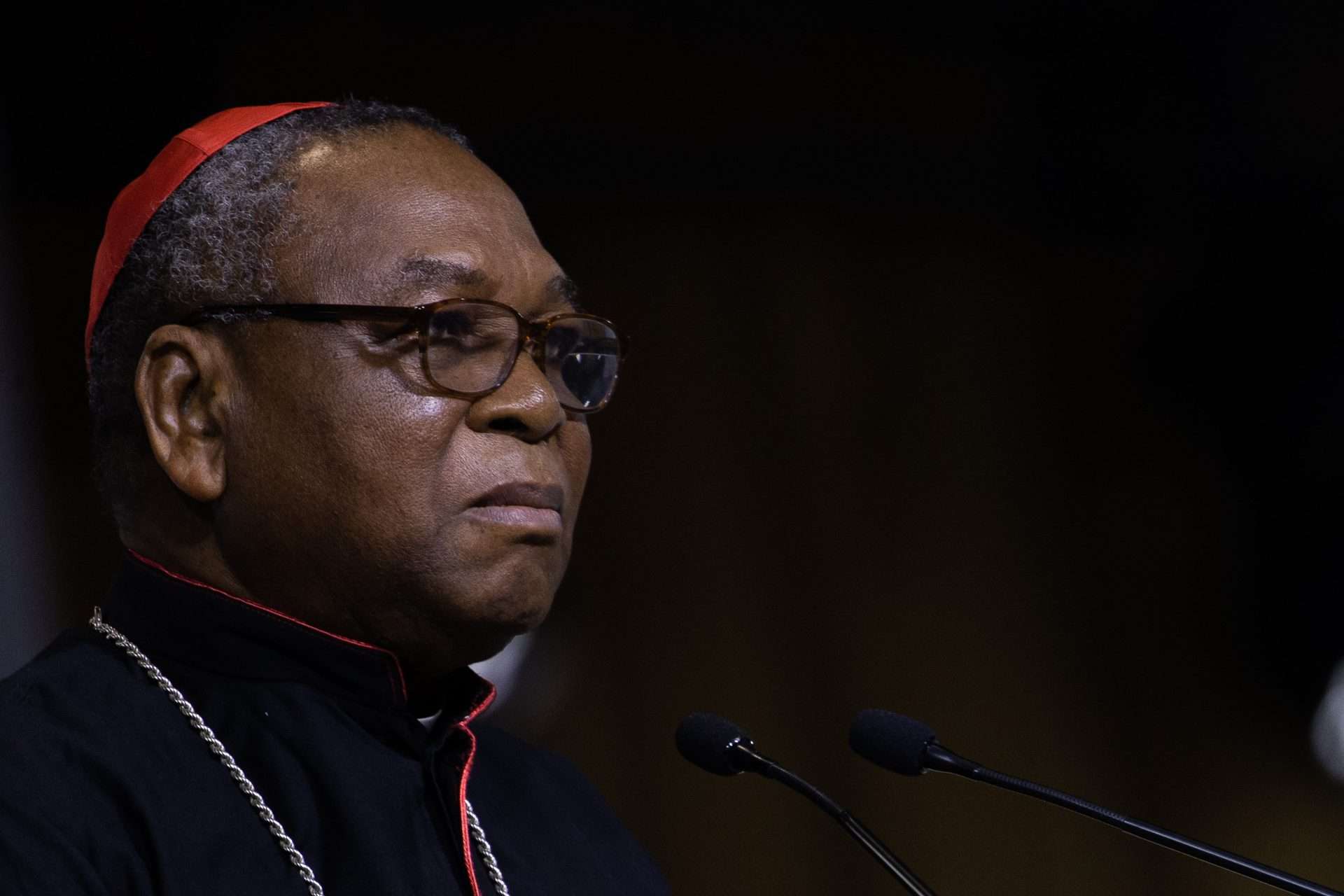
Cardinal Onaiyekan, the former Archbishop of Abuja, said that ‘Nigeria is bleeding’, citing insecurity and violence in several parts of the country, and claimed that the 2027 elections are being fixed in favour of President Bola Tinubu.
Daniel Ibañez / EWTN News
‘We are not unaware that our political elite are performing under par. Yet, as they say, no matter how much you try, you cannot hurry the sunrise. So, let us keep marching in hope. As Christians, hope is the commodity we offer.’
Christian leaders in Nigeria defended Cardinal John Onaiyekan after he made controversial allegations against President Bola Ahmed Tinubu’s government.
The Bishop of Sokoto Matthew Hassan Kukah and the chairman of the Christian Association of Nigeria (CAN) in Northern Nigeria, the Revd John Joseph Hayab, voiced support for the cardinal following objections to his remarks in a television interview after a meeting between President Tinubu and the Catholic Bishops’ Conference of Nigeria (CBCN).
The bishops’ message to Tinubu included several criticisms of the government, particularly of its failure to resolve the security crisis and widespread economic hardship. They also warned of the dangers of electoral fraud undermining Nigerian democracy.
Cardinal Onaiyekan, the former Archbishop of Abuja, said that “Nigeria is bleeding”, citing insecurity and violence in several parts of the country, and claimed that the 2027 elections are being fixed in favour of Tinubu.
Two presidential aides, Bayo Onanuga and Daniel Bwala, demanded that the cardinal apologise to the president for his comments, but Bishop Kukah said this did not amount to a rift between the government and the Church.
“We as bishops have no plans to contest elections, but we have a moral duty to point out how the common good can be achieved,” he told The Tablet, emphasising that the complaints did not come from Tinubu himself. “Do not mistake the overzealousness of the media aides to be the mind of the president.”
Kukah explained that meetings with the president are a regular feature of the bishops’ relationship with the state, and allowed them “to oil these wheels of collaboration and also share any concerns we may have about the country while also seeking ways of greater collaboration, especially in the area of peace in our country”.
He maintained: “This is in keeping with our apostolate as pastoral leaders.”
Responding to claims that he supports Tinubu’s government, Kukah said the suggestion derives from “the hysteria in the last one year over the issues of persecution of Christians and claims of genocide and President Trump’s claims of coming to save Christians”.
“Then as now, I am pleased that in all of that period, I was in sync with the mind and spirit of all the members of [the bishops’] conference. We did issue a statement to the effect that we wanted an end to violence in our country and that our focus should be on our country and its citizens and not on Christians alone,” he said.
“Our position as a conference aligned with that of the Holy Father and the [Holy See’s] Secretary of State, both of whom had shown concerns with the violence in Nigeria and encouraged the government to end violence against its citizens. Our position may not have been popular, but we believed that as leaders, we were right. Go back and read our statements during the period.”
Kukah said that Cardinal Onaiyekan is “one of this nation’s most respected clerics” and “spoke as a free citizen and one with a moral voice that is respected”.
“Beyond the shores of Nigeria, Africa and the world, he is highly revered. His views have always been prescient, fearless, and morally sound, often pointing out the best way for our nation. Nigerian opposition politicians and journalists have sought in vain to make an issue out of it by presenting the cardinal as an opponent of the president.”
The bishop said Nigerians must “renew our commitment to democracy”, citing the remark attributed to Winston Churchill that democracy is “the worst form of government, except for others”.
“As religious leaders, we believe God has great plans for our country,” Kukah continued. “Our democracy is still young. I understand that with social media, there has been a surge of expectations. I am unhappy with the fact that poverty still ravages our land. I am sad that violence continues to ravage our land. I believe we could have done much better.
“However, we are pleased that we are still standing as a country. After over 25 years of back-to-back elections, with no one calling for the return of the military [which governed Nigeria from 1966 to 1999], ordinary Nigerians have faith in their country and they also believe that democracy offers us a good platform to manage our diversity.
“We are not unaware that our political elite are performing under par. Yet, as they say, no matter how much you try, you cannot hurry the sunrise. So, let us keep marching in hope. As Christians, hope is the commodity we offer.”
Hayab, a Baptist minister who chairs the CAN in Norther Nigeria, echoed this argument in a television interview, saying those attacking Cardinal Onaiyekan and his fellow bishops were putting personal interests ahead of the nation’s future.
“Those who believe that their first god is their stomach, and their interest is what they gain from government, they don’t care about the future of the country,” he said on Trust TV’s Daybreak. “If we do not address insecurity, these same people shouting against these bishops will also be victims. Their families will be victims.”
Hayab criticised the presidential aids who attacked Onaiyekan, noting that insecurity has affected communities including Daniel Bwala’s home village.
“My brother Daniel Bwala, whose home village has not resettled up to now. Someone is calling for things to be done right so that things will be good for you at home and good for you in the city, and you call it partisan? Then you are short-sighted,” he said.
He also questioned the position of Bayo Onanuga, saying Nigerians remember him as a journalist known for courage and transparency.
“Is it not the same Bayo? Such a man with such courage, what has happened to him now that he is no longer thinking about nation-building and transparency? All he is interested in is his position.”
Hayab argued that those who tell President Tinubu the truth are his genuine supporters, while those who only praise him may not be acting in the country’s interest. He dismissed the suggestion that the bishops’ visit was linked to the 2027 elections, emphasising that their message about insecurity and hardship remains important regardless of timing.
The Pentecostal Fellowship of Nigeria (PFN) also backed the CBCN, saying that any attack on Catholic bishops is an attack on Nigeria’s entire Christian community.
PFN national president Bishop Wale Oke, founder of a Pentecostal church based in Ibadan, western Nigeria, endorsed Cardinal Onaiyekan’s remarks.
“Are we not bleeding in Benue, Southern Kaduna, Borno, Kwara and Oyo?” Oke asked, insisting that speaking truth to power is “a moral responsibility and not a political act”.
In separate comments to The Tablet, Bishop Kukah said Nigeria’s Christians must not live in fear despite the evidence of growing persecution, arguing that this has historically been a catalyst for growth and strength.
“The history of our church is a history of innocent blood and martyrdom,” he said. “We all want to live in peace and safety. However, we know from our history that persecution has only made us strong … I believe the God we worship will defend us and we cannot surrender to fear.”
Kukah said that martyrs – such as the 18-year-old seminarian Michale Nandi, abducted and murdered in 2020 – sustained the Church in Nigeria, which now numbers 35 million Catholics with a weekly Mass attendance rate of 94 per cent.
He attributed such growth to the solid foundations laid by early missionaries and the towering influence of indigenous clergy like Cardinal Francis Arinze and Cardinal Anthony Olubunmi Okogie.
Contrasting this with the decline of Christianity in Europe, Kukah argues that the European Church collapsed when it abandoned the “ground floor” where the people are and ascended to the “upper chambers” of secular power.
He said that Nigeria, and Africa at large, can only sustain its phenomenal growth if it learns from Europe’s mistakes and resists the allure of secularism, ensuring the Church changes the world rather than becoming like it.
Using a proverb from his grandmother – “What made the mother vulture bald will also make her baby bald” – Kukah warned that this could come from African elites looting national treasuries to send spiritually immature children to the West for education.
He said that without rigorous spiritual formation at home, Africa’s youth could easily fall victim to the same materialism and cultural shifts that emptied European churches.
Nigeria divided: when poverty and ignorance kill
Cardinal in Nigeria attacks government over rise in kidnappings
Stay updated — add us as a preferred news source on Google:


Help us keep The Tablet’s voice independent, clear and far-reaching.
Founded in 1840, The Tablet is the leading independent English-language Catholic weekly, celebrated for great writing, astute analysis, brilliant arts and books reviews and trustworthy reporting from correspondents in Britain, Ireland, Rome and across the world.
Independent, high-quality journalism is at the heart of what we do. The Tablet does not have deep pockets and we are not funded by rich donors. If you appreciate our work please consider supporting The Tablet’s Development Fund. It only takes a moment and you can cancel at any time.
- Support with £5 per month
- Support with £10 per month
- Support with other amount.

MOST READ ARTICLES
-
1
German bishops commit to global Synod process despite delay to reforms
-
2
The Tablet poem
-
3
Battling confession fatigue
-
4
Bangladesh Christians ask president to help ease missionary visa restrictions
-
5
Catholic Social Teaching and universities
-
6
Pope Leo announces operation to remove growth in lung
FROM THE EDITOR'S DESK


