Kidnap threat hits Nigerian school and seminary enrolment


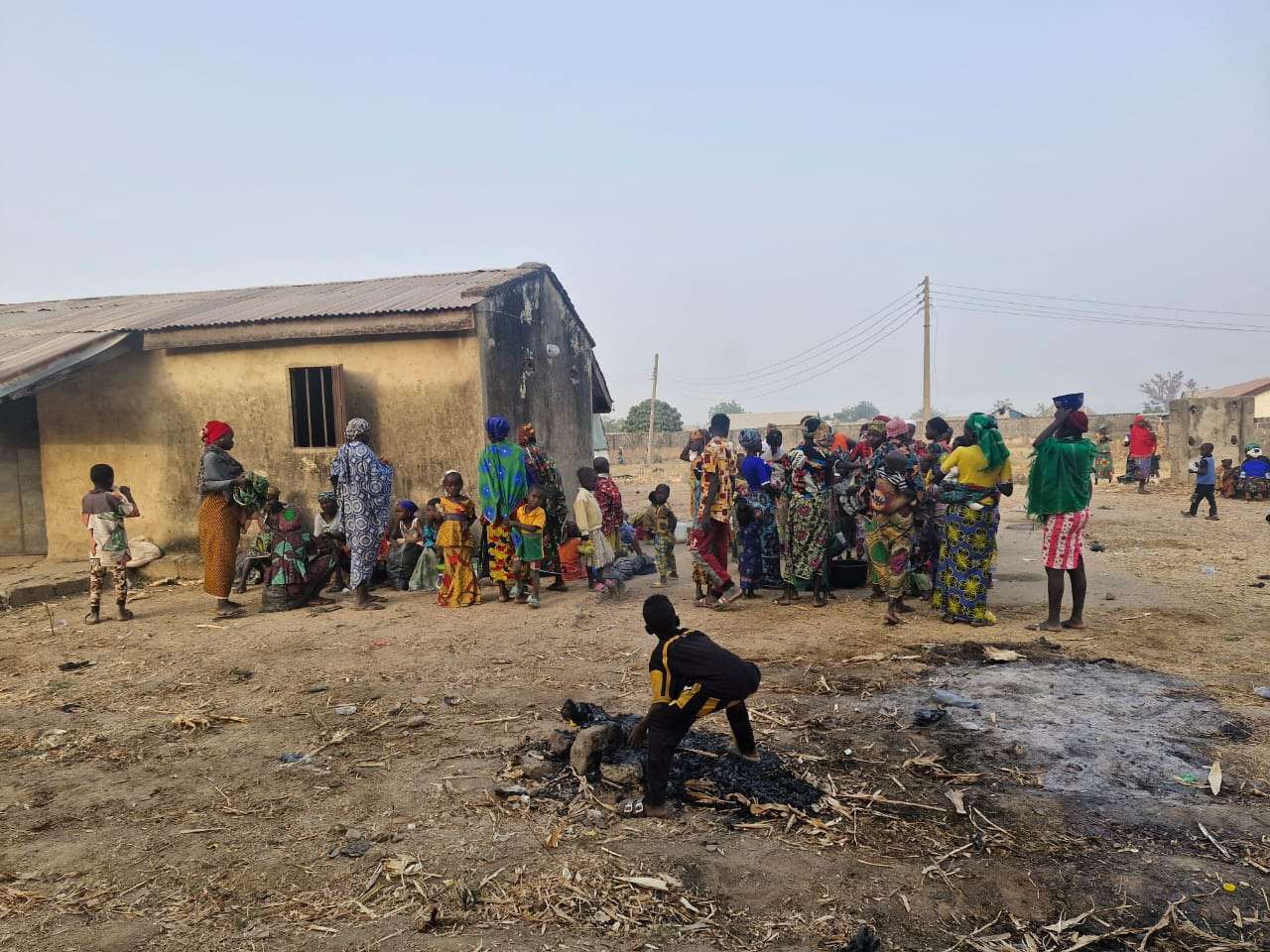
Christians in the Diocese of Kontagora, where the St Mary Catholic School suffered an attack in November in which more than 200 pupils were abducted
© ACN
According to a bishops’ conference study, in 41 of the country’s 59 dioceses over 200 priests and seminarians have been kidnapped in the past decade.
Attacks by bandits and terrorists on Catholic seminaries in Nigeria have begun to impact on the institutions’ enrolment. Parents and guardians are reportedly afraid to allow their children to attend seminary until the threat diminishes.
Reports for the Catholic Bishops’ Conference of Nigeria (CBCN) indicate that at least 212 priests were kidnapped in the country between 2015 and 2025,
In November, attackers abducted around 200 pupils from the St Mary Catholic School in Papiri, in northern Niger State, an incident regarded as the height of attacks on Catholic educational institutions. Although all the abductees were returned in the following weeks, The Tablet understands that about a quarter them have now been withdrawn from the school by their parents.
On 10 July 2025, attackers kidnapped three students from the Diocese of Auchi’s Immaculate Conception Minor Seminary in Ivianokpodi, Edo State. They released two on 25 November but the third died in their custody. The parents of the survivors have withdrawn them from the minor seminary.
Similarly, students kidnapped in October 2021 from the St Albert the Great Institute of Philosophy, a major seminary in Fayit community in Kagoma of Jama’a Local Government Area of Kaduna State, and ransomed for large sums, did not all return to the institute.
After a failed attack on a minor seminary in the Diocese of Gboko in September, Bishop William Avenya appealed to students and their parents not to abandon the school.
The CBCN study shared with Aid to the Church in Need (ACN) showed that in at least 41 of the country’s 59 dioceses, over 200 priests and seminarians have been kidnapped.
According to the document, of the 212 kidnapped, 183 were released or escaped, 12 were murdered and three died later as a result of trauma and injuries suffered during their captivity. At least six priests were kidnapped more than once.
It does not yet include data from 18 dioceses, while ACN has independently recorded isolated kidnapping cases in at least five other dioceses not covered in the study so far. In addition, the report does not cover incidents involving religious orders.
The Archdiocese of Kaduna has suffered the highest number of murdered priests in the past decade (four), followed by Kafanchan (two), Minna (two), and Abeokuta, Nnewi, Owerri and Sokoto (one each).
The impact of this violence has been devastating for local Christian communities. Entire villages have been displaced, parishes abandoned and pastoral life severely disrupted across wide areas of the country.
“These are indeed disturbing times for us as Catholics. The backbone of the Church is the number of priests that is available to work in the vineyard of God. If we have a situation where our seminaries are no longer save for students, how do we promote formation?” said one priest, speaking to The Tablet on condition of anonymity.
“If you have been a victim of kidnapping, you will know the trauma that goes with it. Government needs to do more to arrest the situation because how much can the Church do to save the seminaries and this is impacting negatively on enrolment into the institutions.”
The Federal Government has reportedly advised that schools move to urban areas where they can be monitored more effectively by the security agencies.
According to ACN’s Religious Freedom Report 2025, in the north, the primary threat comes from jihadist terrorism, particularly from groups such as Boko Haram and the Islamic State-West Africa Province (ISWAP), whose stated goal is to impose a radical Islamist ideology.
In central Nigeria, especially in the Middle Belt, violence largely consists of attacks carried out by Fulani militias, responsible for mass killings, forced displacement, destruction of predominantly Christian villages and the occupation of farmland. Campaigners say persistent structural and institutional discrimination leaves many Christian communities without effective protection.
A significant proportion of kidnappings in Nigeria are driven primarily by economic motives, as kidnapping has become a highly profitable criminal industry, used both to finance terrorist activity and to sustain networks of armed banditry.
Clergy are frequent targets because they are easily identifiable, generally unprotected, and because their communities make extraordinary efforts to secure their release.
In dioceses such as Okigwe – the worst affected in the country – strategic transport routes, weak security presence, the proliferation of organised gangs and intense rural pastoral activity all converge.
As a result, priests have become highly vulnerable targets within a brutal “kidnapping economy” driven by ransom payments.
Sisters appeal for help to release children kidnapped in Nigeria
Authorities complicit in priest kidnappings, says Nigerian researcher
Stay updated — add us as a preferred news source on Google:


Help us keep The Tablet’s voice independent, clear and far-reaching.
Founded in 1840, The Tablet is the leading independent English-language Catholic weekly, celebrated for great writing, astute analysis, brilliant arts and books reviews and trustworthy reporting from correspondents in Britain, Ireland, Rome and across the world.
Independent, high-quality journalism is at the heart of what we do. The Tablet does not have deep pockets and we are not funded by rich donors. If you appreciate our work please consider supporting The Tablet’s Development Fund. It only takes a moment and you can cancel at any time.
- Support with £5 per month
- Support with £10 per month
- Support with other amount.

MOST READ ARTICLES
-
1
Under endless skies
-
2
Leo pleas for besieged Ukrainian town in call with Putin
-
3
Battling confession fatigue
-
4
Restless statelessness
-
5
Pope Leo thanks staff at Mass in Gemelli Hospital
-
6
Study finds German dioceses failed to guard against spiritual abuse in lay groups
FROM THE EDITOR'S DESK


