Gen Z report highest levels of gratitude, wonder, and spirituality as Bible sales soar


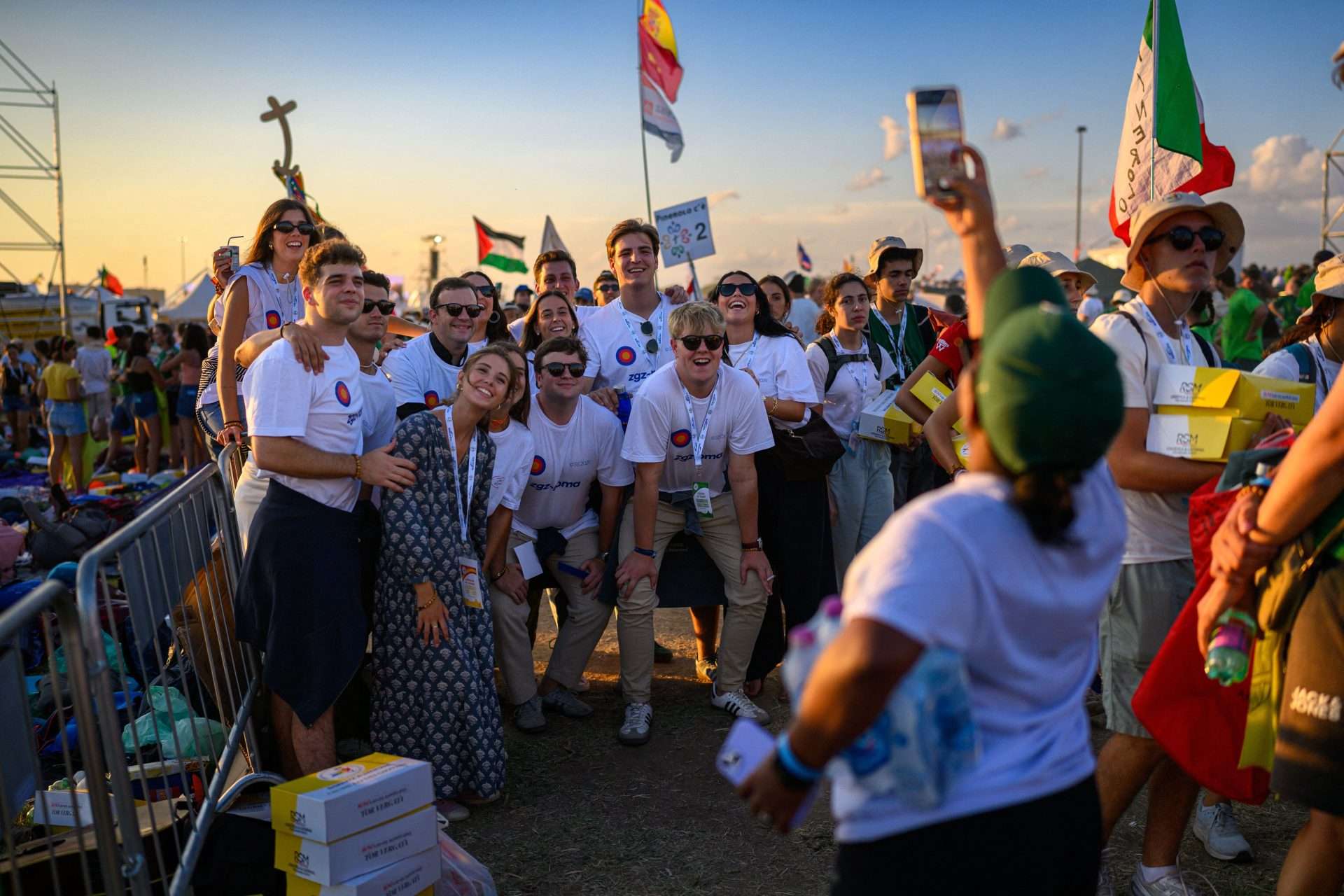
A group of young pilgrims posing for a photo just before the start of the vigil at the Tor Vergata camp during the Jubilee of Youth in August 2025.
Adam Ján Figeľ, Alamy
‘Individuals are re-engaging with questions of meaning and spirituality,’ said publishing CEO Sam Richardson, as Bible sales more than doubled since 2019.
People aged 18-34 are significantly more likely than older age groups to say they experience “profound awe or wonder at the universe” daily or weekly, according to a study entitled “Grateful Britain” carried out by the Policy Institute of King’s College London.
21 per cent of young people say they experience this deep wonder at the universe daily, compared with 11 per cent of those aged 35-49, although it rises again to 17 per cent in the 65+ age group.
24 per cent of people who belong to a religion experience this awe every day, compared with only 10 per cent of those who do not belong to a religion.
The study found that the 18-34 age group were most likely to say they believe in God at least “to some extent”, at 51 per cent, compared with 33 per cent aged 35-49, 30 per cent aged 50-64 years, and 41 per cent aged 65+ years.
Young people and religious people are also significantly more likely to say they feel connected to all people or all living things every day or that they regularly feel suddenly and deeply thankful to be alive, according to the study.
The survey was carried out in October 2025 and published in December. Professor Bobby Duffy, Director of the Policy Institute at King’s College London, said, “We’ll conduct more experiments on young people’s spirituality and religiosity in 2026, as part of the World Values Survey programme that we run in the UK, to get a more definitive answer on whether and how young people’s spirituality is changing.”
Bible sales in Britain also soared to a record high in 2025, according to research by the Christian publisher SPCK Group, reinforcing reports of a rise in religious interest and spirituality among young people.
The total sales of Bibles in the UK reached £6.3 million, more than doubling in value since 2019. Between 2024 and 2025 alone, Bible sales surged by 27.7 per cent.
The chief executive officer of SPCK Group, Sam Richardson, said: “This is evidence of a significant cultural shift regarding matters of faith and religion in this country: as we face worldwide political and social change, including the after-effects of the Covid-19 pandemic, global wars, the rise of AI, and a growing mental health crisis, individuals are re-engaging with questions of meaning and spirituality.”
Richardson referred to a YouGov poll that found that the proportion of 18 to 25 year-old-olds who believe in a higher power had risen from just 28 per cent in 2018 to 49 per cent in 2025, with Gen Z becoming the age group most likely to believe in God.
He said: “The significant and sustained upward trend in Bible sales suggests that more and more people are investigating the Christian faith themselves and seeking to draw their own conclusions about its truth.”
The SPCK Group analysed data from the Nielsen BookScan, a service that compiles the sales data of books across the world.
They found that annual Bible sales skyrocketed by 134 per cent from £2.69 million in 2019 to £6.3 million in 2025: an increase of £3.61 million in just five years.
The bestselling Bible translation in 2025 was the English Standard Version (ESV), published by Crossway.
In comparison, in the 11 years between 2008 and 2019, annual sales grew by just £277,188.
However, despite the increase in Bible sales, weekly church attendance in both Catholic and Anglican churches has still not bounced back to pre-pandemic levels: there were 701,902 weekly Catholic Mass-goers in 2019 but only 575,453 in 2024.
Adult baptisms hit 10-year high in 2024, new data shows
Stay updated — add us as a preferred news source on Google:


Help us keep The Tablet’s voice independent, clear and far-reaching.
Founded in 1840, The Tablet is the leading independent English-language Catholic weekly, celebrated for great writing, astute analysis, brilliant arts and books reviews and trustworthy reporting from correspondents in Britain, Ireland, Rome and across the world.
Independent, high-quality journalism is at the heart of what we do. The Tablet does not have deep pockets and we are not funded by rich donors. If you appreciate our work please consider supporting The Tablet’s Development Fund. It only takes a moment and you can cancel at any time.
- Support with £5 per month
- Support with £10 per month
- Support with other amount.

MOST READ ARTICLES
-
1
German bishops commit to global Synod process despite delay to reforms
-
2
The Tablet poem
-
3
Battling confession fatigue
-
4
Bangladesh Christians ask president to help ease missionary visa restrictions
-
5
Catholic Social Teaching and universities
-
6
Nigerian first lady suffered death threat for practising Christian faith
FROM THE EDITOR'S DESK