Far-right German party considered ban on Christian holidays


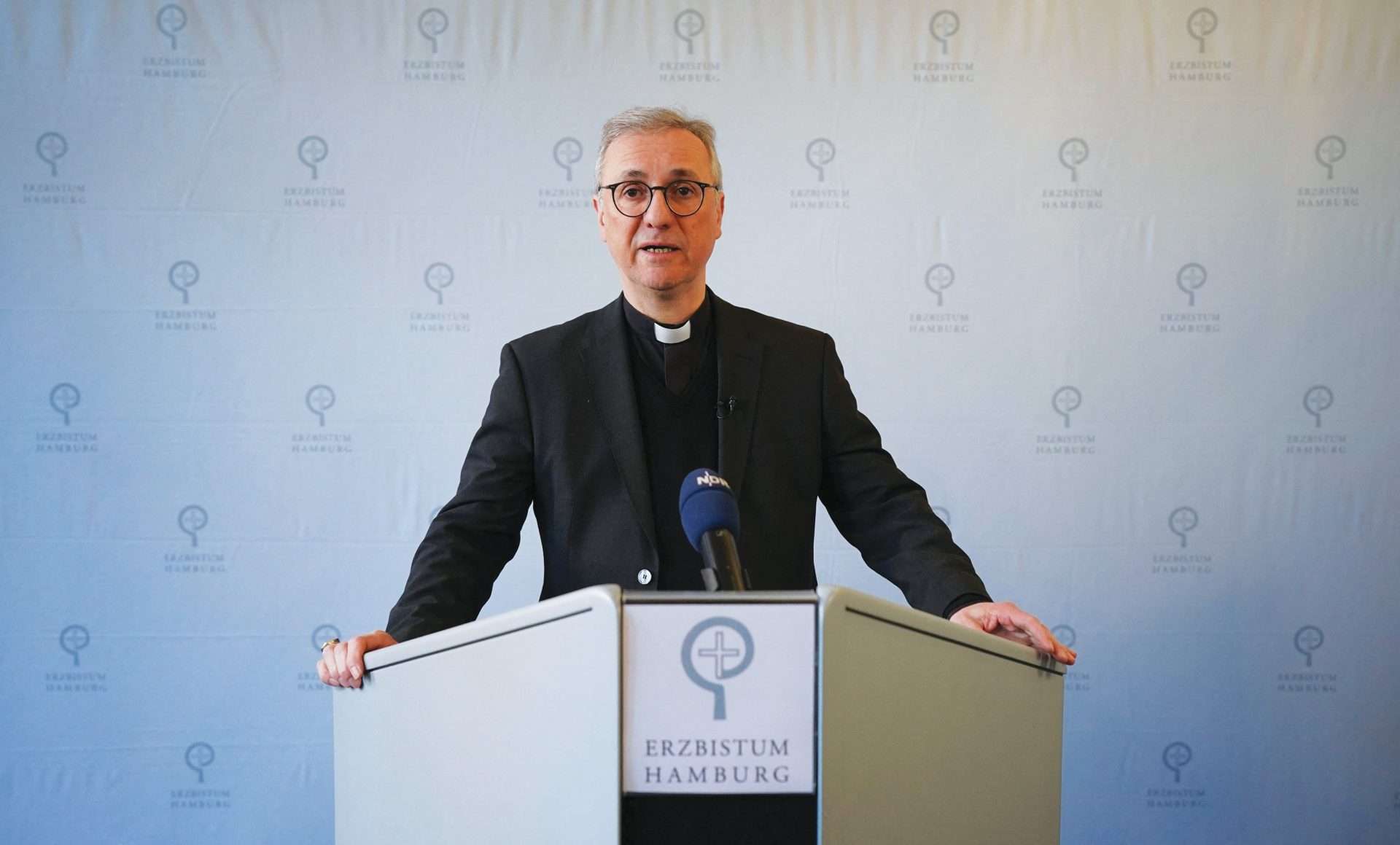
The Archbishop of Hamburg Stefan Hesse called for ‘dialogue and democracy’.
ALAMY/DPA, MARCUS BRANDT
‘Our tradition, which has Christian-Jewish roots, has such a profound cultural influence on everything we know that a direct attack against it would truly be a revolutionary act – just like the Nazis.’
The far-right party Alternative für Deutschland (AfD) debated replacing Christian holidays with neo-pagan German celebrations such as the Winter Solstice, according to a government official.
“Everything is supposed to be shut down, from the Bauhaus to institutions close to the church,” reported Wolfram Weimer, Germany’s federal commissioner for culture and media and formerly editor-in-chief of Die Welt.
Proposals for the ban were discussed but not carried at the AfD’s national conference held in Magdeburg in June, he explained.
“Of course, our tradition, which has Christian-Jewish roots, has such a profound cultural influence on everything we know that a direct attack against it would truly be a revolutionary act – just like the Nazis,” added Weimer, alluding to the Nazi period when Christmas was re-defined as a neo-Pagan Nordic celebration. This celebrated the “heritage” of the Aryan race and the rituals of Winter Solstice , such as lighting candles, attributed to Germanic tribes prior to the coming of Christianity.
“I am absolutely team Christmas,” added Weimer, who said the AfD’s “anti-Church reflex” needed to be named with greater clarity from the political centre.
The AfD is leading the polls prior to elections to the Landtage or state parliaments in Sachsen-Anhalt, Berlin and Mecklenburg-Vorpommern, three of the 16 states to comprise Germany’s federal republic. In Sachsen-Anhalt, 41 per cent voters support AfD as do 36 per cent of those residing in Mecklenburg-Vorpommern.
The Catholic Church launched a campaign to urge Germans to fight ultra-right extremism and vote for democratic parties in the September Landtage elections.
The archdioceses of Hamburg and Berlin are providing posters and banners for use by parishes, schools, nurseries, and Caritas institutions. They also are supplying online resources on topics including extremism and populism for the campaign, whose motto is “With a heart for and commitment to democracy and love for our neighbour”.
The Archbishop of Hamburg, Stefan Hesse said: “Let us use the opportunity to make our parishes and institutions places for dialogue and democracy – and to play our part in shaping the future of Mecklenburg-Vorpommern.”
German Catholics urged to speak up in politics
German elections and the advance of the far right
Stay updated — add us as a preferred news source on Google:


Help us keep The Tablet’s voice independent, clear and far-reaching.
Founded in 1840, The Tablet is the leading independent English-language Catholic weekly, celebrated for great writing, astute analysis, brilliant arts and books reviews and trustworthy reporting from correspondents in Britain, Ireland, Rome and across the world.
Independent, high-quality journalism is at the heart of what we do. The Tablet does not have deep pockets and we are not funded by rich donors. If you appreciate our work please consider supporting The Tablet’s Development Fund. It only takes a moment and you can cancel at any time.
- Support with £5 per month
- Support with £10 per month
- Support with other amount.

MOST READ ARTICLES
-
1
Budapest archdiocese warns priest off politics after PM’s complaint
-
2
Women already act as deacons
-
3
Nurturing young Catholics in STEM
-
4
News Briefing: Britain and Ireland
-
5
Bolsonaro leads in first round of Brazil election despite Aparecida alarm
-
6
Reform’s God squad
FROM THE EDITOR'S DESK