English Heritage launches search for descendants of 31 men involved in violent protest against Cardinal Wolsey and the reforms of Henry VIII


Bayham Abbey ruins
English Heritage
Descendants of 31 of the people involved in the violent protests against the closure of a monastery 500 years ago are being sought by English Heritage
Today, Wednesday 4 June, marks the 500th anniversary of the Bayham Abbey Uprising, where more than 100 men launched a violent protest against Cardinal Wolsey’s plan to close their local monastery near Tunbridge Wells on the border between Kent and Sussex border.
Armed with makeshift weapons, they stormed the abbey in protest at its closure in an episode viewed today as a precursor of the turbulence to come and an indication of the esteem in which monastic houses were held.
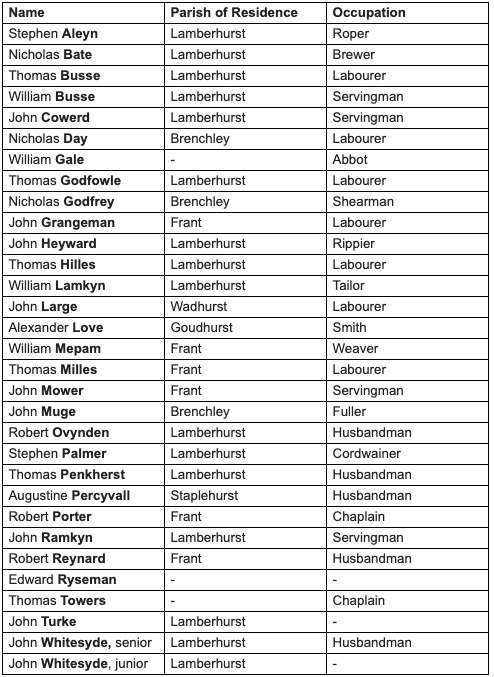
The names of 31 of the protestors were documented. English Heritage, which now cares for Bayham Abbey, is planning a commemorative event this summer and wants to find people with family connections to the protestors, to include them in its plans. Bayham, which eventually closed in 1525, was among the smaller monasteries that Wolsey sought to suppress to fund his new colleges at Oxford and Ipswich.
The closure and protest is historically significant as it is regarded as a precursor to the Dissolution of the Monasteries and the Pilgrimage of Grace – the rebellion against the religious reforms of King Henry VIII.
The historical records state that on 4 June 1525, “over a hundred men with painted faces and visures”, armed with longbows, crossbows, swords and clubs, assembled at the abbey to reinstate the evicted canons. They stormed the abbey gatehouse and temporarily restored the community. The canons were once again removed a week later and the 31 men whose names are known were indicted by the Crown for rioting.
Dr Michael Carter, English Heritage’s specialist in monastic history, said: “The Bayham Abbey Uprising is a fascinating precursor to Henry VIII’s religious reforms – a harbinger not only of the Dissolution of the Monasteries just ten years later but also of the Pilgrimage of Grace, which was a major revolt against the reforms in the North of England in 1536 and 1537.
“In 1525, Bayham was deeply embedded in the religious and social life of its locality. Many of its community – the canons – were local boys and their prayers were highly prized. In addition, the bed in which St Richard of Chichester slept had been preserved at Bayham Abbey as a relic and was believed to perform miracles.
“The abbey was also a significant employer and the men who took part in the uprising were predominantly local tradesmen, including shoemakers, labourers and farmers. While they will undoubtedly have feared the loss of their spiritual leaders, their loss of income would have been of equal concern. This act of rebellion could have cost them their lives and, as we reach the 500th anninversary of the riot, we are keen to remember and celebrate these brave men.”
Bayham Abbey still stands, but as a impressive ruin, built from local golden sandstone, with much of the 13th to 15th-century church, the refectory range and 14th-century gatehouse remaining. It is open to the public daily for free. There are also several objects relating to Bayham Abbey’s dissolution and uprising within English Heritage’s collection.
Among these is the abbey’s stained glass, one of the most important collections of medieval window glass from any monastic site in England. Abandoned after everything of value at the abbey had been removed to be sold (including the lead holding the windows together), these fragments of glass are still translucent, showing a vibrant display of patterns and colours. There is also a pair of ankle shackles, suggesting there may have been some form of prison on site
English Heritage is searching for family connections to the following 31 men. Those who think they may have a connection, should email press@english-heritage.org.uk:
Stay updated — add us as a preferred news source on Google:


Help us keep The Tablet’s voice independent, clear and far-reaching.
Founded in 1840, The Tablet is the leading independent English-language Catholic weekly, celebrated for great writing, astute analysis, brilliant arts and books reviews and trustworthy reporting from correspondents in Britain, Ireland, Rome and across the world.
Independent, high-quality journalism is at the heart of what we do. The Tablet does not have deep pockets and we are not funded by rich donors. If you appreciate our work please consider supporting The Tablet’s Development Fund. It only takes a moment and you can cancel at any time.
- Support with £5 per month
- Support with £10 per month
- Support with other amount.

MOST READ ARTICLES
-
1
Pope Leo diagnosed with lung cancer after operation
-
2
The Tablet Lecture 2026: Keeping the dream of peace alive
-
3
Battling confession fatigue
-
4
Vatican confirms Pope’s Latin America travel plans despite operation
-
5
Under endless skies
-
6
Nicaraguan bishops visit Rome as Ortega regime tightens grip
FROM THE EDITOR'S DESK


