Diocese offers ‘take outs’ to help Catholics engage with synodality


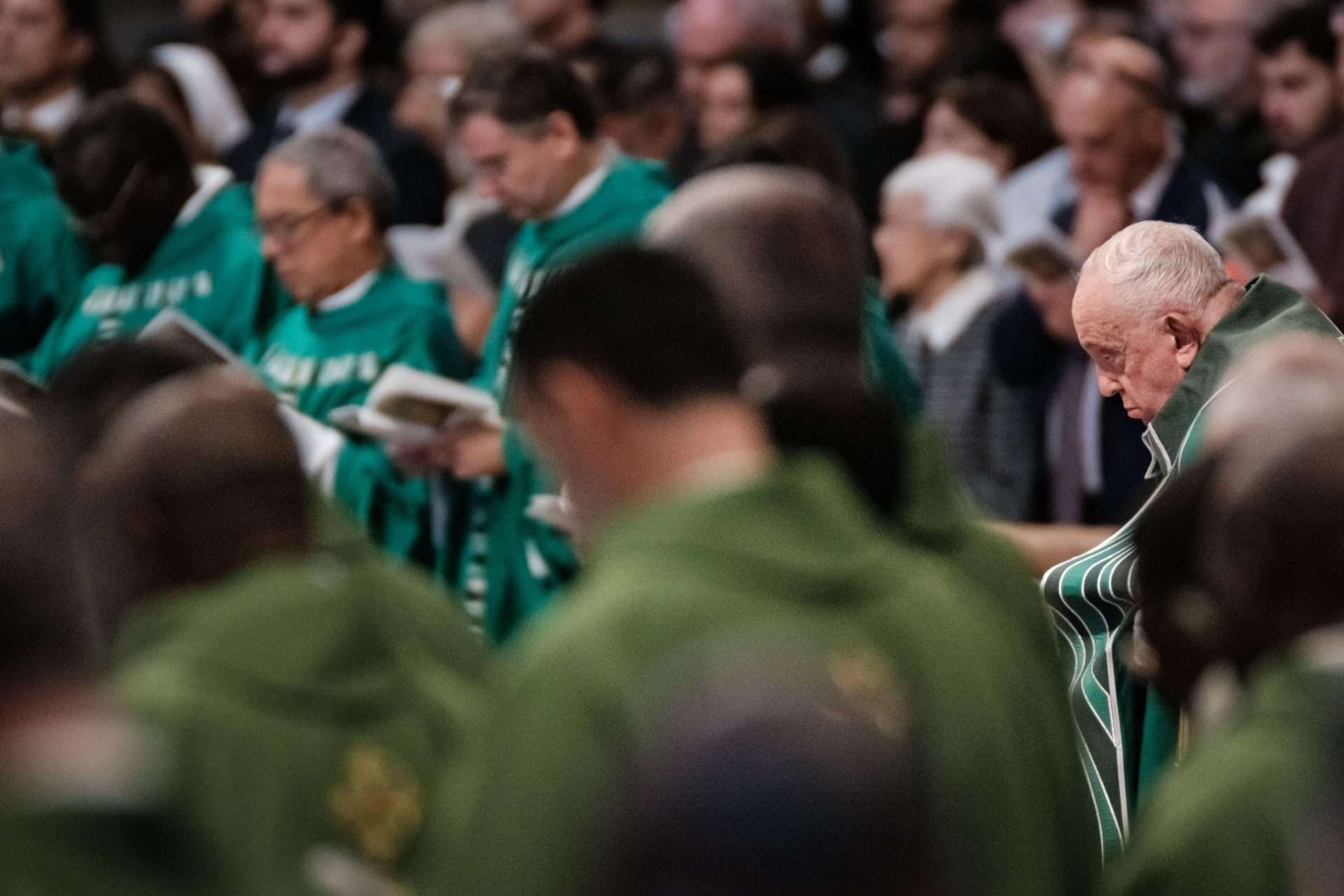
Conclusion of the Synod on Synodality in Rome last October, where Pope Francis delivers a homily at Mass.
Imago / Alamy Stock Photo
The guide highlights ‘conversations in the spirit’ and the synodal church placing ‘the poor at its centre’.
A free eight-page guide to help Catholics engage with the Final Document of the Synod on Synodality has been produced by Westminster diocese.
How to be a Synodal Church in Mission? Take Outs from the Final Document : “An informal reaping of the fruits” presents key statements from the Final Document in the form of bullet points.
Beneath each appear two or three numbered quotations from the Final Document which the bullet point is referring to. One point, on how a “synodal Church should not be excluding of individuals on account of their marital situation, identity or sexuality”, refers for instance to paragraph 50 of the Final Document.
This reads: “What emerged throughout the entire synodal journey … was the call for a Church with a greater capacity to nurture relationships … Many participants were delighted … to be asked to share their thoughts and to be given the opportunity to have their voices heard in the community … to express the pain of feeling excluded or judged because of their marital status, identity or sexuality.”
The guide highlights “conversations in the spirit” and the synodal church placing “the poor at its centre”. Other points covered include the need for formation in synodality, the “co-responsibility” of ordained and lay Catholics and the fostering of women’s roles in leadership.
The “take outs” as the 25 bullet points referencing the Final Document are described also include the need for bishops and clergy to listen to the laity and vice versa.
Westminster Diocese Auxiliary Bishop Nicholas Hudson told The Tablet he had “developed” the resource over recent months to accompany presentations on the Synod. These presentations have been to groups of Deanery clergy, to Parish Pastoral Councils and other groups in my Area of Central and East London.
He added: “I like to think these 21 bullet-points capture the essence of the Synod. The bullet-points are not quotes; they are accompanied by quotes from the Final Document. I believe these 21 ‘take-outs’ to be faithful to the Synod as I experienced it and as it was captured in the Final Document.
“I hope the combination of bullet-points and quotes will encourage people – clergy and laity alike – to read the Final Document in its fullness. Formation was a key theme of the Synod. I suggest to the groups with whom I meet that familiarising ourselves with the Final Document is the first formation on which we need to focus; foundational for our implementation of the Synod.
“A second focus has been on Parish Councils. I have encouraged them to consider the ‘School for Synodality’ resource for ‘Reimagining Pastoral Councils’ as a help to initiate or renew their own Parish Pastoral or Advisory Council. These ‘take-outs’ encourage them to see that such councils are a good place to begin realising the Synod’s vision for deepening of co-responsibility, of decision-making that is more participatory, of transparency, accountability and evaluation – all key ‘take-outs’ of the Synod.
Hudson continued: “I welcome the schedule presented to us by Cardinal Grech of a process to deepen the implementation of the Synod through diocesan Synodal Teams which will prepare the way for diocesan, national, international and continental Assemblies which will culminate in an Ecclesial Assembly in the Vatican in 2028. By then I trust the fruits reaped from this Synodal process on which we have been embarked some four years already will be plentiful indeed.”
The website of the Bishops’ Conference of England and Wales describes the resource is as “particularly useful” ahead of the “Implementation Phase” of the Synod that the Pope has asked the Church to move into. According to the Apostolic Constitution Episcopalis Communio, the aim of this phase is to ensure that “synodality is increasingly understood and lived as an essential dimension of the ordinary life of local Churches and the entire Church”.
Stay updated — add us as a preferred news source on Google:


Help us keep The Tablet’s voice independent, clear and far-reaching.
Founded in 1840, The Tablet is the leading independent English-language Catholic weekly, celebrated for great writing, astute analysis, brilliant arts and books reviews and trustworthy reporting from correspondents in Britain, Ireland, Rome and across the world.
Independent, high-quality journalism is at the heart of what we do. The Tablet does not have deep pockets and we are not funded by rich donors. If you appreciate our work please consider supporting The Tablet’s Development Fund. It only takes a moment and you can cancel at any time.
- Support with £5 per month
- Support with £10 per month
- Support with other amount.

MOST READ ARTICLES
-
1
Leo pleas for besieged Ukrainian town in call with Putin
-
2
Under endless skies
-
3
Battling confession fatigue
-
4
Restless statelessness
-
5
Pope Leo thanks staff at Mass in Gemelli Hospital
-
6
Study finds German dioceses failed to guard against spiritual abuse in lay groups
FROM THE EDITOR'S DESK


