Diocese given clean bill of health over safeguarding


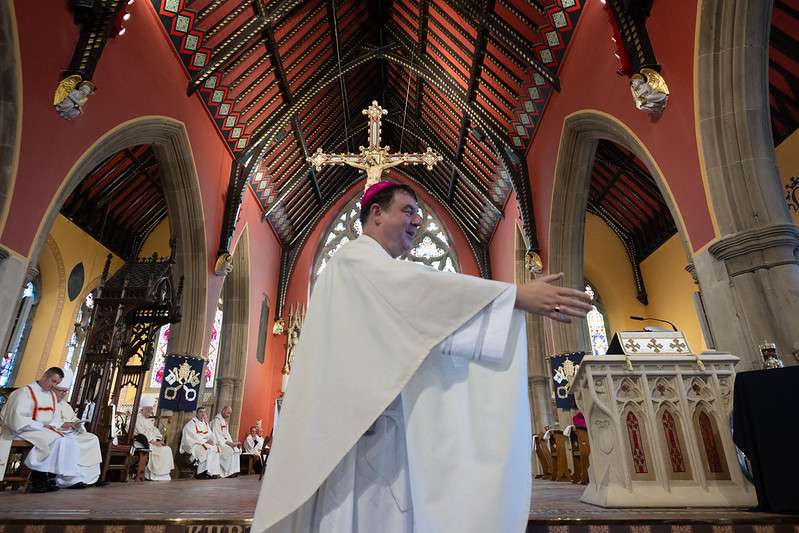
Bishop Stephen Wright was installed 15th Bishop of Hexham and Newcastle in July 2023
© Mazur/cbcew.org.uk
The Catholic Safeguarding Standards Agency has announced that the Hexham and Newcastle has achieved good practice in all eight of the safeguarding standards
Hexham and Newcastle diocese, once blighted by a serious scandal over its safeguarding mistakes and the role of its former bishop, has been given a clean bill of health by the Catholic Church’s safeguarding body.
The Catholic Safeguarding Standards Agency (CSSA) has announced that its inspectors found that the diocese has achieved good practice in all eight of the safeguarding standards it has set. And it has praised the diocese for particular improvements in Church leadership, governance, ministry, culture and the care of survivors of abuse.
The approval marks a major turnaround for the diocese which was the subject of a damning report by the CSSA 18 months ago, which said that its former bishop, Robert, Byrne, put vulnerable people at risk by ignoring professional advice. The report referred to a priest that he knew was suspected of grooming but went ahead and promoted, and that he also had an inappropriate relationship with a known paedophile priest who had been convicted of criminal offences. The first priest, Canon McCoy, killed himself in 2021 while the second, the Dominican Fr Timothy Gardner, was laicised by his order.
After Bishop Byrne stepped down in 2022, his successor, Stephen Wright, who was appointed the following year, pledged to improve safeguarding in the diocese.
The safeguarding crisis in Hexham and Newcastle during Byrne’s tenure was the subject of four inquiries, including one by the Vatican’s for bishops, and by the CSSA. Now, says the CSSA, the diocese once found to have “serious failures of leadership”, has taken on board previous recommendations and has an improved culture of safeguarding which can be seen across the diocese’s work, from its dealings with volunteers to the finance department. The latest report says that it is “evident that the diocese is motivated to ensure that improvements are made” and that it has made “a firm commitment to a zero tolerance approach to abuse”.
However, it has also said that the diocese needs to promote safeguarding messages more, share more information with statutory agencies and rethink issuing celebrets – permissions to officiate at Mass – to clergy subject to safeguarding concerns, if it is to move from good progress to exemplary.
Bishop Wright said: “The improvements over the last two years are clear and we all remain committed to ever improve our safeguarding culture, procedures, and practices. Best practice in safeguarding is always evolving and complacency must always be avoided.”
Stay updated — add us as a preferred news source on Google:


Help us keep The Tablet’s voice independent, clear and far-reaching.
Founded in 1840, The Tablet is the leading independent English-language Catholic weekly, celebrated for great writing, astute analysis, brilliant arts and books reviews and trustworthy reporting from correspondents in Britain, Ireland, Rome and across the world.
Independent, high-quality journalism is at the heart of what we do. The Tablet does not have deep pockets and we are not funded by rich donors. If you appreciate our work please consider supporting The Tablet’s Development Fund. It only takes a moment and you can cancel at any time.
- Support with £5 per month
- Support with £10 per month
- Support with other amount.

MOST READ ARTICLES
-
1
The Tablet poem
-
2
A craving for beauty
-
3
Battling confession fatigue
-
4
Massachusetts abuse report finds over 1,000 victims in three dioceses
-
5
Bishops demand security investment to promote ‘common good’ in Nigeria
-
6
Woman religious becomes first female president of Pontifical Mission Societies
FROM THE EDITOR'S DESK


