Congolese must speak openly about crises in national dialogue, says bishop


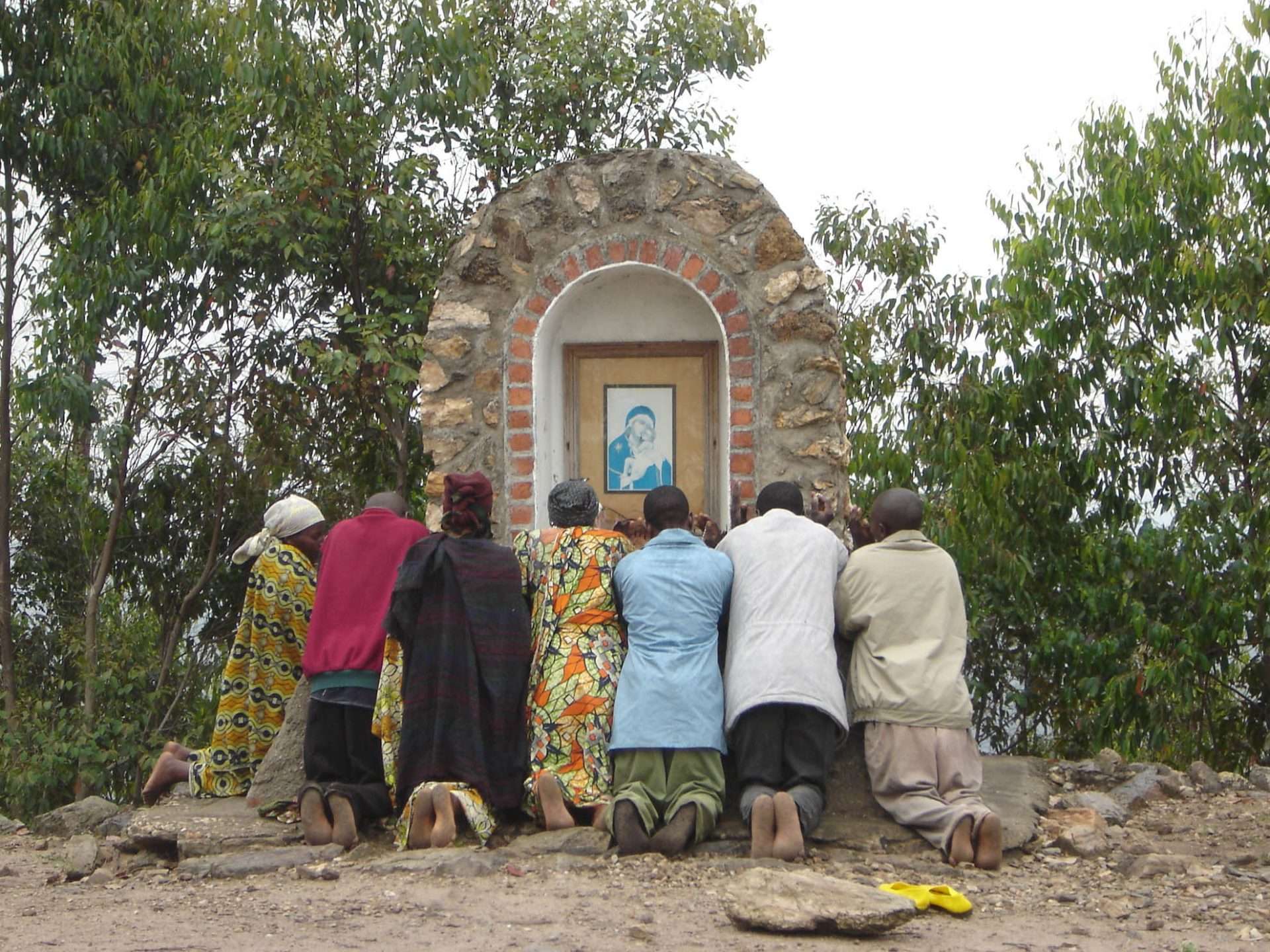
Prayers at a Marian shrine in the Diocese of Butembo-Beni
Liz St Jean Photography / flickr / Creative Commons
President Tshisekedi announced plans to hold ‘an inclusive national dialogue’ to address the DR Congo’s multiple crises, beginning with a series of consultations across the country’s 26 provinces, followed by a national conference in Kinshasa.
The Bishop of Butembo-Beni in the war-ravaged eastern Democratic Republic of Congo urged the Congolese people to speak openly and sincerely about the country’s crises as they prepare for what authorities call “an inclusive national dialogue.”
Speaking on the National Justice and Peace Day on 23 September, Bishop Melchisedec Sikuli Paluku said President Félix Tshisekedi’s call for dialogue by must help Congolese confront why peace, development and freedom remain out of reach – pointing specifically to persistent insecurity and killings.
The DR Congo has suffered from decades of violence, particularly in the east where Rwanda-backed M23 rebels have been fighting the Congolese army over the control of territory and minerals.
The conflict has destabilised eastern provinces including North Kivu – where Paluku’s diocese is located – South Kivu, and Ituri, and displaced more than five million people. According to Genocide Watch, at least six million people have been killed in the fighting since 1996. Bishop Paluku said the scale of the killings, destruction and displacement makes the planned dialogue imperative.
“Since we are talking about a dialogue that should be inclusive, we are moving in that direction. We indeed need inclusivity in this dialogue, but I would first like Congolese people themselves to be able to speak among themselves,” the bishop said.
In August, President Tshisekedi announced plans to hold “an inclusive national dialogue” to address the DR Congo’s multiple crises. He said the process will begin with a series of consultations across the country’s 26 provinces, followed by a national conference in Kinshasa.
Provincial forums, the president explained, will bring together national and provincial elected officials, majority and opposition parties, civil society representatives, traditional chiefs, religious groups, as well as economic, academic and scientific actors.
“Each province will, in all frankness, carry out its own assessment: the causes of insecurity, land and customary disputes, community tensions, administrative shortcomings, inequalities, obstacles to development and the reforms deemed necessary,” the president said, with the conclusions forming the basis for the national conference.
Bishop Paluku said it will be critical for the Congolese people to say “what is not going well, what is preventing us from having peace, development and freedom in our country, why we are occupied, why we are being killed”.
Cardinal accuses Congolese politicians of subjecting people to ‘slavery’
The epidemic of neglect in DR Congo
Stay updated — add us as a preferred news source on Google:


Help us keep The Tablet’s voice independent, clear and far-reaching.
Founded in 1840, The Tablet is the leading independent English-language Catholic weekly, celebrated for great writing, astute analysis, brilliant arts and books reviews and trustworthy reporting from correspondents in Britain, Ireland, Rome and across the world.
Independent, high-quality journalism is at the heart of what we do. The Tablet does not have deep pockets and we are not funded by rich donors. If you appreciate our work please consider supporting The Tablet’s Development Fund. It only takes a moment and you can cancel at any time.
- Support with £5 per month
- Support with £10 per month
- Support with other amount.

MOST READ ARTICLES
-
1
Battling confession fatigue
-
2
Under endless skies
-
3
Nicaraguan bishops visit Rome as Ortega regime tightens grip
-
4
Vatican confirms Pope’s Latin America travel plans despite operation
-
5
Would the Church miss us?
-
6
Church from the 1950s receives £1 million government grant for new roof
FROM THE EDITOR'S DESK


