Catholic wealth not always used in line with social teachings, report finds


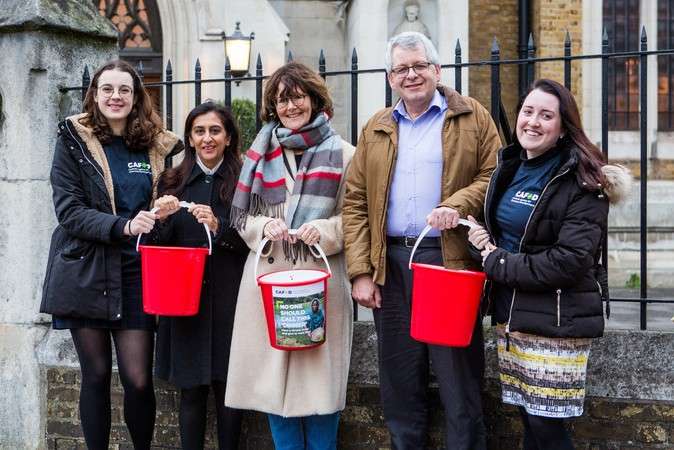
Cafod
There may be untapped potential for wealthy Catholics to support charities and initiatives in line with their values, a report suggests.
Catholic charity sector in the UK is large, diverse, and supported by a sizeable community of donors, but its potential is not always realised, according to the Catholic Generosity Report.
Produced by Catholics in Fundraising, the report said that interviews with wealthy Catholic donors have revealed a “consistent gap” between Catholic teachings on wealth and charity and their actual behaviour.
The report said Catholic Social Teaching (CST) outlines clear principles for the stewardship of wealth. In particular, the principle of the universal destination of goods places a real limit on private property: the Church affirms the right to own property, but holds that it is not absolute.
The preferential option for the poor establishes a priority for decision-making, placing the needs of the poor and vulnerable first when resources are allocated.
Solidarity calls for action in support of others, while the integrity of creation links environmental responsibility to care for the poor.
“Those with greater wealth therefore carry greater responsibility to contribute to the common good, often described as a ‘social mortgage’ on wealth,” the report said.
It said around 360,000 Catholic households in the UK have net wealth exceeding £1 million, and estimates that Catholics together give £2.9 billion to charity annually, which makes up about 10 per cent of charitable giving in the UK.
Ethnic minority Christians give a higher proportion of their income: non-white Christians give an average of 9.3 per cent of what they earn, compared with 4.1 per cent among white Christians.
Regular donations have remained relatively stable, but the proportion of Christians giving in response to urgent appeals has fallen from 46 per cent to 35 per cent, suggesting a shift away from one-off emergency donations.
This is in contrast with CST, which “treats wealth holders as stewards rather than owners and firmly links giving with investing”.
The report referred to Mensura Bonam, a 2022 Vatican document which encourages “integral investors” to use investment to serve the common good.
This document covers 24 areas of concern for Catholic investors and urges them to be proactive in investing in areas such as renewable energy and microfinance.
This reverses the usual hierarchy of ethical investing, which usually focuses on excluding harmful sectors rather than actively seeking to invest in positive ones.
The report also said that while Catholic investing overlaps with conventional Environmental, Social and Governance (ESG) approaches, CST has a more explicit focus on human development and the preferential option for the poor.
The report echoes then-Vatican Bank president Jean-Baptiste de Franssu’s observation that many responsible for managing Catholic assets “have little idea how to make their investments consistent with their faith”.
“The common thread is unrealised potential: while the tradition offers a ready framework, the tools, advice and peer networks needed to act on it remain underdeveloped in the UK,” the report said.
There are about 840 Catholic charities across the UK, which combined match the scale of the country’s largest charities, according to the report.
The sector holds assets worth nearly £7 billion, heavily concentrated among dioceses, religious orders, schools and grant-making trusts.
Churches urged to adopt stronger ethical investment policies
Stay updated — add us as a preferred news source on Google:


Help us keep The Tablet’s voice independent, clear and far-reaching.
Founded in 1840, The Tablet is the leading independent English-language Catholic weekly, celebrated for great writing, astute analysis, brilliant arts and books reviews and trustworthy reporting from correspondents in Britain, Ireland, Rome and across the world.
Independent, high-quality journalism is at the heart of what we do. The Tablet does not have deep pockets and we are not funded by rich donors. If you appreciate our work please consider supporting The Tablet’s Development Fund. It only takes a moment and you can cancel at any time.
- Support with £5 per month
- Support with £10 per month
- Support with other amount.

MOST READ ARTICLES
-
1
Nicaraguan bishops visit Rome as Ortega regime tightens grip
-
2
Would the Church miss us?
-
3
Vatican confirms Pope’s Latin America travel plans despite operation
-
4
Word from the Cloisters
-
5
Church from the 1950s receives £1 million government grant for new roof
-
6
Nurturing young Catholics in STEM
FROM THE EDITOR'S DESK


