Atom bomb anniversary demands ‘renewed’ teaching on war and peace


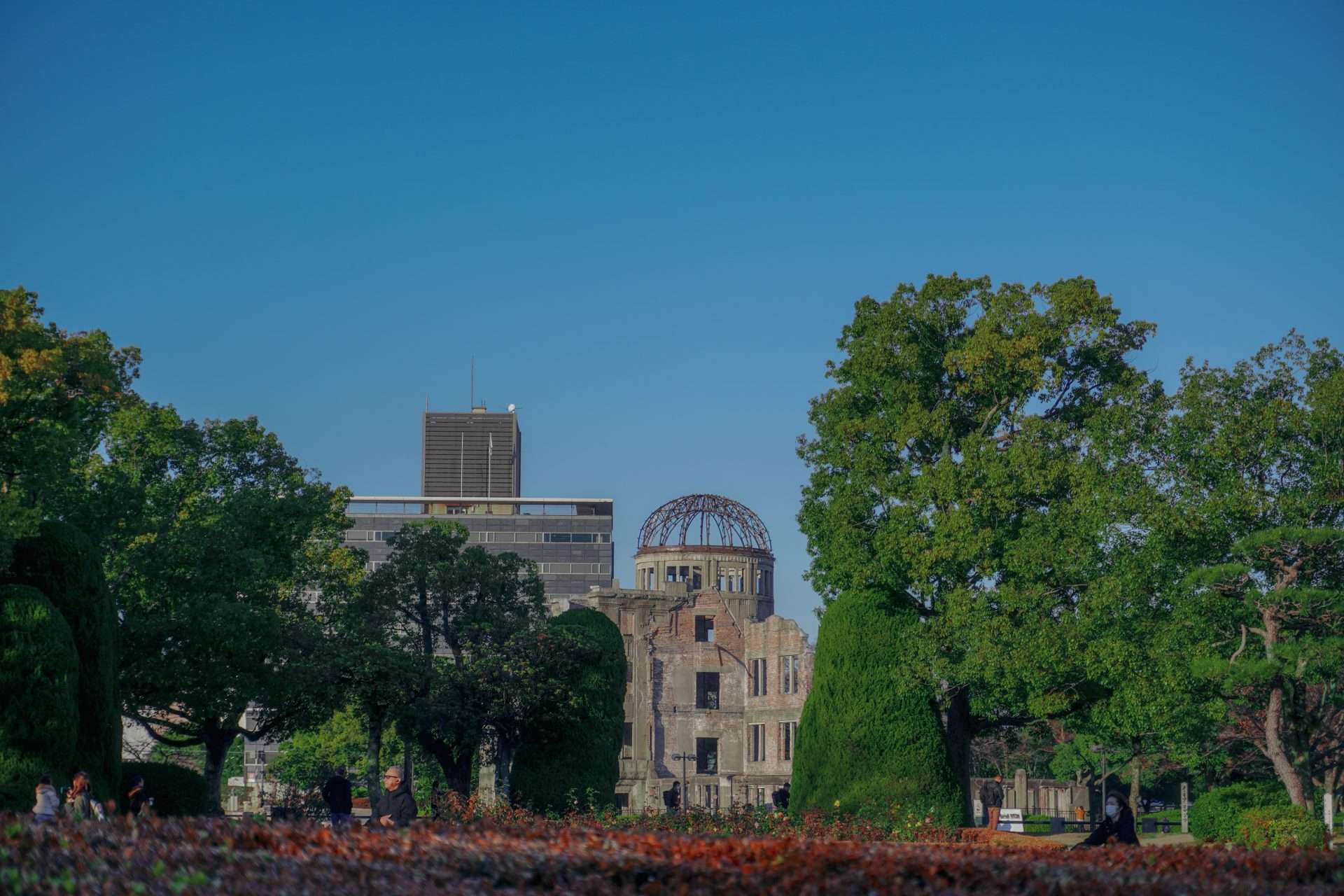
The Hiroshima Peace Memorial, or Genbaku Dome
kyu chan1 / flickr | Creative Commons
‘We are facing a breakdown of the arms control regime and the possibility of the use of nuclear weapons,’ said Cardinal Robert McElroy in an address in Hiroshima.
Cardinal Robert McElroy of Washington likened the current moment to the era of profound reflection in Catholic circles after the Second World War that led to John XXIII’s encyclical Pacem in Terris issued in 1963.
He was speaking in Hiroshima on 6 August during a visit to Japan with three fellow US prelates, Cardinal Blase Cupich of Chicago, Archbishop Paul Etienne of Seattle and Archbishop John Wester of Santa Fe, marking the eightieth anniversary of the atomic bombing of Hiroshima and Nagasaki.
McElroy said that “three major shifts in Catholic thinking are taking place”. First, contemporary wars, the devastating weapons used and the countless lives lost to war “have pointed to the need to fundamentally renew and prioritise the claim of non-violent action as the primary framework for Catholic teaching on war and peace”.
Second, he criticised the “continuous misuse of the just war tradition”, turning it from a restraint on war to a justification for it.
Third, McElroy said the approach set out in the US bishops’ 1983 pastoral letter which concluded nuclear deterrence was allowable only “as a step on the way to nuclear disarmament”, had failed. “We are facing a breakdown of the arms control regime and the possibility of the use of nuclear weapons,” he said.
Cardinal Cupich echoed McElroy in an address at the University of Nagasaki the next day, saying “priority should be given to nonviolence in crafting a holistic approach to Catholic teaching on conflict, with just war theory focused on weaponry taking a more secondary role”.
The prelates participated in Masses commemorating the 1945 bombings in both cities’ cathedrals. They joined Korean and Japanese bishops for a Mass at Hiroshima’s Memorial Cathedral for World Peace on 5 August, which the next day hosted a Mass for the souls of atomic bomb victims.
In a message to Bishop Alexis Shirahama of Hiroshima, Pope Leo said that “though many years have passed, the two cities remain living reminders of the profound horrors wrought by nuclear weapons”. He expressed “respect and affection for the hibakusha survivors, whose stories of loss and suffering are a timely summons to all of us to build a safer world and foster a climate of peace”.
In Nagasaki on 9 August, twin bells at Urakami Cathedral rang in unison for the first time in 80 years, commemorating the moment the city was destroyed by the bombing at 11.02am.
The cathedral, with its twin bell towers, was rebuilt in 1959 after it was almost completely destroyed in the bombing. Only one of its two bells was recovered from the rubble, leaving the northern tower silent. Funds from US Catholics paid for a new second bell that was installed last month.
In his homily at Urakami Cathedral, McElroy recalled his visit three years earlier, and the profound impression made on him by the Martyrs’ Museum, the Atomic Bomb Museum, and the cathedral. The sites “point to the foundation for true peace in the world,” he said. The Martyrs Museum attested to “true faith”, he said, the Atomic Bomb Museum to “tragic human failings”, while the rebuilt cathedral is a monument to “overwhelming hope”.
Signatories of an international interfaith statement on the anniversary included the International Union of Superiors General (UISG), Catholic Religious Australia, Maryknoll Office for Global Concerns, Pax Christi International, and the World Council of Churches. The statement called for peace, nuclear abolition and justice.
“While the challenges are immense, this is a time to affirm that another way is possible: one rooted in solidarity, human dignity, and hope,” it said.
The statement suggested that by redirecting the approximately $100 billion spent on nuclear weapons development in 2024 instead towards health, education, human rights, and ecological well-being, “we could make a profound difference in supporting the realisation of the UN 2030 Agenda and responding to the crises of our time”.
It honoured the legacy of all who bear the wounds of nuclear weapons, particularly the survivors of the Hiroshima and Nagasaki bombings, saying “we must co-create a peaceful and nuclear-free world, for the sake of all this planet’s people and non-human beings”.
The signatories endorsed the 2021 Treaty on the Prohibition of Nuclear Weapons, “which is currently joined by 73 states parties, and which is inspiring grassroots movements and a growing number of nations, and hundreds of municipalities around the world to take a stand”.
In a separate statement, the UISG called for a day of prayer and fasting for peace on 14 August, the eve of the Feast of the Assumption.
“As women of peace, present in the peripheries of the world and immersed in the suffering of humanity, we feel the urgent need to raise our voices, unite our hearts, pray and take action,” they said, noting that “women and children are often those who suffer most” in conflict.
The UISG published materials online, including a prayer guide and statements of solidarity, encouraging community prayer and reflection as well as engagement “with civil and ecclesial authorities in your respective countries, urging them to open paths of reconciliation, disarmament, the defence of human rights, and the protection of victims”.
Pope calls for courage to disarm on Hiroshima anniversary
Nagasaki bell a gift of ‘compassion’ from US to Japanese Catholics
Stay updated — add us as a preferred news source on Google:


Help us keep The Tablet’s voice independent, clear and far-reaching.
Founded in 1840, The Tablet is the leading independent English-language Catholic weekly, celebrated for great writing, astute analysis, brilliant arts and books reviews and trustworthy reporting from correspondents in Britain, Ireland, Rome and across the world.
Independent, high-quality journalism is at the heart of what we do. The Tablet does not have deep pockets and we are not funded by rich donors. If you appreciate our work please consider supporting The Tablet’s Development Fund. It only takes a moment and you can cancel at any time.
- Support with £5 per month
- Support with £10 per month
- Support with other amount.

MOST READ ARTICLES
-
1
The Tablet poem
-
2
A craving for beauty
-
3
Battling confession fatigue
-
4
Massachusetts abuse report finds over 1,000 victims in three dioceses
-
5
Bishops demand security investment to promote ‘common good’ in Nigeria
-
6
Woman religious becomes first female president of Pontifical Mission Societies
FROM THE EDITOR'S DESK


