Africa must form common aid fund after US cuts, says Angolan priest


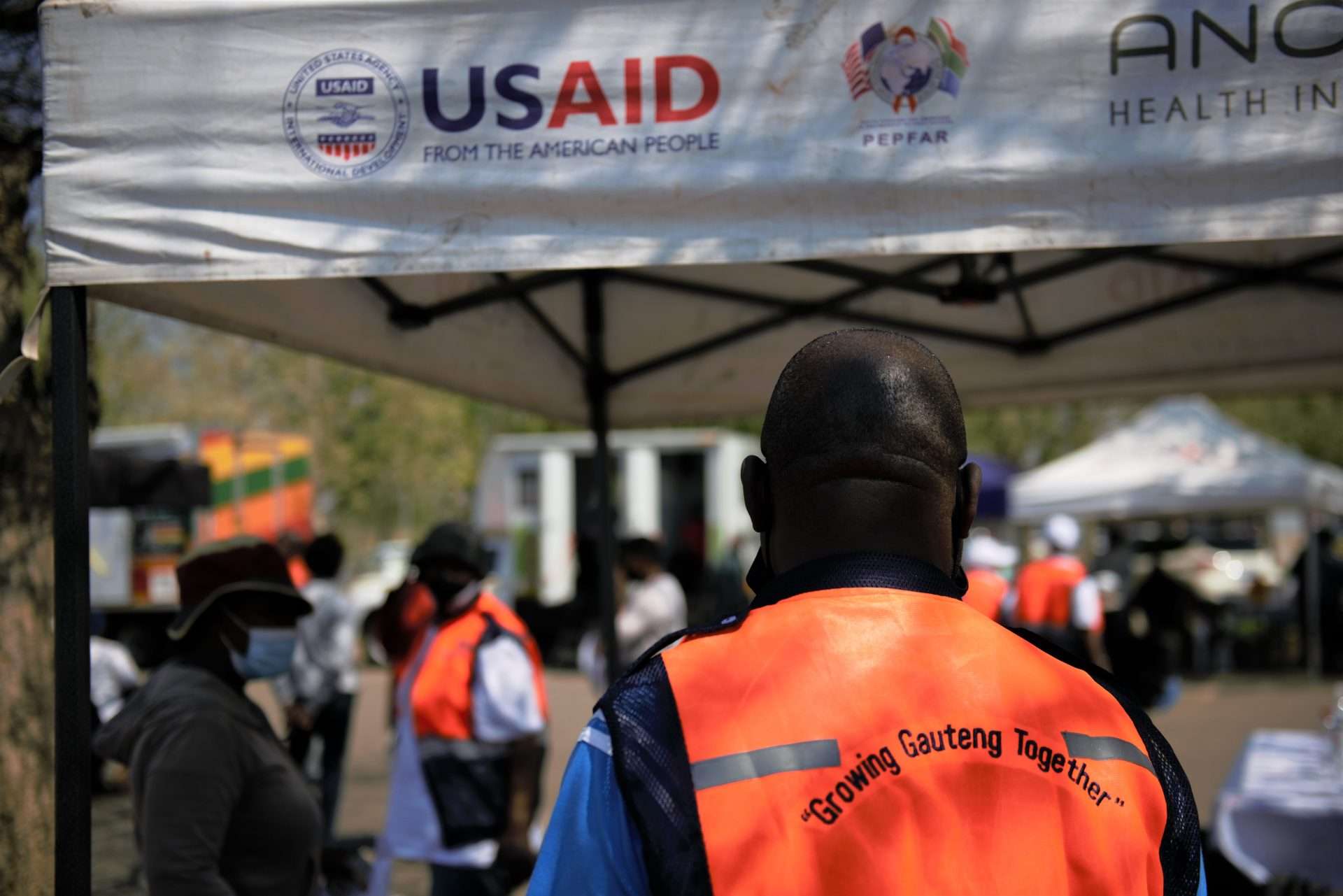
A mobile vaccine clinic in South African operated by USAID.
USAID / South Africa
‘We must work to strengthen solidarity among countries and create solid advocacy plans to minimise this impact.’
A senior cleric in Angola called on African states to create a common fund to cope with the impacts of US President Donald Trump’s executive order on 20 January freezing US foreign development assistance.
The Trump order has led to a drought of funds into the continent, compromising the lives of millions who depended on programmes funded by the US.
In response, the executive secretary of the Catholic Commission for Justice and Peace (CCJP) of the Catholic Bishops’ Conference of Angola and São Tomé (CEAST), Fr Celestino Epalanga urged African leaders to find a common strategy in addressing challenges following the abrupt funding cuts.
He told the news agency ACI Africa it was imperative for Africa to come together to mitigate the effects of the cuts.
“We must work to strengthen solidarity among countries and create solid advocacy plans to minimise this impact,” he said. “We should already start creating a common fund to support difficult situations such as disasters, victims of food insecurity, and patients with HIV/AIDS, tuberculosis, and other diseases who are deprived of medical and pharmaceutical assistance.”
Angola benefited from US aid worth $1.7billion from 2001 to 2024. The money was used to finance health, agriculture, and social projects.
Seeking alternatives is also an idea floated by Cameroonian Celestin Monga, Professor of Economics at Harvard University, who has noted that complaining about aid is not a development strategy for Africa.
“In 2023, Africa received less than $20 billion from the US, and less than $60 billion from all the countries improperly referred to as ‘donors’. These are tiny sums for a continent of 1.4 billion inhabitants, which itself does not repatriate the bulk of its $610 billion in export earnings to rich countries,” he said.
He said illicit financial flows from Africa far outweigh the money that comes into the continent as aid and therefore closing the tap on the flow of African money out of the continent will significantly reduce the need for such aid. He said that the global economic system was rigged against Africa.
“What the continent loses when it is forced to sell its products in dollars – making it dependent on fluctuations in the greenback – is far greater than what it receives in the form of ‘gifts’. African decision-makers seem incapable of understanding these dynamics.”
Monga urged African countries to create special economic zones that would attract both domestic and foreign private capital, to drive industrialisation and create jobs.
Fr Epalanga called on African heads of state to convene and develop a practical strategy for funding productive infrastructure and generating employment opportunities.
Caritas president warns of peril for charities after US funding freeze
Jubilee 2025 – a cry for global economic justice
Stay updated — add us as a preferred news source on Google:


Help us keep The Tablet’s voice independent, clear and far-reaching.
Founded in 1840, The Tablet is the leading independent English-language Catholic weekly, celebrated for great writing, astute analysis, brilliant arts and books reviews and trustworthy reporting from correspondents in Britain, Ireland, Rome and across the world.
Independent, high-quality journalism is at the heart of what we do. The Tablet does not have deep pockets and we are not funded by rich donors. If you appreciate our work please consider supporting The Tablet’s Development Fund. It only takes a moment and you can cancel at any time.
- Support with £5 per month
- Support with £10 per month
- Support with other amount.



