‘You can’t say that here …’: intellectual freedom on campus


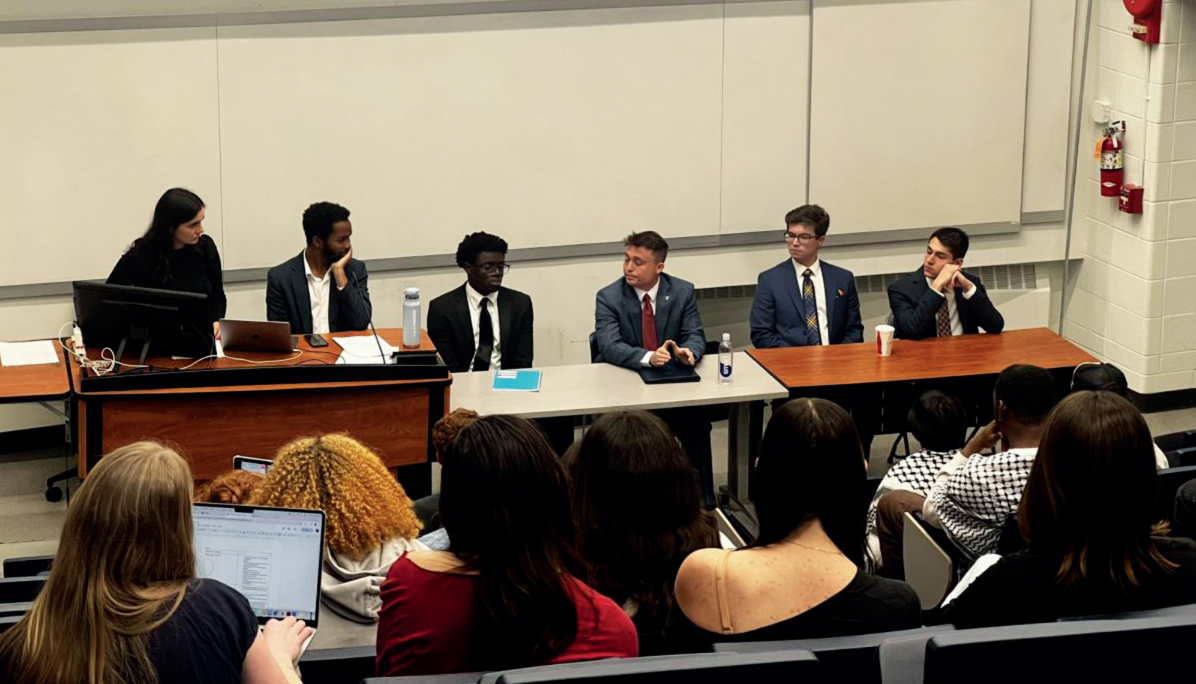
Villanova students take part in a Student Government Association election debate on campus
The Villanovan, Erick Quezada
‘You can’t say that here …’: intellectual freedom on campus
Intellectual freedom is one of the most contentious topics facing students and academics alike. Susan Ostermann, a professor at the university of Notre Dame, Indiana, who is an advocate of abortion rights, recently withdrew from accepting the offer of a more senior appointment after several bishops intervened.
“It has become clear that there is work to do at Notre Dame to build a community where a variety of voices can flourish.” Should there be limits to what can be said by teachers and students in the lecture theatre? Could teaching – and learning – be hemmed in by constraints on the discussion of controversial topics? Is censorship – or self-censorship – a more serious issue than universities are willing to admit? These questions become more complicated when we ask: what, exactly, does “academic freedom” mean in the context of a Catholic university?
Get Instant Access
Continue Reading
Register for free to read this article in full
Subscribe for unlimited access
From just £37.50 quarterly
Print copy of The Tablet delivered directly to your door.
Complete access to all Tablet website content including all premium content.
Access to the weekly digital copy of The Tablet.
Full access to The Tablet’s archive – over 180 years of back issues.

Already a subscriber? Login

Help us keep The Tablet’s voice independent, clear and far-reaching.
Founded in 1840, The Tablet is the leading independent English-language Catholic weekly, celebrated for great writing, astute analysis, brilliant arts and books reviews and trustworthy reporting from correspondents in Britain, Ireland, Rome and across the world.
Independent, high-quality journalism is at the heart of what we do. The Tablet does not have deep pockets and we are not funded by rich donors. If you appreciate our work please consider supporting The Tablet’s Development Fund. It only takes a moment and you can cancel at any time.
- Support with £5 per month
- Support with £10 per month
- Support with other amount.

MOST READ ARTICLES
-
1
Church warns Zambian government against division after archbishop’s arrest
-
2
Breaking up … for now
-
3
A craving for beauty
-
4
The technological paradigm, AI and the human person
-
5
Bishops demand security investment to promote ‘common good’ in Nigeria
-
6
Rival church occupies Kyiv monastery in latest blow to Moscow-linked Orthodox
FROM THE EDITOR'S DESK