The Catholic school – a still point in a turning world


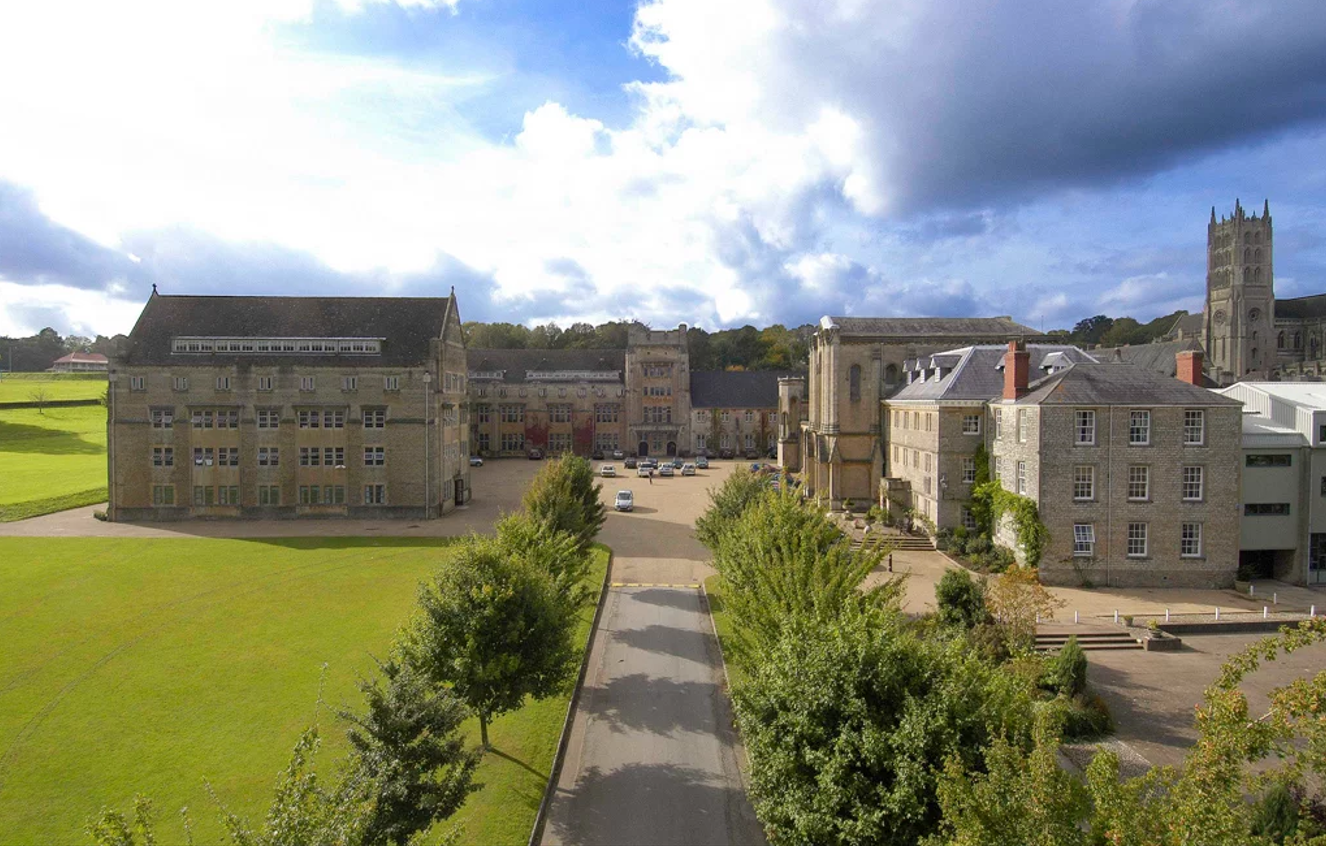
Downside School
As political, cultural and spiritual divides deepen, Catholic education must meet a new generation with honesty, hope and integrity
We live in an age of fracture – political, cultural and spiritual. Public discourse is increasingly polarised, the pace of change unrelenting and young people, in particular, are confronted with contradictions about identity, morality, purpose and truth. In such a landscape, it is easy to feel unmoored. Amid this dislocation, Catholicism offers not a retreat from reality but a way of seeing the world that is coherent, stable and purposeful. It does not deny the chaos or the pain of life, but it insists they are not the whole story.
At the heart of the Catholic vision is the conviction that life is intelligible and relational rather than random or meaningless. Catholicism teaches that faith and reason are not in opposition, but mutually illuminating; that truth is not abstract, but embodied – ultimately in the person of Christ. In a world that often feels morally and metaphysically adrift, this synthesis offers clarity without rigidity, and hope without naivety.
Catholic education seeks not merely to teach this coherence, but to make it lived and tangible. Schools shaped by the Benedictine tradition, such as Downside in Somerset, show how tradition can offer stability – not as nostalgia, but as a countercultural pathway to growth. Young people are invited into a community where academic formation is inseparable from moral and spiritual growth. The aim is not simply to prepare pupils for university or employment, but to equip them for examined, generous and purposeful lives. At its best, Catholic education forms the whole person.
The Catholic tradition is not a fragile inheritance. It has endured wars, schisms, reformations and revolutions. Its continuity arises from its rootedness in Scripture, sacrament and community. The liturgical calendar offers a counter-rhythm to the frantic immediacy of contemporary life. The sacraments mark time not with empty ceremony but with grace. In Catholic schools, this rhythm can be woven gently but unmistakably into daily life.
At Downside, as in Benedictine schools worldwide, prayer, study, work and community are not compartmentalised but integrated. Pupils learn that time is not simply something to be filled or monetised, but something to be sanctified. Stability – a foundational Benedictine value – is presented not as the enemy of growth but as its precondition. In a culture that prizes constant reinvention, it is countercultural to suggest that staying rooted, staying faithful and staying attentive might be the more transformative path.
Yet no Catholic institution can speak credibly about stability or truth without acknowledging the failures of the Church. The deep harm caused by some within its ranks – especially in the betrayal of children – cannot be ignored or minimised. Nor can the Church’s historic entanglement with power. Catholic education must be shaped by repentance, transparency and a commitment to renewal. Schools such as Downside understand that their credibility rests not on perfection but on integrity: the willingness to confront history honestly, to learn and to change.
Paradoxically, the failures of the Church highlight rather than undermine its essential message. The Christian story is not one of moral superiority but of grace amid sin, healing amid harm. Catholic education must teach young people to hold this tension: to aspire to holiness while acknowledging human fallibility; to love the Church while calling it to justice; to believe in redemption without denying the need for accountability. This, too, is formation.
Catholicism offers not only structure but meaning. It teaches that human beings are not consumers or cogs but persons made in the image of God and made for love. This anthropology has profound implications for pedagogy. Education becomes not a narrow exercise in credential acquisition but a for mation in wisdom, conscience and courage. What young people become is as important as what they know.
This formation takes many forms. It hap pens in classrooms, of course, but also in chapel, on playing fields, through music and service and in the friendships and failures that shape character. Downside’s emphasis on hospitality, discipline and community is not nostalgic. It responds to a world in which young people are too often rushed, reduced or overlooked. To be known, accompanied and valued is not a luxury but a necessity.
The poet T.S. Eliot wrote of “the still point of the turning world”. Catholicism, when lived faithfully, becomes that still point – not by withdrawing from the world’s confusion, but by inhabiting it differently. A Catholic school can be a place where young people glimpse a different kind of life: rooted in tradition yet open to the future, anchored in faith yet attentive to reason, nourished by community yet respectful of individuality.
Downside, nestled in the Somerset countryside yet connected to the questions of contemporary society, seeks to embody this vision. As a co-educational day and boarding school welcoming pupils of all faiths and none, it offers an environment where every child is known, supported and encouraged to flourish.
Strong academic results, extensive pastoral care and a rich co-curricular life sit along side the deeper Benedictine commitment to forming discerning, resilient, compassionate young people. Scholarships and means-tested bursaries reinforce the school’s inclusive ethos and enrich the community.
What sets Downside apart – what sets any strong Catholic school apart – is not heritage or academic success alone, but belonging. Pupils and parents consistently speak of the warmth and attentiveness that define the school community. To belong to such a place is to be accompanied into adult hood by people who care not just about achievement but about vocation, character and joy.
In an unsettled age, the challenge and the gift of Catholic education is not to shield young people from the world, but to prepare them to meet it with clarity, compassion and courage. Schools like Downside strive to do precisely that: to offer a still point, a steady foundation and a hopeful vision for the next generation.
Mike Randall is the interim head of Downside School.
Login
Please login to comment
0 Comments
Oldest

Help us keep The Tablet’s voice independent, clear and far-reaching.
Founded in 1840, The Tablet is the leading independent English-language Catholic weekly, celebrated for great writing, astute analysis, brilliant arts and books reviews and trustworthy reporting from correspondents in Britain, Ireland, Rome and across the world.
Independent, high-quality journalism is at the heart of what we do. The Tablet does not have deep pockets and we are not funded by rich donors. If you appreciate our work please consider supporting The Tablet’s Development Fund. It only takes a moment and you can cancel at any time.
- Support with £5 per month
- Support with £10 per month
- Support with other amount.

MOST READ ARTICLES
-
1
Pope Leo diagnosed with lung cancer after operation
-
2
Breaking up … for now
-
3
The future lies with the laity
-
4
A tiny gem
-
5
Archbishop bars Catholics from firing squad for US military execution
-
6
Thousands arrested as Delhi locked down for protest over voter roll scandal
FROM THE EDITOR'S DESK