College of Cardinals: the Church on the peripheries


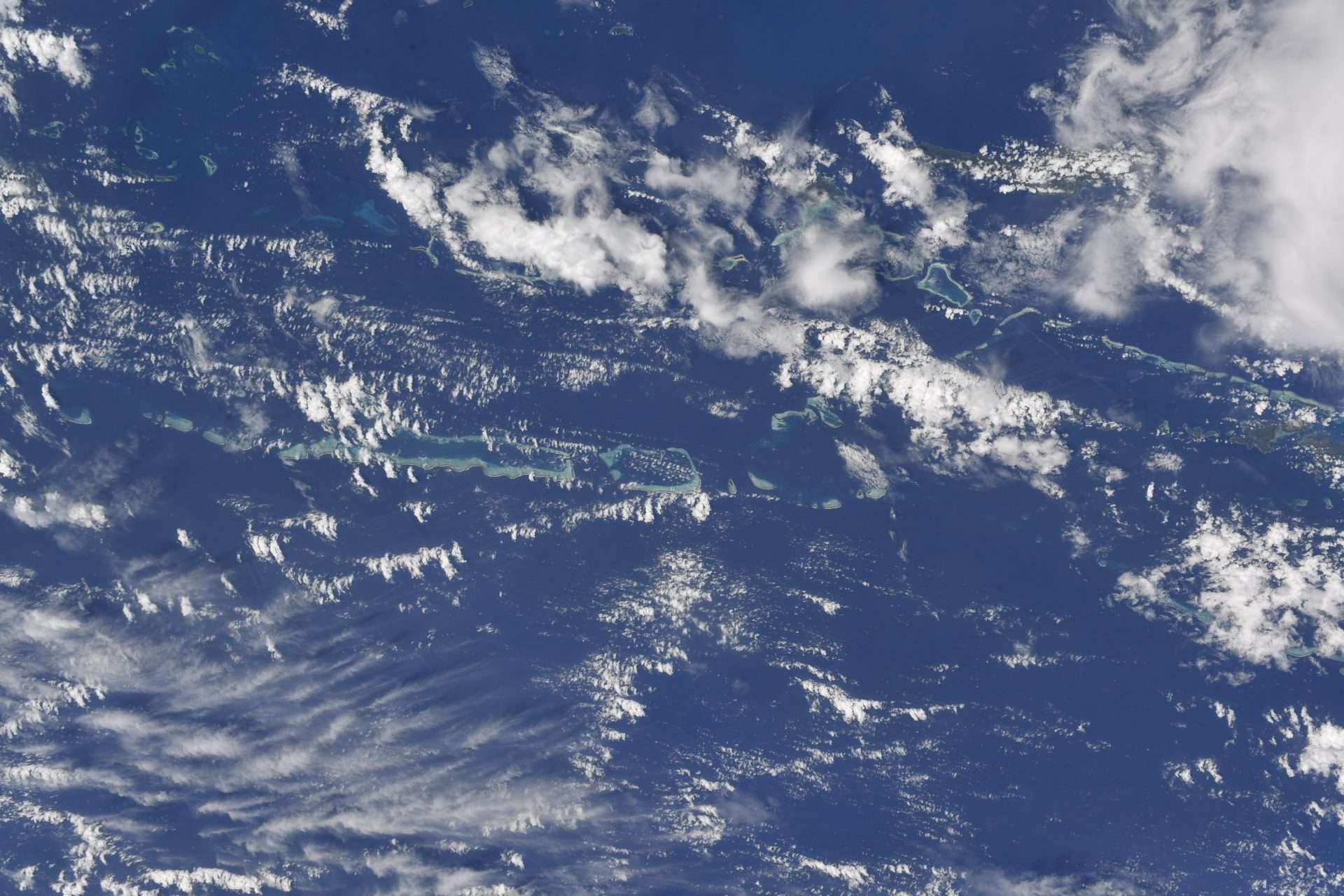
The Solomon Islands in the South Pacific – John Ribat is the first cardinal from the Church in Papua New Guinea and the Solomon Islands to vote in a conclave.
Samantha Cristoforetti / flickr | Creative Commons
Some of Pope Francis’ appointments to the College of Cardinals really were from the ends of the earth – and will change the perspective of the conclave.
When Pope Francis made his visit to the “most peripheral of peripheries” in Oceania last year, he was hosted in Papua New Guinea by the Archbishop of Port Moresby Cardinal Sir John Ribat. The journey – and Ribat’s appointment as cardinal in 2016 – were in many ways typical of Francis, far from Rome and with quite different priorities from the historic Church in the West.
Born into a largely Methodist family (while most of Papua New Guinea’s population is Christian, only a quarter is Catholic), Ribat became a prominent voice for ecumenism and the resolution of tribal conflicts; shortly before he was made a cardinal, he received a knighthood in the Queen’s Birthday Honours for promoting harmony between churches, and was made a cardinal later that year. He has also become an increasingly vocal advocate for action against climate change, with rising sea levels posing an acute threat to many Pacific Islands.
Ribat is the first cardinal from Papua New Guinea or the Solomon Islands, but has spoken confidently and publicly of the importance of “personal holiness” in the selection of the next pope. He is joined from the Pacific Islands by Cardinal Soane Patita Paini Mafi, the Bishop of Tonga, another vocal campaigner against the effects of climate change.
When he visited Rome to receive his red hat in 2015, Mafi was reportedly accompanied by the transgender activist Joey “Joleen” Mataele – a member of the Tongan fakaleitī community, male-born individuals who present as female. The next year Mafi addressed a leitī conference, praising their “courage … despite people saying things against them and all sorts of persecution”.
However, leitī culture does not map neatly onto LGBT+ identity as understood in the West, and nor do Mafi’s public interventions. He also led Church opposition to Tonga’s ratification of a UN convention on discrimination against women, arguing it would threaten Christian opposition to abortion and same-sex unions.
When the then-Archbishop of Bangkok Francis Xavier Kriengsak Kovithavanij was made a cardinal in 2015, a Thai magazine asked him to “express your attitude towards the third gender” – a non-binary identity, distinct from being transgender. Although emphatic about Church doctrine on marriage, he was also insistent that “Christianity is open for everybody” and “we try to meet people of the third gender with sympathy for they can still dedicate their life to God and engage in relationships to others with kindness, respect and love”.
Kovithavanij resigned as Archbihsop of Bangkok last year, but remains eligible to vote in the conclave. Only the second cardinal from Thailand, as leader of its 380,000 Catholics he prioritised peace and national unity, particularly through interreligious dialogue – “unity in diversity” was one of the key themes of his interactions with Buddhism, and also of his vision of the global Church. He told the same interviewer that the first thing Catholics needed to do in Thailand was “concretely contribute to society”, responding to disasters and assisting refugees (notably in winning them permission to work and caring for their children).
But how can the Church “concretely contribute” when it makes up a fraction of a percent of the population? Mongolia’s Cardinal Giorgio Marengo believes his is the only local church in the world where every member was able to get into the same selfie with the Pope. Francis’ visit to the 1,500 Catholics of Mongolia in 2023 was characteristic of his papacy, as was his decision to make Marengo a cardinal the before, when he was just 49.
Born and raised in Italy, Marengo joined the Consolata Missionaries and from his ordination served on the order’s first mission to Mongolia. His red hat and the papal visit attracted attention, and in interviews he described how he overcame his initial prejudices and expectations and immersed himself in Mongolian culture. He has led efforts to promote dialogue with Buddhism, but has also articulated his small Church’s special role in shaping the nation as it emerges from the cultural destruction wrought over decades of communist rule.
Cardinal Mario Zenari serves on another periphery of the Church, where it teeters on the brink of extinction. As apostolic nuncio to Syria since 2008, he was in post throughout the Syrian Civil War and saw the number of Christians across the Middle East collapse, driven out by persecution and the destruction of their prospects. He remained while other embassies closed, declaring in 2016 that “my homeland is Syria. A son cannot tear himself away from his mother’s bedside when she is sick or dying.” Pope Francis made him a cardinal that year, but asked him to continue his work for “beloved and martyred Syria” rather than take up the curial or diocesan posting a red hat normally implies. Zenari was consistently involved in peace initiatives throughout the conflict, advocating on behalf of the entire Syrian population. He has voiced cautious optimism since the fall of Bashar al-Assad’s regime.
The Dominican Archbishop of Algiers, Cardinal Jean-Paul Vesco, is wedded to his own local church. Born in France, he studied and practised as a lawyer before joining the Order of Preachers in his thirties and moving to Algeria shortly after his ordination in 2001, as part of a re-established Dominican presence succeeding the martyred Pierre Claverie – the “Bishop of the Muslims” – murdered by Islamists in 1996. After his appointment as Archbishop of Algiers in 2021, Vesco said he expected to remain in Algeria for the rest of his life; he was granted Algerian citizenship by presidential decree in 2023.
Vesco inherited the tradition of dialogue with Islam pioneered by Claverie and remains an advocate of interfaith “fraternity”. He organised Claverie’s beatification, as one of the 19 martyrs (including the monks of Tibhirine) in 2018. His public positions extend to vocal support for the admission of divorced-and-remarried Catholics to communion, and his participation in a statement from North African bishops distancing themselves from the SECAM statement forswearing the blessings for “irregular” couples outlined in Fiducia Supplicans. After the consistory where he made a cardinal in December 2024, he joined fellow members of the Vatican’s athletics club to share a meal at a homeless shelter in St Peter’s Square.
Paraguay’s first cardinal, the 73-year-old Adalberto Martínez Flores, said Pope Francis’ visit to the slums of Asunción in 2015 “placed deeply within our hearts the special option for the peripheries”. Though born and raised in the Paraguayan capital, Martínez studied Advanced English and philosophy in Washington, DC and completed his priestly formation at the Pontifical Lateran University in Rome. Ordained for the Diocese of St Thomas in the US Virgin Islands by Sean O’Malley in 1985 (when the future Archbishop of Boston was coadjutor bishop of St Thomas) he was incardinated nine years later in the Diocese of Asunción, where John Paul II appointed him auxiliary bishop in 1997. Three years later, he became the first bishop of the new Diocese of San Lorenzo, and then Archbishop of Asunción in 2022. When Pope Francis made him a cardinal the same year, he said the appointment recognised the faith of the Paraguayan people rather than his own achievement, and embraced the synodal process as a means of expressing that faith – including its most marginalised members.
While Flores’ appointment was understood to reflect Francis’ desire better to reflect he breadth of the Church in the College of Cardinals, the appointment of the Nigerian Peter Ebere Okpaleke at the same consistory was a clear signal of a different kind. Okpaleke was appointed Bishop of Ahiara in 2012, but was never accepted by some of the faithful and clergy of his diocese because he did not belong to the local Mbaise ethnic group. His appointment was described as “ecclesiastical colonisation”. Despite the Pope’s intervention, demanding letters of apology from the diocesan clergy for their treatment of Okpaleke, he resigned from the see in 2018.
In 2020 Pope Francis appointed him Bishop of Ekwulobia, a newly created diocese, and made him cardinal in October 2022, sending a strong message against ethnic discrimination in the Church. Okpaleke said he assumed his secretary was joking when he addressed him as “your eminence” for the first time. The 62-year-old is the only of Nigeria’s four cardinals able to vote in the conclave, the others being over 80.
Pope Francis reportedly said he wanted to make the Scalabrian missionary Fabio Baggio a cardinal much earlier than 2024, but he had always declined. The two had worked together since the 1990s, when Baggio headed the migration department for the Archdiocese of Buenos Aires. The Italian priest’s career took him through Latin America, Oceania and Asia before he returned to Rome to run a migration ministry, where in 2016 he received a call from his old friend inviting him to join the migration section of Cardinal Czerny’s Dicastery of the Promotion of Integral Human Development. One of his key contributions was to set out the span of mass migration, affecting almost every country around the world.
Very much the Pope’s man, Baggio was appointed one of the three members of the Vatican’s Covid commission in 2021 established to articulate “bold, broad changes” for the future of society; in 2022 he became the migration section’s sole undersecretary, with broader responsibilities set out by Francis; and in 2023 he became director of the Laudato Si’ Training Centre in Castelgandolfo. He is a guitarist and has published liturgical music, but says he hasn’t composed anything since 2010.
It’s unlikely the cardinals will again go to “the ends of the earth” to find the next Bishop of Rome. But distant, unexpected voices of the Church on the peripheries will inform their thinking as never before.
Login
Please login to comment
0 Comments
Oldest

Help us keep The Tablet’s voice independent, clear and far-reaching.
Founded in 1840, The Tablet is the leading independent English-language Catholic weekly, celebrated for great writing, astute analysis, brilliant arts and books reviews and trustworthy reporting from correspondents in Britain, Ireland, Rome and across the world.
Independent, high-quality journalism is at the heart of what we do. The Tablet does not have deep pockets and we are not funded by rich donors. If you appreciate our work please consider supporting The Tablet’s Development Fund. It only takes a moment and you can cancel at any time.
- Support with £5 per month
- Support with £10 per month
- Support with other amount.