Ronald Knox and the Feast of Christmas


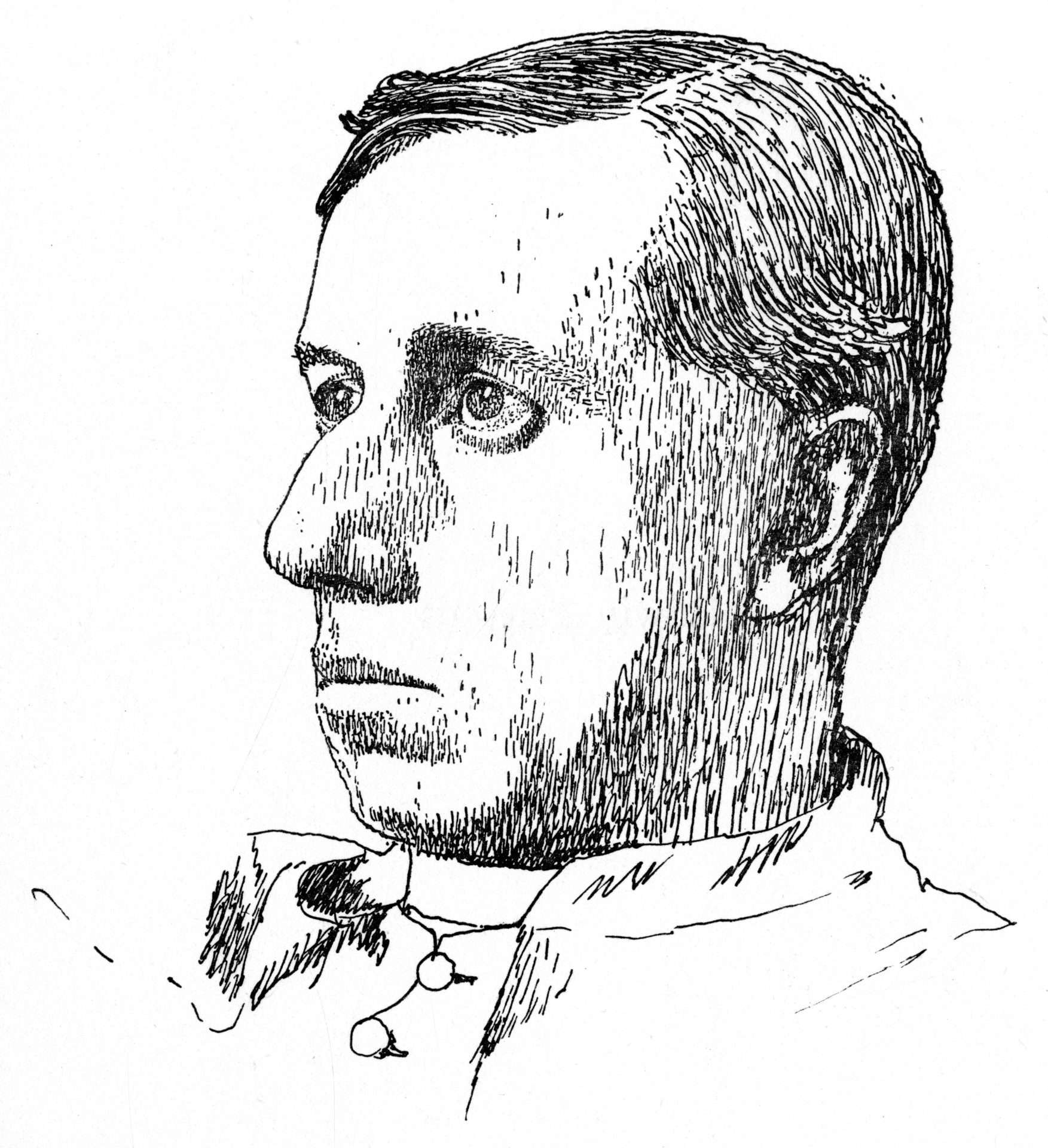
Ronald Knox
Chronicle via Alamy
‘We make a holiday of Christmas only if we have the strength of mind to creep up the nursery stairs again, and pretend that we never came down them.’ Thus spoke Monsignor Ronald Knox on 25 December 1950 in a broadcast for the BBC.
That rich resonant Edwardian voice can still be heard on YouTube. His delivery and prose confirms what made him the greatest homilist of his time. As Paul Dean put it in a profile for New Criterion, “His homilies ….show the fruits of [his] upbringing, the ability to conduct a complex argument with grace, the carefully reined-in precision of phrasing that can rise, when required, to a moving ardour.” So the occasions when he brought these gifts to the Feast of Christmas are not just timely but worthy of note.
But first, a little about Ronald Arbuthnott Knox, one of the most celebrated converts since John Henry Newman. Born into a line of Evangelicals, in February 1887, the sixth, youngest and favourite child of Edmund Knox, anti-Tractarian Anglican Bishop of Manchester and maternal grandson of Alpy French, first Bishop of Lahore, a mystic, protestant Charles de Foucauld. Famously precocious, he declared at the age of four that “at night I think about the past”. He was reading Virgil at six. Young Ronnie was a King’s Scholar at Eton, where, at 17, he privately resolved to remain celibate. He became a Fellow and Chaplain of Trinity College, Oxford having been ordained in 1912. The death of his dearest friends in the Great War, deep reading and prayer led him to question his Anglican Faith. As his friend and biographer Evelyn Waugh wrote of the early years 2 of the War, ” … he stood back aghast at the gross dislocation in the moral order, which kept him on his knees, alone, six hours a day for the last three weeks of the month.”
Returning home for the Christmas holidays in 1916 from Shrewsbury (where he had been a temporary schoolmaster), he met opposition from his father, who threatened to resign as bishop if he became a Catholic, but Ronald convinced him to retain his see. Only a few years earlier, one of his clerical colleagues had proclaimed, “Ronnie Knox is the Church of England!” The Daily Mail hailed him “the wittiest young man in England.” But, on September 22, 1917, he was received into the Church. “The biggest fish landed since Newman.” Cardinal Bourne, sent him to live with the London Oratorians at Brompton and he was ordained in 1919. He then became a teacher at St. Edmund’s College in Ware, Hertfordshire, where he remained until 1926.
He never had the burden of an ordinary parish and from 1926 to 1939, he was chaplain to the Catholic undergraduates at Oxford, among them Julian Asquith, grandson and heir of HH Asquith, whom he succeeded as 2nd Earl of Oxford and Asquith at the age of 11. In 1937, the year after Pius XI had made him a Monsignor, a friend confided she “wasn’t going to have her house turned upside down just because it was Christmas”. The result was “A Letter About Christmas”: “What is Christmas, from start to finish, but things being turned upside down? Don’t start arguing about whether Christmas happened…….. The Maid-Mother—we could not have invented anything more gracious than that part of the story, even if it had been necessary for us to invent …… we find no better way of doing honour to Christmas than by turning things upside down. Everything went wrong from the first; all the best places going to the wrong people, as it were; the ox and the ass nearest to the cradle, and the shepherds getting in ahead of the Kings; the Kings having to ask their way, and asking it of the people who never found it; the inn having no room, so that it was left for a stable to contain Him whom the worlds could not contain—all the arrogant topsy-turvydom, in fact, of the Christmas Crib.”
Despite all the modern paraphernalia, he believed Christmas retained, “under all its trappings, its essential note of unexpectedness. Just when you are expecting burglars to prowl about other people’s houses in disguise and take things away, you instead, the householder, are expected to disguise yourself and prowl about your own house, putting things there. Instead of waking up to find ladders in her stockings, your small daughter wakes up to find that the stocking itself has become a ladder, for Santa Claus to come down the chimney……” In 1939 he went to live at Aldenham, Hertfordshire with John, 3rd Lord Acton and his wife Daphne, whom he was instrumental in converting and to whom he was devoted. There he undertook his translation of the Bible and addressed and wrote for the girls evacuated from the Kensington’s Assumption Convent who occupied Aldenham for the duration of the War. Many girls fell under his spell – shy, benign, a little remote but transparently holy. His trilogy for them: The Mass(1948), The Creed (1949) and The Gospel in Slow Motion (1950) are classics of Catholic instruction. When the Actons emigrated to Rhodesia, another remarkable convert, Katherine Asquith, the last of the Horners of Mells in Somerset and widowed mother of Julian, the 2nd Earl, took him in. As one visitor put it, “It seemed as if St Jerome had taken up residence. All that is needed is a lion.”
He had just completed his singlehanded translation of the Bible, in idiomatic yet assured English and was somewhat depressed at his Church’s response to this Herculean task. As Katherine Asquith’s granddaughter-in-law, Shakespearean scholar, Clare, has written in her charming chapter from Francesca Bugliani Knox’s magisterial Ronald Knox A Man for All Seasons (2017): “For the first five years or so at Mells, he was occupied with assessing the thousands of recommended alterations to his translation, and answering his many critics.” He also worked on his brilliant Enthusiasm (1950), which described the typical ‘enthusiastic’ movement as beginning with “an elite of Christian men and (more importantly) women” trying to live closer to the Holy Spirit than their neighbours; and his commentary on the New Testament (1955). As Clare Oxford recalls, “He would say the office walking round the Manor Garden and reported one day that Raymond [Katherine’s grandson, now the 3rd earl] had asked him what he was doing. “Saying my prayers,” said Ronnie. “That’s not how you say your prayers,” said Raymond, who then knelt down on the grass and put his hands together, “You do it like this.”
The day began and ended in the chapel…..There was much fuss and bell-ringing over the evening rosary. Before his deathbed conversion “that sardonic onlooker, Conrad Russell, compared it to the line- up for the Grand National”. He and his hostess “took the same things seriously – the decoration of the Christmas crib..” A nice Yuletide touch connected with Mells was the nursery rhyme of an ancestor: Little Jack Horner Sat in the corner, Eating his Christmas pie; He put in his thumb, And pulled out a plum, And said, “What a good boy am I!”
In 1953 he would speak again on the BBC, The Effect of Christmas, “How would everything be different, in this year 1953, if we had no year One to date it from — if the world were still waiting to be redeemed? If the picture of a dark stable on a snowy night, a working man and his wife, and a Baby lying in the straw among the beasts meant nothing to us?
“When the shepherds go back to their flocks, we have not finished with the story of Christmas. Their place at the crib is taken by the three wise men from the east; and Christian piety has always emphasised one significant point about their coming: The birth of the Saviour was not for the Jewish people only, it was for the whole world…..”
In the evenings he tackled the crossword, allowing himself to read only the horizontal clues. “Every Christmas he composed a crossword which he copied out, not always quite accurately, and sent to his friends; they were expected to send him the solutions and held in disgrace if they neglected this duty.”
Theology, satire, history, pastoralia, broadcasts, detective novels, parodies, apologetics, pithy verses: Knox mastered them all. But that was not all. He also translated from the Latin some 47 hymns for The New Westminster Hymnal (1939), among them the fifth century carol A solis ortus cardine composed by Coelius Sedulius, ending, “Fast doth He sleep, where straw doth spread, A humble manger for His bed. A Mother’s milk that strength renewed, Which gives the birds of heaven their food. Glory to God, the angels cry; Earth hears the echo from on high; Mankind’s true Shepherd and it’s Lord By shepherd hearts is first adored.”
In early 1957, he was diagnosed with terminal cancer. He did not suffer greatly, typically observing that he was not worthy of it. In late August 1957, another close friend, Lady Eldon, a Lovat Fraser, joined Katherine Asquith at his bedside at Mells. Clare Asquith wrote, “For three days he lay in a coma, but once Lady Eldon saw a stir of consciousness and asked whether he would like her to read from his own New Testament. He answered very faintly, but distinctly: “No”; and then after a long pause in which he seemed to have lapsed again into unconsciousness, there came from the death-bed, just audibly, in the idiom of his youth: “Awfully jolly of you to suggest it, though.” They were his last words. It was 24 August 1957, The Feast of the Apostle Batholomew. Ronald Knox shared his genius and his faith at Christmas but he was ultimately and without question a man for all seasons.
Login
Please login to comment
0 Comments
Oldest

Help us keep The Tablet’s voice independent, clear and far-reaching.
Founded in 1840, The Tablet is the leading independent English-language Catholic weekly, celebrated for great writing, astute analysis, brilliant arts and books reviews and trustworthy reporting from correspondents in Britain, Ireland, Rome and across the world.
Independent, high-quality journalism is at the heart of what we do. The Tablet does not have deep pockets and we are not funded by rich donors. If you appreciate our work please consider supporting The Tablet’s Development Fund. It only takes a moment and you can cancel at any time.
- Support with £5 per month
- Support with £10 per month
- Support with other amount.

MOST READ ARTICLES
-
1
Pope Leo diagnosed with lung cancer after operation
-
2
Breaking up … for now
-
3
The future lies with the laity
-
4
A tiny gem
-
5
Archbishop bars Catholics from firing squad for US military execution
-
6
Thousands arrested as Delhi locked down for protest over voter roll scandal
FROM THE EDITOR'S DESK