Pope Francis – shepherd to the suffering


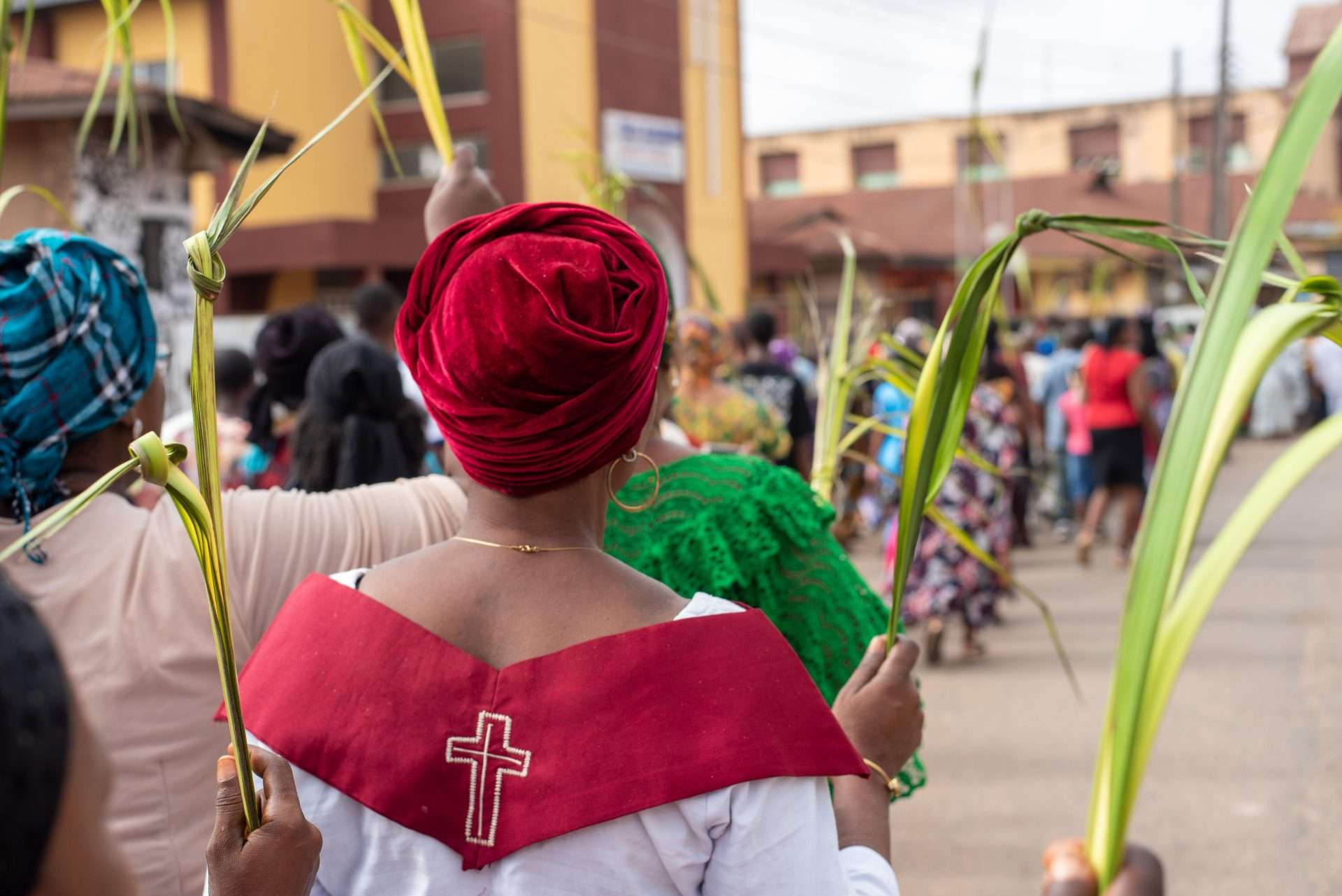
A Palm Sunday procession in Ibadan, Oyo, Nigeria last year.
Tolu Owoeye / Alamy Stock
A call to unity: honouring Pope Francis and facing the future together
This Easter weekend, as thousands marched for peace across Plateau State, a remarkable scene unfolded. Christians of all traditions – Catholic, Anglican, Pentecostal, and independent – walked side by side, united in purpose and prayer. Banners reading “One Church, One Voice” and “Peace for All” stretched above crowds moving through Jos and Bukuru. Their procession was more than a public demonstration; it was a declaration. Terror may strike indiscriminately, but so too must our love and solidarity.
These moving scenes took place in the same week that the world prepares to say farewell to Pope Francis, whose funeral will be held this Saturday. His death marks the end of a profoundly influential papacy, defined not by grandeur but by grace, humility, and courage. As the global Church grieves, many of us are left asking how best to honour the life of a man who gave everything to those most forgotten.
The march was a response to the horrific killings that have recently taken place in Plateau State. At least 60 Christians were murdered, with many more terribly injured. Entire communities in areas like Ruwi, Hurti, and Zike (in Bokkos and Bassa LGAs) have been left devastated.
The march was organised by the Church Denominational Leaders Forum and the Plateau State Chapter of the Christian Association of Nigeria. It was the second such peace walk in recent months, called in unity, grief, and righteous indignation – a solemn but powerful protest urging the government to take decisive action.
Christians across the state gathered over the easter weekend, dressed in black, red, and white – black for mourning, red to symbolise the bloodshed, and white as a statement of peaceful resistance. The walk culminated at the New Government House in Little Rayfield, where participants laid their grief before Governor Muftwang and called on President Tinubu to witness the suffering firsthand and end what is increasingly being seen as a campaign of ethnic cleansing and religious persecution.
Pope Francis was a shepherd to the suffering. From Nigeria’s Middle Belt to Central Asia and the Holy Land, he stood with persecuted Christians—not only in word, but in presence. He knelt in battered chapels, embraced refugees, and challenged powerful leaders to remember the poor. His papacy was a lived theology: a witness that the Church belongs not to the powerful, but to the vulnerable.
He often reminded us that persecutors do not pause to ask if a believer is Catholic or Protestant. To the oppressor, there is only one target: the follower of Christ. “They do not ask: ‘Are you Lutheran? Are you Orthodox? Are you Catholic?’” he once said. “They simply see Christians—and that blood of martyrdom unites us.”
This is no abstract theology. Around the world, Christians continue to die for the same faith, even if they worship under different creeds. From the Sahel to northern India, from Congo to Colombia, persecution doesn’t discriminate—and neither should our response. Yet too often, Catholic and Protestant institutions work in silos, duplicating efforts while the persecuted cry out for unity and action.
If we are serious about confronting persecution, then unity must go beyond shared prayers. It must be seen in strategy, funding, and fieldwork. This is the conviction behind Kerygmos, a Christian initiative working to combine presence with data-driven advocacy, equipping persecuted communities with tools to not only survive but to reclaim their future.
Pope Francis led the Church as one who bore its wounds. He modeled simplicity over spectacle, listening over lecturing. His legacy is not merely an archive of speeches, but a roadmap of radical presence. As we mourn his passing, we are challenged not only to echo his words, but to live out his courage.
This calling extends even to how the Church engages with the modern world. In the 1970s, Christian musician Larry Norman famously asked: “Why should the devil have all the good music?” It was a cultural call to arms. Today, we must ask: Why should the devil have all the good tech? Technology is rapidly reshaping how threats are detected, how stories are told, and how the vulnerable are protected. The Church cannot afford to remain passive. If violence and disinformation flourish in digital spaces, then so must truth and compassion.
At Kerygmos, we are exploring how artificial intelligence, data modelling, and predictive tools can help expose patterns of persecution and respond with precision and care. These tools allow us to see what others overlook—and to intervene before violence strikes.
Just as Larry Norman challenged Christian artists to reclaim excellence in music, we must now challenge Christian technologists and builders to step boldly into the digital frontier, reclaiming it for justice, peace, and Gospel truth.
This week, as Pope Francis is laid to rest, and as the Church continues to march for peace, we are presented with a profound challenge. Will we honour his legacy with our lives? Will we move beyond homage and embody the unity for which he prayed so fervently?
The blood of martyrs still flows. The Gospel still calls. And the work of unity is not yet done.
Mark Peacock is the founder of Kerygmos, a UK-based Christian non-profit that equips vulnerable communities through advocacy, education, and data-driven innovation to confront persecution and terror.
Login
Please login to comment
0 Comments
Oldest

Help us keep The Tablet’s voice independent, clear and far-reaching.
Founded in 1840, The Tablet is the leading independent English-language Catholic weekly, celebrated for great writing, astute analysis, brilliant arts and books reviews and trustworthy reporting from correspondents in Britain, Ireland, Rome and across the world.
Independent, high-quality journalism is at the heart of what we do. The Tablet does not have deep pockets and we are not funded by rich donors. If you appreciate our work please consider supporting The Tablet’s Development Fund. It only takes a moment and you can cancel at any time.
- Support with £5 per month
- Support with £10 per month
- Support with other amount.

MOST READ ARTICLES
-
1
The Tablet poem
-
2
Battling confession fatigue
-
3
A craving for beauty
-
4
Massachusetts abuse report finds over 1,000 victims in three dioceses
-
5
Woman religious becomes first female president of Pontifical Mission Societies
-
6
Bishops demand security investment to promote ‘common good’ in Nigeria
FROM THE EDITOR'S DESK