Light in the darkness: hymns for Ordinary Time


Alamy
We are roughly in the middle of the first section of Ordinary Time in the Church’s year at the moment, the first of the two sequences of Sundays that can be expanded or contracted to make sure that the big dates fall at the right time.
The readings in them can be sequential from Sunday to Sunday; the Gospel usually is, but the First and Second readings can dodge around a bit, and the Responsorial Psalm is a reaction to the First Reading, so that too can come from anywhere (including the odd canticle). This first batch of Ordinary Time, after Christmas, before Lent, is much shorter than the second one (after Pentecost, before Advent), and this year it has only five Sundays, with an early Easter; but because the First Sunday of Ordinary Time is always overtaken by the Baptism of the Lord, the count starts at two. And it’s Year A, so the Gospels are mostly Matthew.
Choosing hymns for these Sundays is an interesting job. Obviously when there is a special occasion, like the Baptism of the Lord, there are some hymns which are particularly appropriate: those which tell the story, like “When John baptised in Jordan’s river”, or “Songs of thankfulness and praise”; or those where we imaginatively put ourselves into the scene, like “Breathe on me, Breath of God”. With the Ordinary Sundays, though, you have to work with whatever the readings suggest, because the hymns should never just be random decorative twirls, they need to contribute to the overall theme and direction of the liturgy. The pressures of life mean that you’re usually working just one week at a time, rather than with an overarching theme as in Lent or Advent.
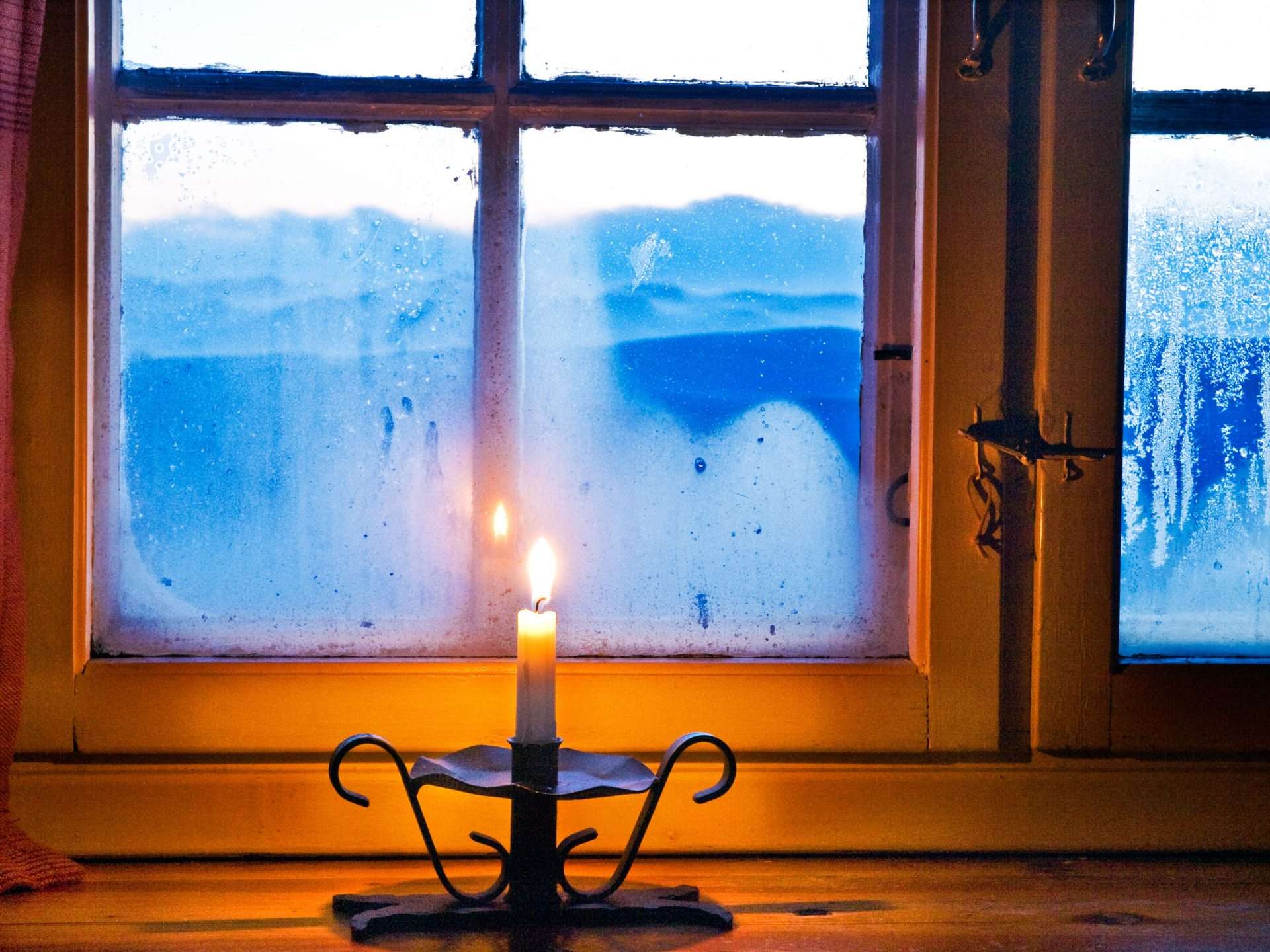
This year I have found myself responding particularly to some of the images being used in the readings, and noticing how often they occur. Just as I kept noticing the water references when we had none in our taps before Christmas, recently in these dark days I have noticed how much light imagery we have been having.
Here in the northern hemisphere, this is the darkest time of the year. Nights are long, and days often gloomy, although we are past the solstice, which makes us feel better already. During the Covid winter lockdown, I was driven to writing down the sunrise and sunset times every day so that I had some evidence of the light returning. I needed to see the numbers to feel sure that it was happening, because perception always seems to lag behind the fact. This feeling hasn’t been quite so oppressive in recent years, but the increasing cloud-cover this year with its accompanying abnormally heavy rain means that I have been feeling very short of light, and any sunbeam is a call for celebration. So, I have been reacting instinctively to any mention of light in the readings, and there have been enough to form a critical mass, and an ongoing theme.
It started quite gently with the Second Sunday, when the story was still running on Jesus’ baptism by John in the Jordan, but the First Reading had God saying to Israel, “I will make you as a light for the nations” (Isaiah 49:6). By the Third Sunday, we had gone backwards in Isaiah, but the light was getting stronger and stronger. “The people who walked in darkness have seen a great light” (Isaiah 9:2), and then the Psalm (27/26) picked up the same idea and indeed used it as the repeated Response: “The Lord is my light and my salvation.” After that in the Gospel, the Isaiah prophecy was repeated word for word, as Matthew tells us that Jesus is the fulfilment of the prophecy.
So, for that Sunday I felt it was entirely appropriate to emphasize the theme of light, and we started with “Christ, whose glory fills the skies”, which is a (Charles) Wesley hymn packed with light of all kinds. It’s so confident about its own brightness that the middle verse can afford to play with the notion of darkness: “Dark and cheerless is the morn / unaccompanied by thee.” It made an excellent first hymn. I told the choir that we needed to sing the brightness into the day and into our celebration because everyone was arriving cold, wet and cheerless. We all felt much better once we had sung it. Then at Communion we sang “Lead, kindly light”, because I wanted a more meditative hymn but still with light in it. Both these two hymns, so different from each other, move through the night’s darkness to arrive with joy at dawn in the last verse.
The lectionary for the Fourth Sunday has only one reference to light, in the Communion antiphon, and it’s out of the Psalms: “Let your face shine on your servant” (Ps. 30/29:17). God is the source of light, especially his face, which the psalmist longs for and seeks. In the beginning, as Genesis tells us, there is nothing but God, darkness and water. Nothing happens until God creates light, and everything unrolls from that beginning. Darkness is to be feared more for the perception of God’s absence than anything else. Darkness has no power over God himself: “even darkness is not dark for you” (Ps 139/138:12), but of course without light the psalmist himself is totally vulnerable and unprotected, so he always calls for help in the darkness and looks forward to the dawn. God provides light for the world, and is himself light: “in your light, we see light” (Ps. 36/35:9).
There is even more light in the New Testament than in the Psalms, and less darkness as an image, I would say, though that’s an impression I haven’t yet checked chapter and verse for. Bad things happen in the darkness, but when Jesus promises light and water, he promises them both on a permanent basis: a light which shines in the darkness and the darkness shall not overcome it; a spring of water that means you will never be thirsty again.
We started Mass with the hymn “Awake, awake! Fling off the night”. Starting the previous week with a hymn about light and wakefulness had worked very well, and I wanted to use the same effect again. The words are based on Ephesians 5:6-20, they are full of positive energy; and the tune, Deus tuorum militum, is a bouncy, rhythmic piece of music which has real vigour and is good to sing. The hymn has five verses, perhaps too many for a first hymn depending on how sprightly your priest is, but it’s fine to stop after the fourth verse, which ends “and your whole nature fill with joy”.
It’s so important to start brightly and with conviction, because it sets the whole mood for the liturgical celebration. Obviously, every hymn matters, but the first one particularly so, and as I said to the choir, if it isn’t bright morning outside, we have to sing the brightness in. A good tune is vital. The hymn later says, “the light of life in us will glow […] Let in the light” and I felt like adding “and off we go”.
The Fifth Sunday in Ordinary Time returns to the theme, with the First Reading promising “Then shall your light break forth like the dawn” (Isaiah 58:8). Again, the light is part of the repeated response to the psalm (112/111), although I find the new translation clumsy and opaque. In the Gospel Jesus himself tells his disciples that they are the salt of the earth and the light of the world, describing vividly how inside a house people light a lamp and then put it high to let the light shine, and so should they (Mtt 5:14-16). But remembering the context in which he is speaking, it is really quite shocking when Jesus says, “I am the light of the world” (John 8:12), which is the Alleluia verse for this week. Only God could say this.
We will be singing hymns about the kingdom, the Word of God and the Name of God, but we will finish with “Thou whose almighty Word”, which ends every verse with “Let there be light”. It may still be fairly dark outside and even in the church, but we will be singing to bring the brightness in, and sending people home with their light shining. There are lots of hymns about light, of all different styles, so you can choose what suits your congregation. “Shine, Jesus, shine”and “Walk in the light”are both fine hymns in the right place with a congregation that sings them with enthusiasm. My lot are a little more staid, so I would normally save those hymns for a specific occasion, when we might also have access to a band rather than the organ, but I know they will sing “Thou whose almighty Word” to lift the roof off.
The last Sunday of Ordinary Time (6 OTA, February 15th) in this section is already moving on from the theme of light, and preparing for Lent’s arrival by focusing on the theme of God’s law. That week’s Psalm is 119/118, the longest psalm in the psalter, with a truly astonishing number of synonyms for law weaving through the lines of this alphabetical poem of praise. But by then we will be halfway through February, and there will be more light outside, so we can think of other things.
For now, though, sing about light. Sing the roof off; let the light in.
Kate Keefe composes musical settings for the Mass and writes about the psalms. You can follow her on Facebook, Twitter, LinkedIn and Instagram.
Login
Please login to comment
0 Comments
Oldest

Help us keep The Tablet’s voice independent, clear and far-reaching.
Founded in 1840, The Tablet is the leading independent English-language Catholic weekly, celebrated for great writing, astute analysis, brilliant arts and books reviews and trustworthy reporting from correspondents in Britain, Ireland, Rome and across the world.
Independent, high-quality journalism is at the heart of what we do. The Tablet does not have deep pockets and we are not funded by rich donors. If you appreciate our work please consider supporting The Tablet’s Development Fund. It only takes a moment and you can cancel at any time.
- Support with £5 per month
- Support with £10 per month
- Support with other amount.

MOST READ ARTICLES
-
1
The Tablet poem
-
2
Battling confession fatigue
-
3
Pope Leo announces operation to remove growth in lung
-
4
Catholic Social Teaching and universities
-
5
Nigerian first lady suffered death threat for practising Christian faith
-
6
Refugees admire ‘talent’ and ‘understanding of the topic’ of young competition winners
FROM THE EDITOR'S DESK