In a world of walls, Pope Francis chose bridges


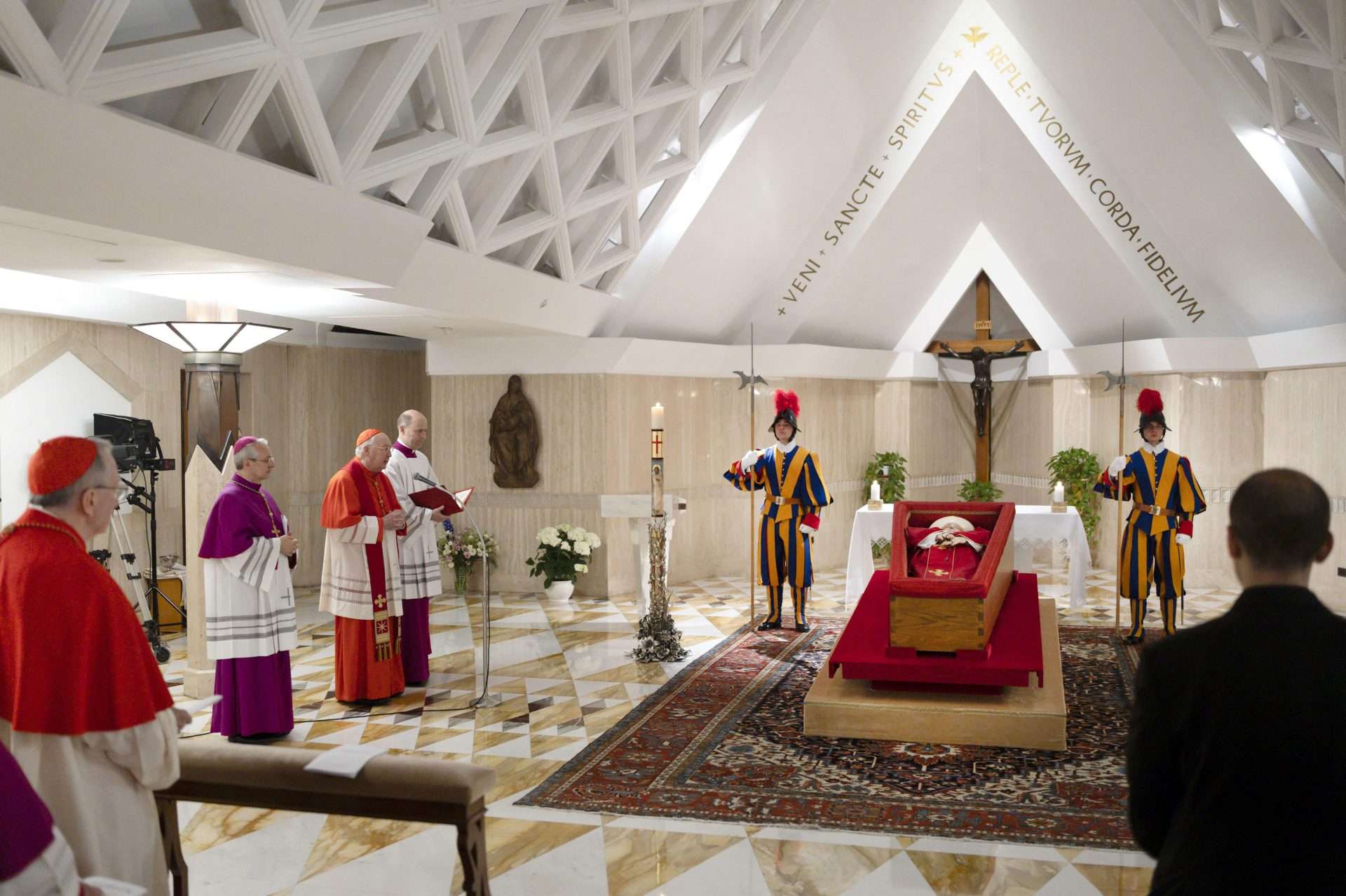
The death of Pope Francis on Monday marked the passing of one of the most consequential religious leaders of our time.
Alamy
Even as the world claims to value tolerance, forces across the globe continue to suppress that right, sometimes in the name of religion itself
The death of Pope Francis on Monday marked the passing of one of the most consequential religious leaders of our time. His papacy didn’t merely challenge norms within the Church, it confronted the world’s growing indifference to faith, freedom, and fraternity. At the heart of his legacy is Fratelli Tutti, a call to recognise every person as a brother, every nation as a neighbor, and every faith tradition as part of the dialogue, not the conflict, of civilisation.
This wasn’t theoretical. Francis spent his papacy confronting some of the most politically sensitive and spiritually fraught divides of our age, between East and West, Christian and Muslim, secular and sacred. His outreach wasn’t without controversy. But it was coherent, rooted in the conviction that every person is made in the image of God and endowed with dignity that no regime, ideology, or religion can erase.
In January 2023, I traveled to Rome to organise an interfaith sports camp in partnership with the Vatican and Muslim NBA star and human rights activist Enes Kanter Freedom. We brought together young people from different faiths, many of whom had never meaningfully encountered someone outside their tradition. What united them wasn’t uniformity, but a shared longing for meaning, truth, and belonging. This, I believe, is what Pope Francis understood at a level few others did: that dialogue isn’t weakness, it’s warfare against the forces of dehumanisation. I didn’t always agree with Pope Francis, but when it came to his pursuit of peace, especially through dialogue and defence of human dignity, he was unwavering, and he was right.
As someone who leads an organisation dedicated to raising awareness about the global crisis of Christian persecution, I’m often confronted with the misconception that advocating for Christians means standing against Muslims. But the Church doesn’t teach that, and neither did Pope Francis. The true threat to all faith is not one another, it’s the rise of religious extremism, political violence, and moral indifference. Francis made clear: unity doesn’t require sameness, but it does require the courage to see the image of God even in those who believe differently.
Religious freedom is a precondition for peace, not a consequence of it. Pope Francis knew this. His public gestures, whether washing the feet of Muslim migrants or praying at sites of Christian martyrdom, weren’t contradictions. They were declarations. If peace is to mean anything in our century, it must begin with a universal defence of conscience.
This isn’t naïve idealism. It’s the heart of Fratelli Tutti. Every human being is made in the image of God and possesses inviolable dignity. “Each of us is fully a person when we are part of a people,” Pope Francis wrote. That means the right to seek truth, to follow conscience, and to live one’s faith freely is not negotiable, it is sacred.
But even as the world claims to value tolerance, forces across the globe continue to suppress that right, sometimes in the name of religion itself. Christians must reject both apathy and tribalism. In a fractured world, Francis reminded us, peace will never come from domination or division. It begins with encounter. It begins when we choose bridges over walls.
The interfaith basketball camp in Rome was framed not around coexistence as a slogan, but encounter as a reality. And that experience reaffirmed what Pope Francis modelled throughout his pontificate: proximity changes perception. When young Christians and Muslims share a court, a meal, or a moment of prayerful reflection, even in silence, they are no longer abstractions to one another. They are neighbours.
Pope Francis didn’t just preach dialogue; he practiced it. And in doing so, he reminded the Church of its calling: not to retreat from the world’s complexity, but to enter it with conviction and compassion. At a time when authoritarianism is rising, when religious minorities are targeted from Nigeria to Nicaragua, and when the West increasingly treats faith as either a private hobby or a political bludgeon, his voice was a steady reminder that spiritual freedom is not peripheral. It is essential.
Now, in the wake of his passing, there will be a temptation to sanitize his legacy, to reduce what he built, what he confronted, and what he called us to, to merely gestures and symbols. But Pope Francis didn’t offer us gestures. He offered a challenge. The future of peace depends on our willingness to protect the dignity of the persecuted while also building bridges with those we are told to fear. Fratelli Tutti was not a conclusion. It was a blueprint.
The work of human fraternity remains. And so must our resolve.
Gia Chacón is the founder of For the Martyrs, the leading voice for persecuted Christians worldwide. She has led interfaith initiatives in partnership with the Vatican and has worked on the ground throughout the Middle East, advocating for religious freedom and human dignity.
Login
Please login to comment
0 Comments
Oldest

Help us keep The Tablet’s voice independent, clear and far-reaching.
Founded in 1840, The Tablet is the leading independent English-language Catholic weekly, celebrated for great writing, astute analysis, brilliant arts and books reviews and trustworthy reporting from correspondents in Britain, Ireland, Rome and across the world.
Independent, high-quality journalism is at the heart of what we do. The Tablet does not have deep pockets and we are not funded by rich donors. If you appreciate our work please consider supporting The Tablet’s Development Fund. It only takes a moment and you can cancel at any time.
- Support with £5 per month
- Support with £10 per month
- Support with other amount.

MOST READ ARTICLES
-
1
Would the Church miss us?
-
2
Nicaraguan bishops visit Rome as Ortega regime tightens grip
-
3
Church from the 1950s receives £1 million government grant for new roof
-
4
Pope Leo thanks staff at Mass in Gemelli Hospital
-
5
Henri Nouwen: Christ’s acrobat
-
6
Under endless skies
FROM THE EDITOR'S DESK


