Choosing hymns for special occasions


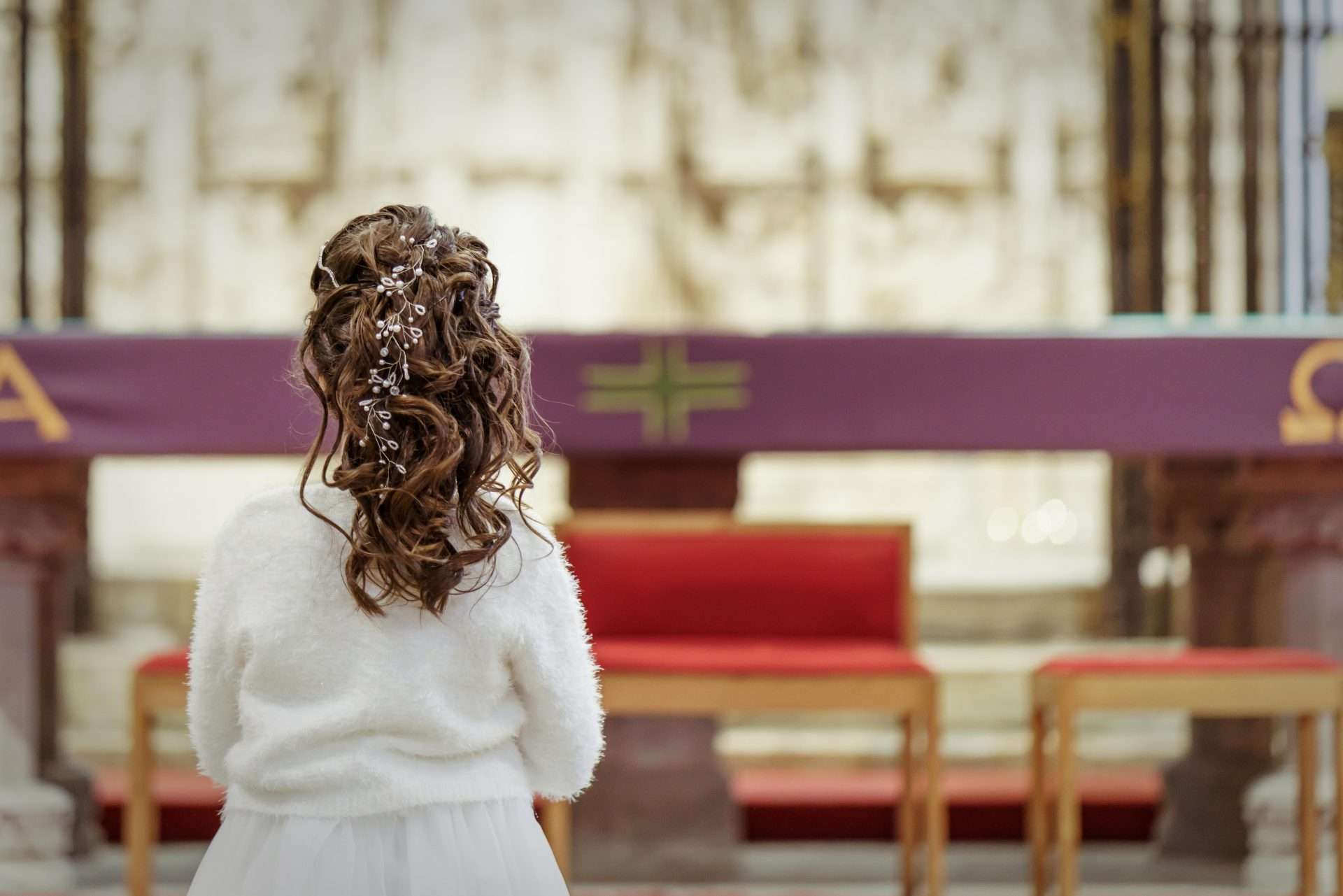
First Communions, Confirmations, Mothers’ Day, Lady Day all seem to be in spring or early summer, and we aren’t even into the wedding season yet
Felice Zumbo / Alamy
Music brings people together, it wakes them up and calms them down, it can be a source of great comfort and solidarity
This is the time of year for several special services. First Communions, Confirmations, Mothers’ Day, Lady Day all seem to be in spring or early summer, and we aren’t even into the wedding season yet, especially with the weather we’ve been having recently. Most people expect music at a celebratory service of whatever nature in church, and quite right too. Music brings people together, it wakes them up and calms them down, it can be a source of great comfort and solidarity. It is a prayer in itself; it gives a sense of community that is hard to beat (and that’s why people sing at rugby matches). It is powerful, but this power can also work negatively; people can be bored or irritated by music beyond what seems reasonable (imagine being stuck in a lift, or the dreaded holding on for a line to a doctor’s surgery).
So then the question is, what do you sing? And here I have to admit to a considerable measure of special pleading. Recently we’ve been organising various events in our parish; we’ve just had two very well-attended funerals, and we’re planning a Confirmation and an evening service of prayer around the Cross on Good Friday.
The funerals were straightforward, because they had been meticulously planned by the beloved gentleman in the coffin, or the family, and this is a situation where of course any choir will sing whatever it is asked. We had a selection of hymns which really meant something to those who were singing them, either for their own reasons, or because they had been favourites of the person whose life they had come to celebrate and mourn. It was a privilege to be able to be there and to help create the music.
With the other two services, I have a problem, because I have simply been presented with a list of hymns for each. That can work fine for a funeral; it doesn’t work so well for a different sort of service. For the Confirmation, I was told that the music has been agreed by the catechists and the priests, but nobody from what you might call the delivery side of the music in the parish was involved (and there are a few of us, not just me). I looked at the list and my heart sank. I know all the hymns, but they are all of the same vintage and type. There is nothing wrong with them, but there’s no variety, and no awareness of the musical circumstances. The parish has different resources at different Masses, sometimes the organ, sometimes guitars, sometimes other instruments, and this does make a difference to the choice of music for any given event.
Music is not just the icing on the cake. It makes a difference to what sort of cake it is, the flavour, the appeal and the appearance, whether it rises or sinks, whether it’s too sweet, whether it’s nourishing, whether it suits the circumstances or is basically unsatisfying, and I’ll leave that metaphor there. Music can make an enormous difference to people’s experience; it is a very powerful element in the liturgy. Its absence or worse, a bad version of it, matters.
I am particularly concerned about this, because any special event can be a great opportunity, a ready-made chance to interact with people who may not be the regular congregation. When you have something like a Confirmation or a First Communion, usually several family members will come to the church, even if they don’t usually. I try to make sure that there are different sorts of music included, so that everyone has a chance to recognise something; I want people to feel not just welcome but comfortable. Some of the people attending will be quite a bit older, and will find that the words of the Mass have changed considerably from what they remember. This is one reason why a familiar hymn of a slightly older type might help to make them feel more at home. These are the sort of hymns people have picked up in their youth, or from the radio, or Songs of Praise, or football matches, or weddings; often they may not realise how many they know, until they hear the tune.
These older hymns are usually very easy to learn; many were written at a time when people didn’t use paper copies, so the tunes were straightforward to pick up, even if you didn’t read music. They didn’t have long pauses for guitar modulations; they didn’t have lines chopped up into awkward lengths for variety; they followed the natural speech rhythms of the words in whatever language you were dealing with. Here we owe an enormous debt to the great translators of Latin hymns and German psalms, and they were superb at making the lines flow with the music. These hymns don’t date; they always work, many people have a vague memory of them, and that is enough to start them singing. Then the sheer competence of the tune-writer and the poet or translator can make people comfortable enough to join in.
Many of our young people have been short-changed by us in our music choices over the last twenty or thirty years. They all know the same three or four hymns (especially if they went to Catholic schools), but you need more than three or four to support you through life, and Confirmation is meant to be a bit like passing your Catholic driving test and being able to go off in the car on your own. Before you go, your church family needs to give you the chance to hear and join in with music of various types, so that you can choose your own favourites from a broader selection. One reason why our choices are currently often so narrow is because so many people are sure that they remember only the hymns they sang at primary school; and then they return to the Church when they have small children of their own, and cling to those same tunes as though they were drowning. But it’s always worth learning a new hymn. Especially for people of my generation, there are huge riches to be discovered in the Anglican hymn books that we were never allowed to use as children, and I personally use hymnbooks as a source of prayers, because the words are beautiful.
Church musicians know a lot of hymns. They have favourites, like everyone else, but they also know that you need to make the music enhance the liturgy, and that certain hymns work better in certain places than others. If you are organising a service of any kind which is going to have some music as part of it, please O please, consult with your church musicians, don’t just give them your final list. They might have suggestions which will help, and they will certainly be able to offer you some hymns which might not have occurred to you. This goes for priests as well: you will get far more out of the resource that is your church musicians if you engage with them. They will also be aware if you’re asking for something which won’t work for any reason (too long or short, too high or low and so on). If the Mass is with music from the organ, don’t list only guitar hymns.
I am happy to offer a list of hymns, but I would always want to go through it with the people most involved. With something like a Confirmation, I would like to ask the confirmandi themselves if there is anything they would particularly enjoy singing. Obviously you will get some silly answers (“Cauliflowers fluffy” is not a hymn), and teenagers hate to admit that they ever sing anything, especially in church. Maybe give them all a piece of paper and ask them to write down two hymns they don’t mind singing. If you have access to a school chaplain, or even better some pupil chaplains, you can ask what they sing at assemblies. You may not get very far, but at least you have tried. If you end up making suggestions, try to ensure that different sorts of music are represented, not just the holy dirges that so many older people remember from school. I’m old enough to have learned Victorian Catholic dirges at school and then the modern dirges as a student, but there is lots of other stuff out there.
We have another celebration coming along too, our granddaughter’s christening. It’s happening during a Lent Sunday Mass, and since I approach Lent (like Advent) with a spreadsheet covering all its weeks, I already know what music we’ll be singing, and I don’t want to change my choices, which are carefully constructed around the readings of the day. But I am going to add one.
It turns out that our granddaughter, tiny as she is (eleven weeks), already has a favourite tune. She was staying with us last week, and quite by chance we discovered that although any music helped to calm her down from full Roara Borealis mode, the old tune St Venantius worked better than anything else. I was playing around with it on the piano, because I want to arrange it in a particular way for the choir; and every time it would reliably send her off to sleep. It’s a gentle tune with a lovely swaying rhythm, and I can put it in as a second Communion hymn. It’s in our hymnbook with the words When Jesus comes to be baptised, which goes on to talk about the Passion, so it will work as a Lent hymn, and I hope our baby will recognise it and feel comfortable and very welcome. I feel the baptism reference is a little joke from the Holy Spirit. Music is a powerful tool; make use of your church musicians.
Kate Keefe composes musical settings for the Mass and writes about the psalms. You can follow her on Facebook, Twitter, LinkedIn and Instagram.
Login
Please login to comment
0 Comments
Oldest

Help us keep The Tablet’s voice independent, clear and far-reaching.
Founded in 1840, The Tablet is the leading independent English-language Catholic weekly, celebrated for great writing, astute analysis, brilliant arts and books reviews and trustworthy reporting from correspondents in Britain, Ireland, Rome and across the world.
Independent, high-quality journalism is at the heart of what we do. The Tablet does not have deep pockets and we are not funded by rich donors. If you appreciate our work please consider supporting The Tablet’s Development Fund. It only takes a moment and you can cancel at any time.
- Support with £5 per month
- Support with £10 per month
- Support with other amount.