What lies beyond


Mahler Symphony No. 2, Resurrection;
London Symphony Orchestra,
Michael Tilson Thomas
Barbican, London
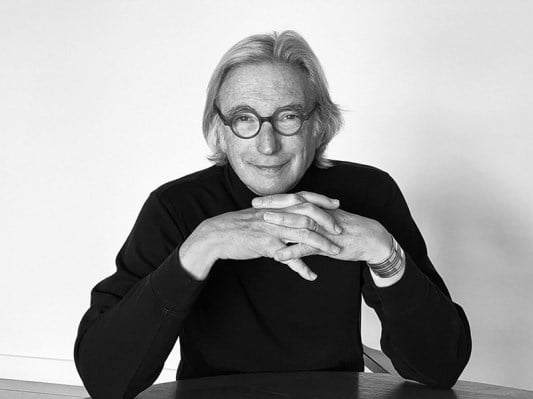
There will have been many in the Barbican audience back in May who thought they were witnessing Michael Tilson Thomas’s farewell to the London Symphony Orchestra – the ensemble the American conductor has worked with so closely for more than 40 years. Suffering from an aggressive brain cancer, the LSO’s eminent Conductor Laureate appeared to forget himself, preparing to walk offstage before the final movement of Mahler’s epic third symphony, and had to be coaxed back to complete the work.
To see him return, then, is extraordinary. And with Mahler’s second symphony – that great confrontation between death and life, a musical affirmation of faith in which, as the composer put it, we are “battered to the ground and then raised on angel’s wings to the highest heights” – it was both the bravest and most natural of choices for a conductor who has measured out his career, and indeed his life, in the composer’s music. Mahler was the first to treat a narrative with suspicion. He himself wrote no fewer than three sets of programme notes for his Resurrection symphony, eventually withdrawing all of them. But there was no ignoring the physical frailty of Tilson Thomas as he carefully made his way on to the podium, nor the beat that launched the symphony’s opening funeral march into a newly erratic tread.
Held tight among some 200 musicians from the LSO and London Symphony Chorus, at the centre of a packed Barbican stage, the conductor was carried by decades of respect, love and mutual trust through a performance created at the intersection of Tilson Thomas’ imagination and the orchestra’s own – a collaboration many years in the making.
If Mahler “Three” contemplates the miracle of life, then the second explores the miracle of what lies beyond. What opens with that implacable funeral march, crushing the strings’ persistent attempts at hope underfoot, ends some 90 minutes later in blazing apotheosis, all musical roads – and the massed voices of all those 200 performers – leading to God.
But it wasn’t an inevitable destination here. A slow start wedged us almost irrecoverably deep in trudging, weighty gloom, lyrical interludes glimpsed but ungraspable. The sleek LSO strings, the flutes and especially the brass all glinted with a promise that was transformed into slippery fool’s gold in the second movement’s Ländler (a “memory – a shaft of sunlight” from the life of a dead hero): elegant tea-dances when we wanted transcendence, an illusory arrival.
That swaying unease turned queasy in the central movement, split strings passing this strange dance across the sides, punctuated by beautifully characterised interjections from woodwind and brass: a glossy duet for violin and flute, trumpets and clarinet bending tone into abstract new shapes. The difference between this deliberate destabilisation and the opening’s scattered focus was marked: here there was momentum.
The mezzo-soprano has the impossible task in this symphony, ushering us all into a new world with “Urlicht” – that most tender and comforting of musical promises, a vision of the light to come. Tilson Thomas’s long-time collaborator Alice Coote’s vision was a fragile one, but deeply touching for it – paradise seen in extremis. It was a prelude to a finale in which the final musical pieces (soprano Siobhan Stagg, the LSO Chorus) fell into place, a tussle between the terror of death and a hope that quietly persisted among cymbal crashes. Heaven didn’t come easy, nor as naturally as we have heard it from this conductor, but it did come. There were tears from the musicians as Tilson Thomas took his bow after this monumental, heroic undertaking.

Help us keep The Tablet’s voice independent, clear and far-reaching.
Founded in 1840, The Tablet is the leading independent English-language Catholic weekly, celebrated for great writing, astute analysis, brilliant arts and books reviews and trustworthy reporting from correspondents in Britain, Ireland, Rome and across the world.
Independent, high-quality journalism is at the heart of what we do. The Tablet does not have deep pockets and we are not funded by rich donors. If you appreciate our work please consider supporting The Tablet’s Development Fund. It only takes a moment and you can cancel at any time.
- Support with £5 per month
- Support with £10 per month
- Support with other amount.

MOST READ ARTICLES
-
1
Nicaraguan bishops visit Rome as Ortega regime tightens grip
-
2
Would the Church miss us?
-
3
Vatican confirms Pope’s Latin America travel plans despite operation
-
4
Word from the Cloisters
-
5
Church from the 1950s receives £1 million government grant for new roof
-
6
Nurturing young Catholics in STEM
FROM THE EDITOR'S DESK



Superb piece